
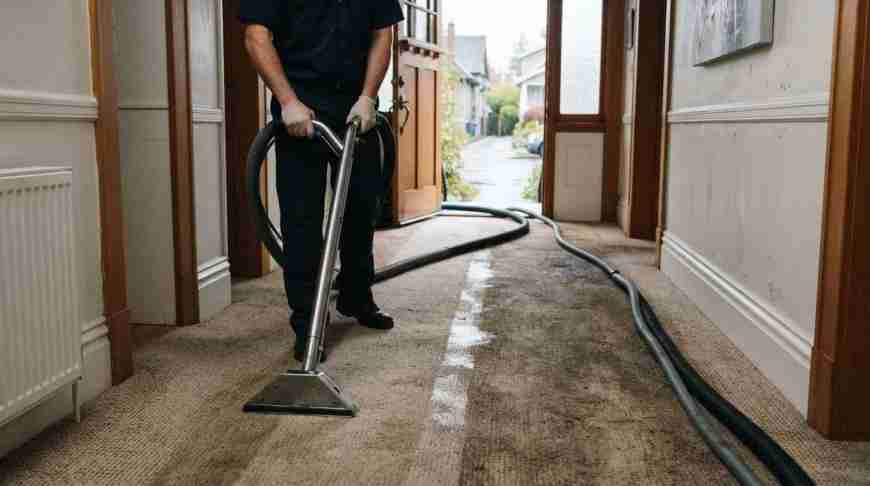
Professional cleaning isn’t needed for every small mark, but a hallway carpet cleaner can help when ground-in soil, recurring traffic lanes or persistent pet stains resist careful spot cleaning. Carpet and rug manufacturers usually recommend professional carpet cleaning every 12-24 months to maintain a carpet’s warranty. In busy hallways, visible soiling and how quickly dirt returns can also signal that it’s time for a deeper clean.
Hallways take constant foot traffic, and damp weather on Southern Vancouver Island can bring extra moisture and soil indoors. If you’re looking for a hallway carpet cleaner, you want a fresh-looking carpet without risking fibre damage or leaving it too wet. This guide explains when professional cleaning makes sense, how to respond to fresh spills and pet stains, and what to expect for residential and commercial hallways in Victoria, Sidney, Sooke and Mill Bay.
Key Takeaways
- Use recurring traffic lanes, ground-in soil and how quickly marks return to judge when routine vacuuming is no longer enough.
- For fresh spills, blot promptly rather than rubbing; pet stains may need careful odour treatment as well as surface cleaning.
- Choose a cleaning approach suited to the carpet’s fibres, soil level and drying conditions, especially in busy hallways.
- Plan residential and workplace cleaning around foot traffic and access needs, then explore professional carpet steam cleaning for a deeper clean.
Is it necessary to get carpet cleaning done professionally?
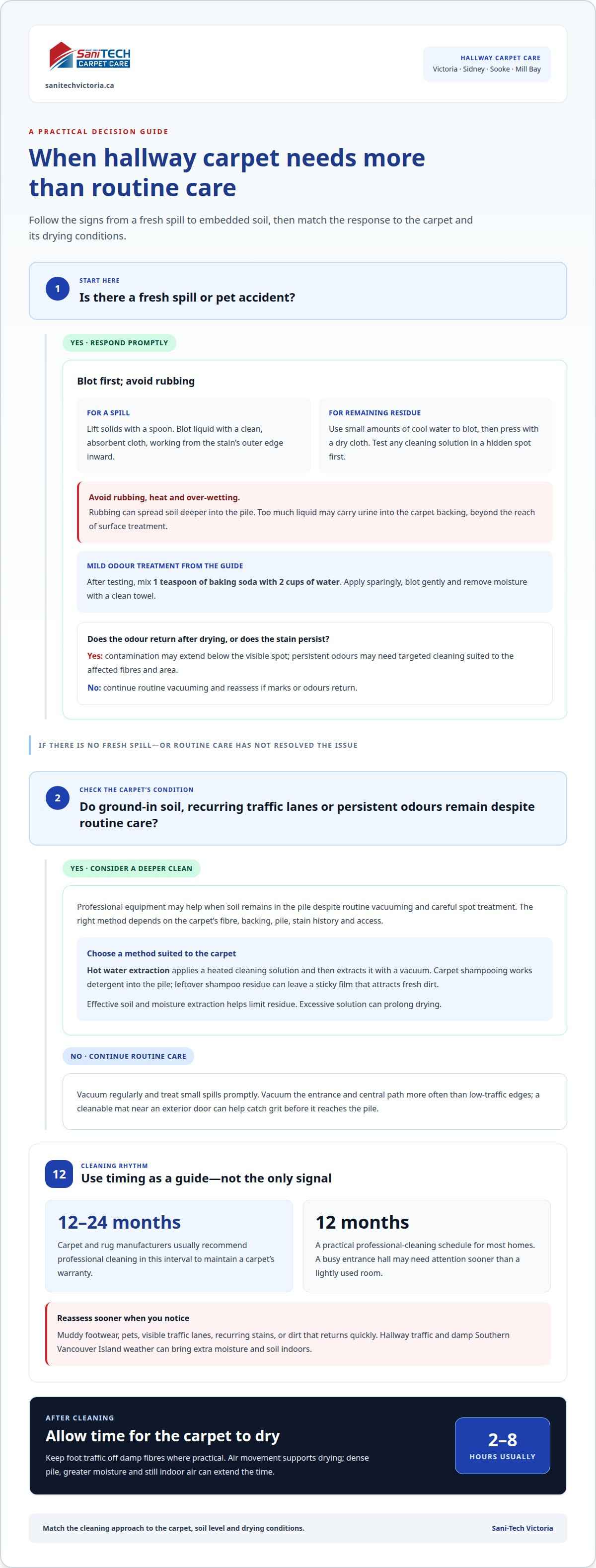
Not for every mark. Regular vacuuming and prompt spot treatment can manage loose soil and small spills, but ground-in grime, recurring traffic lanes and persistent odours may need professional equipment. A deeper clean is worth considering when soil remains in the pile despite routine care. In Victoria, weigh the carpet’s condition, fibre type and hallway traffic.
Steam cleaning commonly refers to hot water extraction: a heated cleaning solution is applied, then extracted with a vacuum. Carpet shampooing works detergent into the pile, often with mechanical agitation, and the solution and loosened soil must then be removed. Shampoo residue can leave a sticky film that attracts fresh dirt. The best method is one suited to the carpet, with effective soil and moisture extraction.
For most homes, professional cleaning once every 12 months is a practical schedule. A busy entrance hall may need attention sooner than a lightly used bedroom. Pets, muddy footwear, visible traffic lanes and recurring stains are useful signs to reassess the timing. Vacuuming removes surface debris between deeper cleans but cannot lift all embedded soil.
Drying usually takes 2-8 hours, depending on carpet material and airflow. Dense pile, greater moisture and still indoor air can extend drying; open windows when conditions allow and keep air moving through the hallway. A carpet that stays damp for a long time can disrupt household or workplace use, so ask how water extraction limits leftover moisture. Avoid walking on damp fibres where practical.
A sticky feel after cleaning can indicate detergent residue in the pile. Don’t add more soap. Follow the carpet-care instructions and avoid soaking the area with hot water. Suitable extraction removes loosened soil and cleaning solution, helping prevent residue that can quickly dull the carpet’s appearance.
Removing fresh spills and pet stains
Act quickly when coffee, mud or pet urine gets on hallway carpet. Lift solids with a spoon, then blot liquid with a clean, absorbent cloth. Work from the stain’s outer edge inward; rubbing can spread it and push soil deeper into the pile. Use small amounts of cool water to blot remaining residue, then press with a dry cloth. Test any cleaning solution on a hidden area first, as some fibres or dyes may react.
For a mild odour treatment, mix 1 teaspoon of baking soda with 2 cups of water. Apply sparingly after testing, blot gently, then remove moisture with a clean towel. Too much liquid can carry urine further into the backing, where surface treatment may not reach. Avoid layering products: mixed cleaners can leave residue or complicate later stain removal. Don’t use heat on a fresh stain, as it may set some substances.
Pet stains need attention to both visible marks and lingering odour. Blot the area and use a carpet-safe product according to its label, then remove any remaining solution as directed. If the smell returns after drying, contamination may extend below the visible spot. Repeated surface treatments can leave sticky residue that attracts soil, so persistent odours may need targeted cleaning.
Are carpet cleaning products safe for pets, children and indoor air quality? Sani-Tech Victoria uses non-toxic, biodegradable cleaning solutions that are pet- and child-friendly. Follow product directions for application, ventilation and re-entry, and keep children and pets away from the treated area while cleaning. A low-odour product is not automatically suitable for every carpet or household.
Vacuuming helps remove loose dust and grit, while deeper extraction can remove embedded soil and cleaning residue. It supports a cleaner carpet but doesn’t replace appropriate stain treatment. For recurring pet odours or stains that remain after careful blotting, consider professional carpet stain and odour treatment suited to the affected fibres and area.
Carpet cleaners for hallway and high-traffic carpet
Clean a hallway in sequence: remove furniture, vacuum slowly, treat spots, clean in narrow, overlapping passes, then extract moisture and allow the carpet to dry fully. This helps remove grit and soil tracked in from Victoria sidewalks without repeatedly soaking the same area.
- Clear and inspect. Move loose items, check carpet-care instructions, and note worn seams or stains. A wool hallway runner needs gentler handling than a durable synthetic broadloom.
- Vacuum thoroughly. Make slow passes along the traffic lane, then vacuum across it. This lifts dry grit before moisture turns it into muddy residue.
- Pre-treat carefully. Test the cleaning solution in a hidden spot. Apply it sparingly to stubborn marks, following its label and avoiding saturation near seams.
- Clean evenly. Use equipment suited to the carpet’s fibre and soil level. Overlapping passes help avoid missed strips; excessive solution can leave residue or prolong drying.
- Extract and dry. Remove as much moisture as possible, then keep foot traffic off the carpet until dry. Air movement supports drying in a damp Victoria home.
A professional deep clean can help when dark lanes remain after vacuuming or soil returns quickly. The right method depends on the carpet’s fibre, backing, pile, stain history and access. Professional equipment can control solution application and water extraction more closely than a small household machine, which is useful in a narrow corridor with limited airflow.
For routine care, vacuum the entrance and central path more often than low-traffic edges. Place a cleanable mat near exterior doors and remove grit before it reaches the pile. Set a cleaning schedule based on actual use: a family hallway exposed to wet footwear needs different attention from a rarely used passage. Prompt vacuuming and careful extraction can help extend carpet life and keep the corridor presentable.
Residential and commercial carpet cleaning
Residential and workplace hallways collect different kinds of soil. A family entry may accumulate wet-footwear marks, pet hair and food spills, while an office corridor sees repeated shoe traffic and rolling equipment. In both settings, vacuuming removes loose grit, while professional carpet cleaning addresses embedded soil. The right approach depends on the carpet’s fibre and backing, the type of soiling and how the hallway is used.
At home, clear small furniture and personal items before the appointment. Identify a wool runner, synthetic broadloom or treated carpet, and point out stains or previous cleaning products. Extraction should suit the material and remove loosened soil and solution. If an area rug sits in the hallway, treat it according to its own construction rather than assuming it can be cleaned like fitted carpet.
For a business, coordinate access around staff, visitors and deliveries. A clinic reception corridor, strata building entrance and shop passage each have different traffic patterns. Move furniture where practical, identify restricted areas and decide which sections need to stay open. A staged cleaning plan can limit disruption while giving technicians and equipment access to edges, corners and high-use paths.
- Before the visit: Clear loose objects and mark spills, worn seams or recurring odours.
- During planning: Share carpet material, hallway access details and business operating needs.
- After extraction: Keep people and furniture off damp carpet until it is dry, following the cleaning instructions.
Upholstery beside a home hallway may also collect tracked-in dust, while commercial waiting areas often pair carpet with chairs and area rugs. Scheduling related work together can help organize room access and furniture movement. Choose carpet cleaning services that explain the cleaning method, extraction and drying plan before work begins. For residential or workplace carpet care in Victoria, request a carpet cleaning appointment that fits your hallway and access needs.
Sani-Tech Victoria: Carpet Steam Cleaning
Sani-Tech Victoria provides Carpet Steam Cleaning for hallway carpets in homes and workplaces. Consider professional cleaning when embedded soil, traffic lanes or marks remain after routine vacuuming, or when the carpet is due for a deeper clean. The approach should suit the carpet’s fibres and condition, with attention to soil removal and moisture extraction.
Preparation helps protect the hallway and support a thorough clean. Clear loose items, point out persistent stains and share any carpet-care instructions. In the damp conditions of Southern Vancouver Island, plan for drying and keep foot traffic off the carpet until it is dry. Sani-Tech Victoria also offers Area Rug Cleaning, Upholstery Cleaning and Leather Cleaning for related textile-care needs.
For professional carpet steam cleaning in Victoria and surrounding communities, contact Sani-Tech Victoria to discuss your hallway carpet.
Set a clear plan for your hallway carpet
Before arranging a clean, note which areas matter most: the entrance, the main traffic path or the full corridor. A clear scope helps match the work to your home or workplace instead of treating every carpeted space alike. Include nearby furnishings or a separate area rug in your plan if they also need attention.
Choosing a hallway carpet cleaner is also an opportunity to consider the surrounding interior. Sani-Tech Victoria offers Carpet Steam Cleaning, Area Rug Cleaning and Upholstery Cleaning, so you can discuss related textile-care needs together. If routine care hasn’t refreshed the hallway, professional cleaning can be a practical next step to maintain the carpet.
Make a note of the carpeted areas and any concerns you want addressed, then contact Sani-Tech Victoria to discuss your cleaning needs. A considered plan can make the next step straightforward and help keep your Victoria home or business looking cared for.
Frequently Asked Questions
Do I need to move all of my furniture?
Heavy furniture can usually remain in place, but the carpet beneath it won’t be accessible unless the item is moved. Decide whether that area also needs cleaning. Furniture with delicate finishes or unstable legs may need extra care around moisture. In a hallway with a console table or bench, consider whether cleaning only the exposed carpet meets your needs.
How long does it take for the carpet to dry?
Drying time varies, so assess the carpet itself rather than relying on its surface. Press a clean, dry cloth into a thicker section and check for moisture. Pay attention to the pile near edges and seams, where dampness can be less obvious. This can help you judge when the carpet is ready for normal use.
Can you clean carpet effectively with just hot water?
Hot water alone can loosen some water-soluble soil, but it won’t remove every mark. Greasy residue, tracked-in oils and coloured spills may also need a suitable cleaning agent. Effective cleaning matches the treatment to the substance and carpet, then removes the loosened soil. Don’t pour hot water directly onto a stain, as excess moisture can spread it.
How long does the work take?
Active cleaning time depends on the carpeted area and the hallway’s condition. A clear passage is simpler to clean than one connected to several carpeted rooms or marked by stubborn spots. Pre-treating stains and working carefully along edges can add steps. Plan separately for the appointment and drying period when arranging access for residents, staff or visitors.
Should you buy a carpet cleaner, rent one, or call a pro?
Buying a machine can make sense for regular upkeep if you have storage space and expect to use it. Renting may suit a one-time project if you can transport and operate the equipment. Professional cleaning is practical for broad, persistent soiling or when you want cleaning and extraction handled as one process. Consider the hallway’s size, condition and access before deciding.
What is the best carpet cleaner for a hallway?
The right hallway carpet cleaner depends on whether you need routine removal of dry soil, spot treatment or a deeper clean. A vacuum with an edge tool can reach dust along baseboards, while a compact spot-cleaning machine suits isolated marks. For a full hallway clean, consider professional equipment rather than choosing a machine by suction claims alone.