
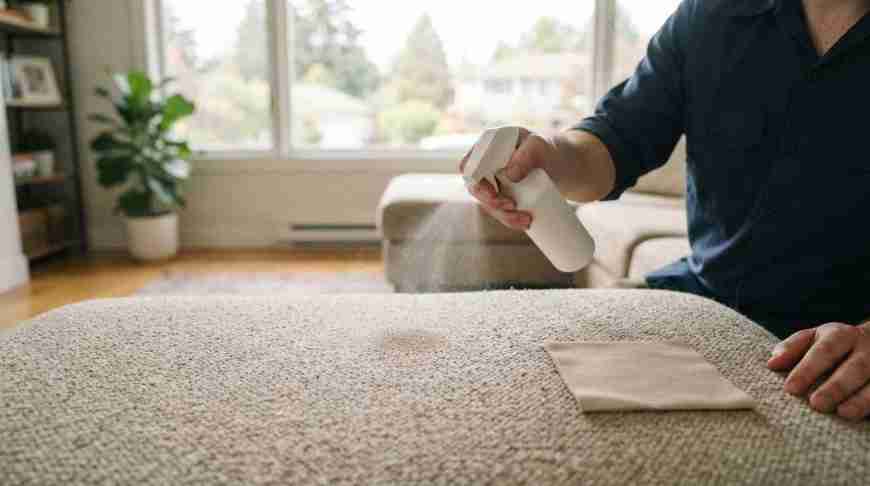
The best fabric protector for upholstery depends on the material and how it’s used. Tests found that sprays improved spill resistance across all tested fabrics, but liquid eventually soaked into each one. Highly textured materials absorbed spills faster than smoother fabrics. Leather and suede also need different compatibility checks from woven upholstery.
It’s reasonable to want a treatment that helps guard against spills without changing the fabric’s colour or feel. Compare more than the product label: check its coverage, the amount required, whether it suits your upholstery and what the protection can and can’t do.
This guide explains how coverage and application affect results, what to consider for textured and performance fabrics, and why leather and suede call for particular care. Use the material and its care instructions to narrow your options, rather than relying on broad product claims alone.
Key Takeaways
- Compare sprays by the upholstery they suit and the coverage they provide, not just by broad protection claims.
- Account for texture when judging spill resistance: highly textured fabrics can absorb liquid faster than smoother materials.
- Separate fabric care from leather and suede care; a spray suitable for one material may not suit another.
- Use the decision guide to weigh DIY spray application against professional upholstery or leather cleaning for the piece you need to care for.
Fabric protector spray testing and product comparisons
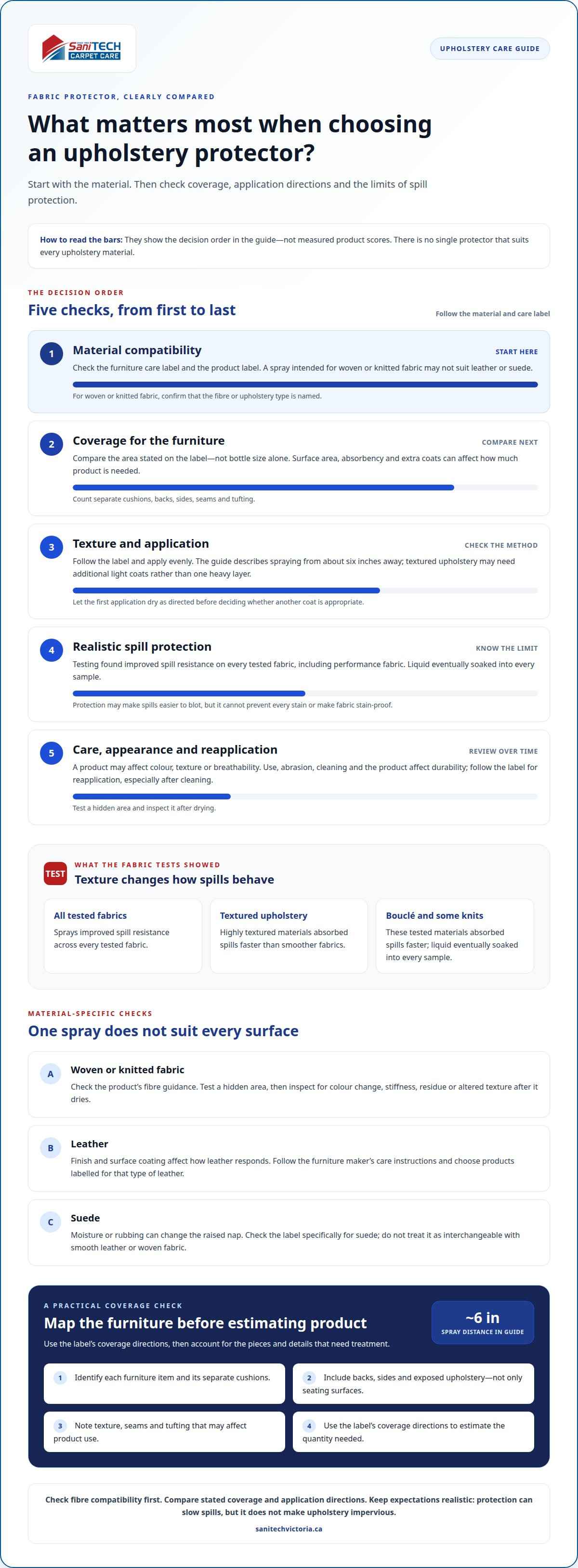
Compare products by spill resistance, coverage, material suitability and application, not label claims alone. Testing showed that protectors can slow spills, but they don’t make upholstery stain-proof.
Spray-on application and coats
Spray-on protectors let you apply a product yourself. Follow its label, spraying from about six inches away and covering the surface evenly. Highly textured upholstery may need additional light coats rather than one heavy layer. Testing found improved spill resistance on every sample, including performance fabric. However, liquid eventually soaked into every tested fabric, and textured bouclé and some knits absorbed spills faster.
Professional upholstery protection
A spray-on treatment leaves product selection and application to you. Professional upholstery care takes the fabric, its texture and condition, and the treatment process into account. The European Union notes that upholstery treatments can protect fabric against stains or make cleaning easier, helping prolong its lifespan. Neither approach makes fabric impervious to spills.
Upholstery appearance and protection considerations
A product may affect a fabric’s colour, texture or breathability. Test a hidden area and inspect it after drying. If children or pets are at home, follow the product label’s directions for application, ventilation and drying. Spill testing does not establish indoor safety or Canadian regulatory approval. There’s no single lifespan for protection: use, abrasion, cleaning and the product all affect durability. Follow the label for reapplication, especially after cleaning. Protection may make spills easier to blot, but it can’t prevent every stain.
There’s no single lifespan for upholstery protection. Use, abrasion, cleaning and the product affect durability, so follow the label for reapplication, especially after cleaning. Protection may make spills easier to blot, but it can’t prevent every stain.
| Option | Coverage | Fabric fit | Spill result |
|---|---|---|---|
| Spray-on, smooth fabric | Whole surface, about six inches away | Check label and test first | Improved resistance in testing |
| Spray-on, textured fabric | Additional light coats may help | Bouclé and some knits absorb faster | Beads eventually soak in |
| Professional treatment | Applied as part of a service | Consider fibre and condition | Can help with stains or cleaning |
Check fibre compatibility first, then compare coverage and care instructions.
Coverage and product quantities
Coverage depends on the product directions, the upholstery’s surface area and how much product the fibres absorb. Compare containers by the area the label says they treat, not by bottle size alone. A larger container may not cover more furniture if the formula requires heavier application or extra coats.
Start with the label. Check its coverage guidance and confirm that it applies to upholstery, not just carpets or other materials. Then assess the furniture: a compact dining chair has less surface area than a sectional, while deep cushions, piping and tufting add areas that need attention. Highly textured fabric may also need extra coats, applied lightly rather than as one heavy layer.
For a practical estimate, work through the furniture methodically:
- Identify each item and its separate cushions.
- Include backs, sides and exposed upholstery, not just the seating surface.
- Note texture, seams and tufting that may affect product use.
- Use the label’s coverage instructions to estimate the quantity needed.
Apply the product evenly. Spray from about six inches away, moving across the surface until it’s covered. Overlapping passes help avoid untreated strips. Where the fabric’s texture calls for it, add a light coat rather than soaking one area. Let the first application dry as directed before deciding whether another coat is appropriate.
Don’t assume one bottle will treat every piece in a room. A smooth armchair and a heavily textured sofa may use different amounts, even if their visible dimensions seem similar. Note the stated coverage, which pieces you plan to treat and whether any need extra coats. This makes container comparisons clearer and helps you avoid running short partway through.
For valued furniture or varied upholstery, fibre-specific upholstery care can help guide the next step when product coverage and fabric needs are difficult to match.
Fabric compatibility, including leather and suede
A protector’s suitability depends on the upholstery material, not just its intended use. A woven polyester sofa, cotton cushion, leather chair and suede footstool each need different compatibility checks. Start with the furniture care label, then compare its material guidance with the product label before applying anything.
For woven or knitted fabric, check whether the spray names that fibre or upholstery type. Blends may respond differently from single-fibre fabrics, and a textured weave may absorb more liquid. Test a small, hidden area first. Once it dries, check for colour change, stiffness, residue or altered texture before treating visible surfaces.
Leather needs separate consideration. Its finish and surface coating affect how it responds to cleaning and treatment, so don’t assume a fabric spray is suitable. Follow the furniture maker’s care instructions and use products labelled for that type of leather. A hidden-area test may reveal visible changes, but it doesn’t replace checking product compatibility.
Suede’s raised nap can change with moisture or rubbing. A liquid fabric spray may flatten or mark the surface, so check the product label specifically for suede and follow its application instructions. Don’t treat suede as interchangeable with smooth leather or woven fabric. For a suede cushion, the material name and care label are key decision points.
- Identify: Check the furniture label for fibre or material details.
- Match: Look for that exact material on the protector’s directions.
- Test: Apply to a hidden spot and assess it after drying.
- Stop: Don’t proceed if the label excludes the material or the test changes its appearance.
The European Union notes that upholstery treatments can protect fabric against stains or make cleaning easier. That doesn’t mean every treatment suits every material. Leather furniture needs material-specific care: leather cleaning is not the same as applying a textile spray. Match the product to the upholstery and keep the manufacturer’s care instructions for future cleaning.
How do spray-on and professional upholstery fabric protection compare?
Spray-on treatment gives you control over product choice and application. Professional care takes the upholstery and its condition into account. The right approach depends on the material, the furniture’s value and how comfortable you are following product directions. Neither makes upholstery spill-proof.
For a household spray, compare the label’s fabric guidance, coverage and application steps. You’ll need to prepare the surface, apply the product evenly and allow the stated drying time. Tests found that protectors improved spill resistance on every sample, including performance fabrics, but liquid eventually soaked into all tested materials. Blot spills promptly.
Professional care starts with the piece itself. A technician can assess the fabric type, texture, visible soil and care instructions before recommending a cleaning process. This is useful for a delicate weave, a large sectional or cushions made from different materials. Cleaning and fabric protection are separate tasks, so don’t assume upholstery cleaning includes a protective treatment.
Consider these differences before deciding:
- Control: Spray-on application lets you choose the product and manage each pass.
- Assessment: Professional care can account for upholstery condition and fibre needs.
- Responsibility: DIY requires careful label reading, even application and drying.
- Limits: Either option may improve spill resistance, but neither prevents every stain.
Choose a spray when its label clearly matches the fabric and you can follow each instruction. Choose professional upholstery care when the material is valuable, delicate, heavily soiled or difficult to identify. In Victoria’s coastal climate, allow the room to ventilate and follow the product’s drying directions rather than covering damp upholstery. For cleaning that prepares furniture for ongoing care, book professional upholstery cleaning and discuss the fabric’s needs.
Sani-Tech Victoria: Carpet Steam Cleaning
Sani-Tech Victoria provides upholstery cleaning for everyday soil and spills that need more than routine care. Professional cleaning can address embedded soil and prepare fabric for regular maintenance, while a protector remains a separate product choice. For leather furniture, Sani-Tech Victoria also provides leather cleaning, a material-specific alternative to textile spray.
Consider professional cleaning when upholstery is heavily soiled, delicate or difficult to identify, or when you want help before applying a product. Sani-Tech Victoria also provides Carpet Steam Cleaning and Area Rug Cleaning for floor coverings that need specialist attention.
For upholstery or leather care in Victoria, Sidney, Sooke or Mill Bay, contact Sani-Tech Victoria or visit sanitechvictoria.ca.
Choose a care plan that fits your upholstery
Before applying a protector, decide what you want to preserve: the fabric’s appearance, easier spill cleanup or both. Keep the care label and product directions together, and note which treatment you used. That record can guide future cleaning and help you avoid applying an unsuitable product after the upholstery has been cleaned.
A fabric protector for upholstery is only one part of furniture care. If soil or spills need attention first, Sani-Tech Victoria offers upholstery cleaning, as well as carpet steam cleaning and area rug cleaning. Consider the fibres and care instructions for each surface instead of treating every material alike.
For advice on caring for upholstery in Victoria and nearby communities, contact Sani-Tech Victoria. A thoughtful choice today can help you care for your furniture with greater confidence.
Frequently Asked Questions
What is fabric protector for upholstery and how does it work?
A fabric protector for upholstery is a treatment intended to help fabric resist stains or make cleaning easier. The European Union describes upholstery treatments as a way to support fabric care and lifespan. A drink spill, for example, may sit briefly on the treated surface, giving you a chance to blot it. Protection doesn’t make furniture stain-proof, so prompt cleanup still matters.
What are the best upholstery fabric protectors available in Canada?
Choose a product whose label explicitly matches your furniture’s fibre and intended use. Compare its upholstery directions, coverage and application instructions, then check whether it suits a blend such as cotton-polyester. Broad claims about water or stain resistance don’t establish that a product suits every textile. Match the label to the care tag on the specific chair before choosing.
How do you apply fabric protector to upholstered furniture safely?
Follow the product label and begin with clean upholstery. After cleaning, wipe the surface with a moist cloth to remove detergent residue before protecting it. Test an inconspicuous area and inspect it after drying. Apply evenly from about six inches away, using additional light coats for textured fabric when directed. Drying can take from 10 minutes to overnight, depending on the product.
Which upholstery fabrics should not be treated with fabric protector?
Don’t treat fabric if the product label excludes it or doesn’t identify it as suitable. Leather and suede need products made for those materials, not an assumed textile spray. For an unknown blend or delicate vintage upholstery, check the furniture care label first. A hidden-area test may reveal a visible reaction, but it doesn’t override product exclusions.
Is fabric protector safe for children, pets, and indoor use?
If children or pets are at home, follow the product label’s directions for application, ventilation and drying. Spill testing does not establish indoor safety.