
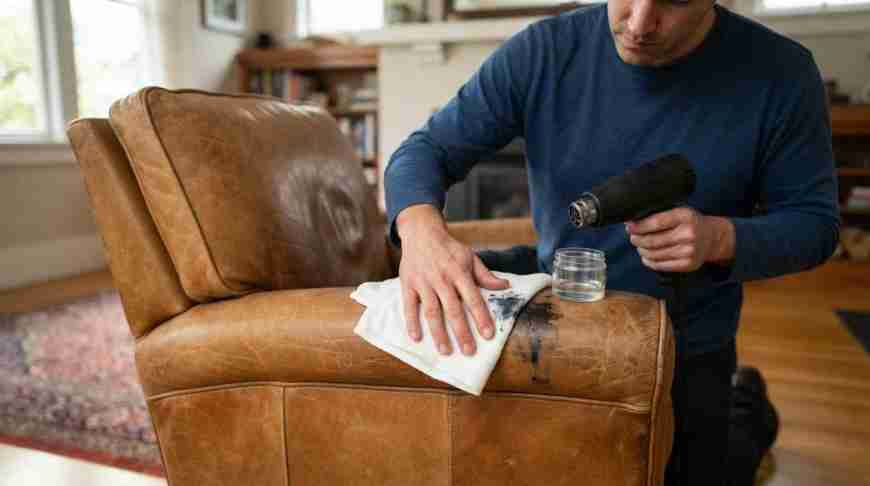
Act quickly and use a gentle touch. When removing stains from a leather recliner, blot fresh spills with a clean, dry cloth instead of rubbing them into the surface. The right treatment depends on the stain and how deeply it has set; an older or darker mark may need more care than a fresh spill.
A stain can make a favourite recliner look worn, but scrubbing or using the wrong cleaner can damage the leather’s finish or colour. In Victoria, Sidney, Sooke, and Mill Bay, careful first steps can help protect furniture you want to keep.
This guide covers what to do after a spill, how to blot and clean a mark without soaking the leather, and how to approach dark stains. You’ll also learn when to stop treating a stain at home and seek professional leather cleaning, particularly if it is deep or set in, or if the finish is cracked or flaking.
Key Takeaways
- Blot a fresh spill promptly with a clean, dry cloth; rubbing can spread the mark and harm the leather’s finish.
- Use a lightly damp cloth for careful cleaning, and avoid soaking the leather or scrubbing aggressively.
- Test any cleaning method on an inconspicuous area first, especially when dealing with a dark mark or ink.
- Deep, set-in stains and cracked or flaking finishes may need professional leather cleaning rather than further home treatment.
Acting quickly on leather stains
- Stop the spill from spreading. Gently lift solid material with a spoon or the edge of a dull card. Avoid pressing debris into the leather grain or seams. For a drink spill, move removable cushions and keep liquid from reaching another panel. Act promptly with grass marks, as set-in grass dye may need professional treatment.
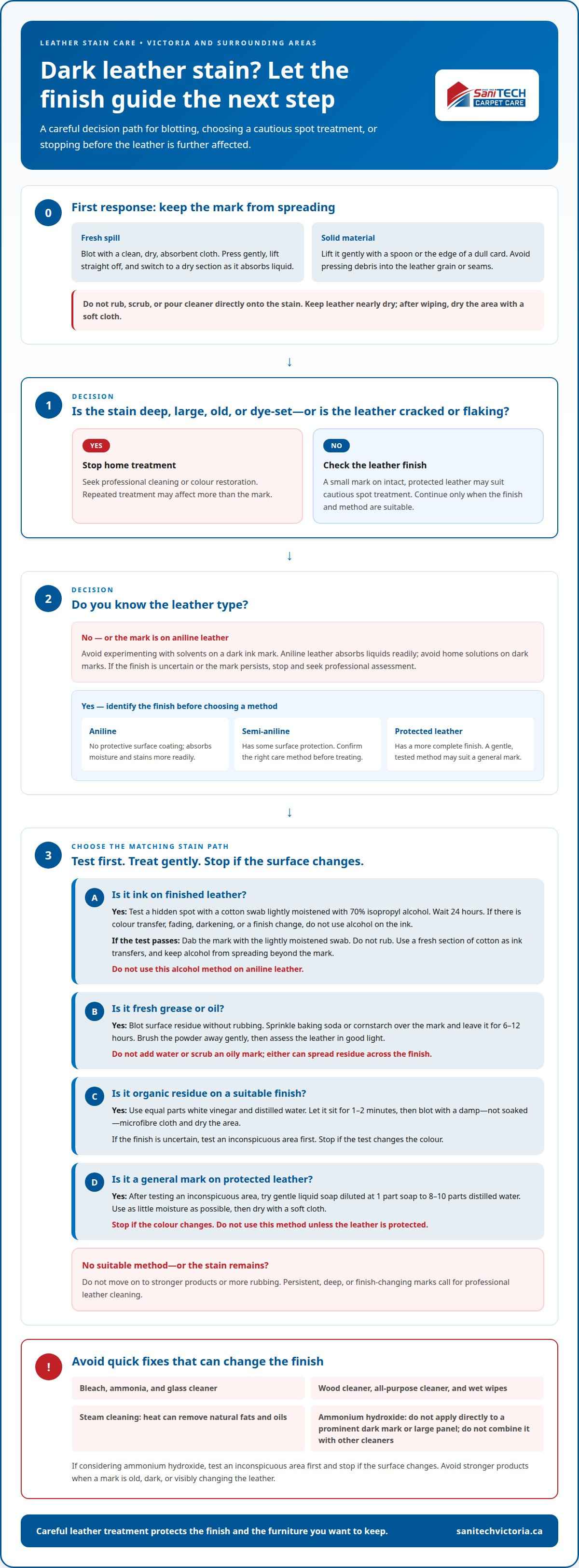
- Blot, rather than rub. Press a clean, dry, absorbent cloth against the fresh mark, then lift it straight off. Switch to a dry section of cloth as it absorbs liquid. Rubbing can spread the stain and create friction that affects the colour. Use light pressure near seams and perforations, where liquid can settle in small openings.
- Keep the leather nearly dry. Don’t pour water or cleaning solution directly onto the stain. Excess moisture can spread residue beyond the mark, especially around cushion seams. If general surface cleaning calls for a damp cloth, make sure it is damp, not wet. Dry the area with a soft cloth after wiping rather than leaving moisture on the leather.
- Avoid quick fixes that can change the finish. Don’t use bleach, ammonia, glass cleaner, wood cleaner, all-purpose cleaner, or wet wipes. These products can affect the leather’s finish and colour. Steam cleaning is unsuitable too, as heat can remove the leather’s natural fats and oils. If a mark is old, dark, or visibly changing the surface, don’t try stronger products; more rubbing can make it harder to treat.
Blotting and removing stains
After blotting excess liquid, choose a cleaning method suited to the stain and leather finish. Use as little moisture as possible, and stop if the colour changes.
Remove ink stains from leather
Step 1: Test an inconspicuous spot and wait 24 hours before treating ink. For finished leather, dab the mark with a cotton swab lightly moistened with 70% isopropyl alcohol. Work carefully, using a fresh swab section as ink transfers. Don’t rub or let alcohol spread beyond the mark. Avoid this method on aniline leather, which absorbs liquids readily.
Remove grease and oil stains
Step 2: For fresh grease or oil, blot away surface residue without rubbing. Sprinkle baking soda or cornstarch over the mark and leave it for 6-12 hours to absorb oil. Brush the powder away gently, then assess the leather in good light. Don’t add water or scrub an oily mark, as either can spread residue across the finish.
Clean stains by leather type
Step 3: Identify the finish before choosing a cleaner. Aniline leather has no protective surface coating, so it absorbs moisture and stains more readily; avoid home solutions on dark marks. Semi-aniline has some surface protection, while protected leather has a more complete finish. For a general mark on protected leather, try gentle liquid soap diluted at 1 part soap to 8-10 parts distilled water.
For organic residue on a suitable finish, use equal parts white vinegar and distilled water. Let it sit for 1-2 minutes, then blot with a damp, not soaked, microfibre cloth and dry the area. If the finish is uncertain or a test changes its colour, stop. Persistent marks call for professional leather cleaning.
Removing dark stains from leather
- Inspect the mark and finish. Check whether the dark area is a small surface mark or a broad, deep stain. Look for nearby cracks, flaking, or changes in colour. These signs help determine whether home cleaning is appropriate. A stain that has penetrated the leather or altered its finish needs a different approach from a light mark on protected leather.
- Test any cleaning product before treating the stain. Choose an inconspicuous spot, such as the back or underside of a cushion, and apply a small amount as directed. Watch for colour transfer, darkening, or a change in finish. If the test alters the leather, don’t use that product on the visible stain. Testing is especially important on light-coloured leather.
- Use extra caution with ammonium hydroxide. It can damage leather, so test it on an inconspicuous area before use. Don’t apply it directly to a prominent dark mark or across a large panel. Stop if the test changes the surface. Avoid combining it with other cleaners, as that can make the leather’s reaction harder to assess.
- Stop home treatment if the stain or finish is compromised. Large, deep, dye-set, or old stains are reasons to seek professional cleaning or colour restoration. The same applies to cracked or flaking leather. Repeated treatment can affect more than the mark itself. For instance, if a dark stain remains after gentle blotting, don’t scrub harder or keep applying products.
The leather’s condition matters more than the stain’s colour. A small mark on intact, protected leather may suit cautious spot treatment; a deep stain or damaged finish calls for professional assessment.
How do you remove ink stains from leather furniture?
- Identify the leather finish before treating ink. The alcohol method is for finished leather, not every leather type. Check the furniture care information or inspect an inconspicuous area to identify the surface. Aniline leather absorbs liquids readily, so don’t use this method on it. If the finish is unknown, avoid experimenting with solvents on a dark ink mark.
- Test the treatment on a hidden spot. Apply a small amount of 70% isopropyl alcohol to a cotton swab, then touch an inconspicuous area. Wait 24 hours and look for colour transfer, fading, darkening, or changes to the finish. This wait allows you to assess the leather after the test area has dried. If you notice a change, don’t use alcohol on the ink.
- Dab ink with a lightly moistened cotton swab. On finished leather that passes the test, touch the swab to the ink rather than rubbing back and forth. Switch to a clean section of cotton as ink transfers, to avoid carrying pigment across the surrounding surface. Keep the alcohol on the mark, away from seams and adjacent panels.
- Pause and inspect between applications. Check whether the ink is lifting and the leather’s colour remains consistent. Stop applying alcohol if the stain spreads, the finish changes, or the swab picks up the leather’s colour. Repeated solvent treatment can affect the surface, especially near stitching or cushion piping.
- Stop if the mark remains deep or the finish is damaged. Old, dye-set ink and cracked or flaking leather need more than repeated spot treatment. Further rubbing may enlarge the affected area or alter its appearance. Professional leather cleaning is the next step for persistent ink marks; describe the leather type and any treatment already applied.
Sani-Tech Victoria: Leather Cleaning
Sani-Tech Victoria provides Leather Cleaning for recliners with persistent stains, dark marks, or delicate finishes. A professional assessment considers the leather type, the stain’s location and depth, and any products already used. This helps guide treatment and protect the surrounding finish. For example, an ink mark on protected leather needs different handling from a stain on absorbent aniline leather. Professional care can help when a mark remains after gentle blotting, spreads during treatment, or is near cracked or flaking areas. Describe the stain and leather condition when arranging service so treatment can be planned for the furniture. Contact Sani-Tech Victoria to discuss Leather Cleaning for your recliner.
Protect your recliner with the right next step
Treatment time depends on the leather, the stain’s depth, and whether earlier products have affected the finish. Let the surface dry before judging the result, and avoid applying more cleaners if the stain remains. Removing stains from a leather recliner carefully also means knowing when further spot treatment could affect the surrounding colour or finish.
If a mark persists or the leather is delicate, professional assessment can help identify a suitable cleaning approach. Sani-Tech Victoria also offers Upholstery Cleaning, Carpet Steam Cleaning, and Area Rug Cleaning for other furnishings and floor coverings. Each material needs care suited to its surface, so share what caused the stain and what you have already applied.
Contact Sani-Tech Victoria for help with leather cleaning. With a considered next step, you can care for your recliner and feel more confident about its future.
Frequently Asked Questions
How can I make my leather couch look new again?
Clean and condition leather according to its finish, and protect it from direct sunlight and nearby heat. Dusting with a soft, dry microfibre cloth helps limit surface soil between deeper cleans. Faded colour or a rough, brittle feel may need more than routine cleaning. A leather care professional can assess whether cleaning or colour restoration suits the couch.
How do you remove dark stains?
Start by considering what caused the mark and whether the leather itself has changed. Darkening from an oily spill differs from dye transfer or a stain that has penetrated the finish. Don’t cover the whole panel with a stronger cleaner to hide one spot. A large, old, or dye-set mark, especially near cracked or flaking leather, is best assessed professionally.
How do you safely remove stains from a leather recliner?
Check the care label or manufacturer’s instructions before choosing a treatment. Recliners may combine leather panels with different finishes, fabric sides, piping, or perforations, so don’t assume every surface is the same. Use a method suited to the affected panel, keeping cleaner away from controls and mechanical joints. If the upholstery construction is unclear, professional assessment can help prevent damage.
What cleaning products are safe for leather upholstery?
Choose a cleaner labelled for the specific leather finish and follow its directions instead of relying on a general household product. Aniline, semi-aniline, and protected leather respond differently because their surface protection varies. Choose a conditioner suited to the material and test it in a hidden spot before wider use. Don’t mix cleaners, as this can make a surface reaction harder to identify.
How do you remove food and drink stains from leather?
For a food spill, lift crumbs or soft solids without pressing them into seams. Treat coloured drinks such as juice or coffee promptly, as their pigments can leave visible marks. Greasy food needs a different approach from a watery spill, so don’t use the same cleaner on both. If residue remains in stitching or perforations, don’t probe with sharp tools or soak the area.