

A single improper cleaning attempt can cause more damage to a fine textile than the original spill itself. For Victoria homeowners, the fear of permanent discolouration is a common anxiety, especially when faced with conflicting DIY advice that ignores the chemistry of different fibres. Mastering area rug stain removal requires a balance of immediate action and material respect to ensure your home’s most valuable textiles remain pristine. You deserve a cleaning solution that is effective yet safe for your children and pets.
This guide will provide you with the expert techniques needed to protect your investment and maintain a hygienic living environment. You’ll learn how to successfully treat common stains while preserving the original texture and vibrant colour of your rugs. We will outline the essential steps for safe home care, highlight the risks of harsh chemicals, and define the clear boundary where DIY efforts should end and professional restoration must begin to ensure the longevity of your floor coverings.
Key Takeaways
- Act within the first 60 seconds and use the “blot, never scrub” technique to prevent permanent fibre distortion in your fine textiles.
- Discover the specific chemical balance required for successful area rug stain removal when treating difficult tannin spills or protein-based pet accidents.
- Protect natural fibres by learning why common high-pH household cleaners can cause “wool rot” so you don’t ruin your investment.
- Avoid the risks of over-saturation and abrasive DIY myths that often lead to mould growth or permanent texture damage.
- Recognize when a spill has reached the stage where it requires professional colour restoration or meticulous fringe repair from a local specialist.
The Golden Rules of Emergency Area Rug Stain Removal
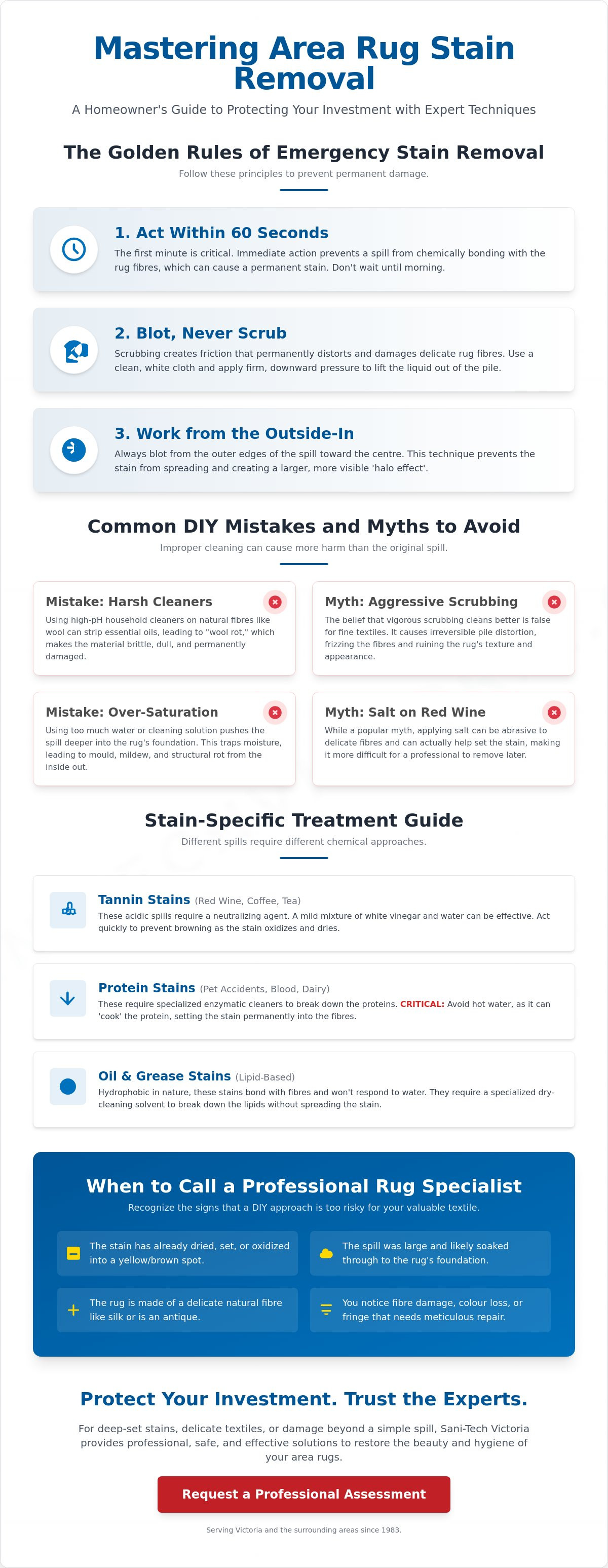
The first 60 seconds after a spill are the most critical for the life of your textile. When liquid hits the pile, it begins a process of absorption that can lead to permanent bonding if you don’t address it with clinical precision. Successful area rug stain removal depends on your ability to remain calm and follow a proven methodology. Immediate action prevents the liquid from reaching the foundation of the rug, where it becomes significantly harder to extract. If you wait until the morning, you’re no longer cleaning a spill; you’re attempting to reverse a chemical bond.
Friction is the enemy of natural fibres. You must adopt the “Blot, Never Scrub” mantra to preserve the integrity of your rug. Scrubbing creates heat and mechanical stress that permanently distorts the delicate cuticles of wool or silk. This damage, known as pile distortion, is often irreversible. Instead, use a firm, downward pressing motion to lift the liquid. Always work from the outer edges of the spill toward the centre. This “outside-in” approach prevents the “halo effect,” where a stain spreads into a larger, more visible ring as it migrates through the dry fibres.
Monitoring the physics of transfer is essential for a professional result. By using a clean, white cotton towel, you can visually track your progress as the pigment moves from the rug into the cloth. This process requires patience and a steady hand. You should continue blotting with fresh sections of the towel until no more colour transfers. For a deeper understanding how stains work, it helps to realize that many pigments are held in suspension and will settle into the fibre if they’re allowed to dry and oxidize.
The Anatomy of a Spill
Liquids don’t just sit on the surface; they travel through the rug pile via capillary action. Gravity pulls moisture down toward the backing, which is why you must avoid over-saturation during area rug stain removal. Excess water can trap moisture against the floor, leading to browning, mildew, or structural rot. Even “clear” spills, like white wine or ginger ale, contain sugars and proteins that oxidize over time. If left untreated, these invisible residues will eventually turn into unsightly yellow or brown spots that are notoriously difficult to remove once they’ve set.
Essential Tools for Your Home Spotting Kit
Every Victoria homeowner should maintain a professional-grade spotting kit to handle accidents the moment they happen. Use only dye-free, white absorbent cloths to prevent accidental dye transfer from the towel to the rug. For solid spills, a simple spoon is far superior to a brush. Its blunt edge allows you to scoop up debris without fraying the fibres or pushing the matter deeper into the pile. Finally, ensure your kit contains a pH-neutral detergent. Harsh household soaps are often too alkaline, which can strip natural oils from wool and cause the material to become brittle, dull, and prone to “wool rot.”
Stain-Specific Solutions: From Red Wine to Pet Accidents
Every spill possesses a unique chemical signature that dictates the necessary recovery method. Effective area rug stain removal isn’t a one-size-fits-all process; it’s a series of targeted interventions based on the pH of the offending substance. Tannin-based stains, such as coffee, tea, and red wine, are acidic and require different neutralizing agents than protein-based stains like blood or dairy. Victoria homeowners often make the mistake of using aggressive commercial oxidizers on natural wool. These products can cause irreversible bleaching, whereas a professional approach focuses on lifting the pigment without stripping the original dye from the fibres.
Oil and grease accidents represent a different challenge because they are hydrophobic. These substances don’t just sit on the pile; they bond with the fibres and attract atmospheric soils, creating a dark, sticky patch. To resolve these, you must use a specialized dry-cleaning solvent that breaks down the lipids without over-saturating the rug’s backing. Following the Carpet and Rug Institute tips for spot treatment ensures you’re using industry-validated methods that protect your textile’s long-term value.
Managing Liquid and Food Spills
Red wine is perhaps the most feared household spill. While many suggest covering the area with salt, this can actually set the stain or scratch delicate fibres. Instead, use a specialized spotting agent or a mixture of white vinegar and water to neutralize the tannins. For coffee and tea, mild acids are essential to prevent the browning that occurs as the spill dries. If you’re dealing with sticky substances like gum or candle wax, use an ice pack to harden the material before gently scraping it away with a spoon. This method prevents you from pulling or breaking the pile, which is a common risk with DIY attempts.
Pet Stain Protocols for Victoria Pet Owners
Pet accidents require more than just surface cleaning; they demand a molecular breakdown of uric acid. Enzyme-based cleaners are the only effective way to digest these proteins and eliminate the source of the odour. Without these enzymes, you’re merely masking the scent, which often leads to repeat accidents in the same location. On high-value textiles, urine can cause “burn” marks that permanently alter the colour of the wool. If you notice yellowing or a change in texture, it may be time to consult a specialist for oriental rug repair victoria to restore the affected area. For deep-seated issues, our professional stain and pet odour cleaning services provide the thorough extraction needed to maintain a hygienic home environment.
Material Matters: Why Your Rug Type Changes Everything
The success of area rug stain removal depends entirely on your ability to identify the fibre on your floor. Victoria homes often feature high-quality wool or silk rugs that require a completely different chemical approach than a modern synthetic alternative. Natural fibres are highly absorbent; they soak up liquids like a sponge, drawing pigments deep into the core of the strand. Synthetic fibres, such as nylon or polyester, are essentially plastic. They are less absorbent, meaning spills often sit on the surface longer, but they are also prone to permanent melting if treated with incorrect heat or friction. Understanding these physical differences is the first step in protecting your investment.
Wool is the gold standard for floor coverings, yet it is incredibly sensitive to pH levels. Most common household cleaners are highly alkaline to cut through grease. These high-pH solutions cause “wool rot” by stripping the natural lanolin and breaking down the protein bonds in the fibre. This results in a rug that feels brittle and looks dull. Silk and viscose are even more delicate. Viscose is made from wood pulp and often loses a significant portion of its structural integrity when wet. Attempting a DIY cleaning on these materials usually leads to permanent texture collapse or “yellowing” that even a professional cannot fully reverse. The backing material also plays a role in your strategy. A rug with a thick cotton foundation will retain moisture much longer than a synthetic one, increasing the risk of rot and lingering odours.
Caring for Wool and Natural Fibres
Before applying any liquid to a natural fibre rug, you must perform a “bleed test.” Dampen a clean white cloth with your cleaning solution and press it firmly against a hidden area of the rug for 60 seconds. If any colour transfers to the cloth, stop immediately. Hand-dyed Oriental rugs are particularly susceptible to dye migration. You must also preserve the natural lanolin coating. This oily substance provides a built-in stain barrier that harsh chemicals will destroy. Finally, never use high heat to dry a wool rug. Heat causes natural fibres to shrink and warp, which permanently ruins the rug’s shape and lay.
Synthetic Rugs: Nylon, Polyester, and Olefin
Synthetic rugs are generally more forgiving, but they present a unique challenge known as “wicking.” Because these fibres don’t absorb moisture, the liquid often travels down the pile and pools in the backing. As the rug dries, the stain “wicks” back up to the surface, causing the spot to reappear days later. While nylon is durable, polyester and olefin are “oleophilic,” meaning they have a natural affinity for oils. These materials can suffer from permanent fibre melting if you use high-speed friction during cleaning. If a synthetic rug shows signs of greyish wear that doesn’t respond to spotting, the fibres may be physically scratched and beyond the reach of home area rug stain removal techniques.
Common DIY Mistakes and Myths to Avoid
Many homeowners reach for kitchen staples when attempting area rug stain removal, but these well-intentioned efforts often cause more harm than good. The most persistent myth involves the combination of baking soda and vinegar. While the resulting fizzing reaction looks like it’s working, it actually creates a salty, abrasive residue that remains trapped in the pile. This grit grinds into the rug’s foundation every time you walk on it, leading to premature fibre wear and a ruined texture. You’re effectively sanding your rug from the inside out. If you own a hand-knotted Persian piece, understanding the full scope of these risks is essential — our guide on persian rug cleaning victoria myths debunked covers five of the most damaging misconceptions that homeowners encounter.
Over-saturation is another frequent error that can lead to a total loss of the textile. Using too much water doesn’t just wet the surface; it soaks the backing and the floor underneath. This trapped moisture provides the perfect environment for mould and mildew to flourish within the rug’s foundation. Additionally, “Oxy” style commercial cleaners should never be used on heirloom or natural rugs. These aggressive oxidizers are essentially bleaching agents that can strip the vibrant dyes and historical value from your rug in a single application.
The “reappearing stain” phenomenon is almost always caused by soap residue. If you don’t rinse the area thoroughly with clear water, the leftover detergent remains sticky. It acts as a magnet for atmospheric dust and oils from your feet. Within a few weeks, a dark spot forms exactly where the spill was, leading many to believe the stain has returned from the backing. In reality, you’re looking at a new layer of soil stuck to old soap that was never properly extracted.
The Science of pH Balance
Understanding the pH scale is vital for successful textile maintenance. Most natural rug fibres prefer a slightly acidic environment, typically between a pH of 5.5 and 6.5. Most common household soaps and “all-purpose” cleaners are highly alkaline, often reaching a pH of 10 or higher. This alkalinity causes the fibres to swell and become “crunchy” or stiff once dry. It can also cause dyes to become unstable and bleed into one another. A professional-grade rinse is the only way to neutralize these chemicals and leave the rug feeling soft and clean.
Managing Moisture in Victoria’s Climate
The coastal humidity of South Vancouver Island presents a specific challenge for drying rugs after a spill. Slow drying is a major risk factor for “cellulosic browning.” This occurs when moisture lingers in the cotton or jute foundation, causing brown lignin to travel up to the surface fibres as the water evaporates. To prevent this, you must accelerate the drying process using high-velocity fans or a dehumidifier. If your rug still feels damp after 12 hours, you are in the danger zone for structural damage. For a safe, deep clean that avoids these risks, trust our meticulous area rug cleaning experts to restore your textiles properly.
When to Call a Professional Rug Specialist in Victoria
Even the most diligent homeowner will eventually encounter a spill that defies conventional home-made solutions. Identifying “un-cleanable” stains is a specialized skill developed over decades of restoration work. If a spill has caused the rug dyes to migrate or if the pigment has undergone a chemical change due to oxidation, DIY area rug stain removal is no longer an option. Attempting to treat these complex issues at home often results in permanent colour loss. Professional technicians use advanced colour restoration techniques to meticulously re-insert pigment into affected fibres, a process that requires a clinical level of precision.
Delicate rug borders and fringes are particularly vulnerable to amateur cleaning. Many homeowners inadvertently ruin these intricate areas by using high-pressure vacuuming or aggressive scrubbing. If your rug shows signs of fraying or if the binding is loosening, it’s essential to seek oriental rug repair victoria from a specialist who understands how Victoria’s coastal climate accelerates structural fibre decay. Professional carpet steam cleaning victoria provides a level of deep-set odour extraction that household machines simply cannot replicate. We utilize specialized tools that flush out contaminants from the rug foundation without compromising the structural integrity of the textile.
The Sani-Tech Victoria Advantage: Specialized Area Rug Care
Victoria’s coastal climate presents unique challenges for drying fine textiles. Sani-Tech Victoria operates a meticulously controlled drying environment that ensures your rugs are processed in a humidity-stable facility. This prevents the “wicking” and browning issues common in South Vancouver Island homes. Our team adheres to the highest persian rug cleaning victoria bc standards, utilizing pH-balanced surfactants that protect natural wool and silk. For your convenience, we provide professional pickup and delivery services across the Greater Victoria area, including Sidney, Sooke, and Mill Bay.
Protecting Your Investment Post-Stain
Once your rug is restored, applying a professional-grade fabric protector is the most effective way to prevent future damage. These silicone or teflon-based coatings create an invisible barrier that prevents liquids from immediately penetrating the fibre core. This buys you the critical time needed for effective area rug stain removal during the next accident. Regular maintenance doesn’t just preserve the aesthetic of your rug; it creates a healthier living environment by removing deeply embedded allergens. For our commercial clients, integrating these standards with our office disinfecting services victoria bc ensures a comprehensive approach to property hygiene and longevity.
Protecting Your Household Investment for the Long Term
Maintaining the pristine condition of your fine textiles requires more than just luck; it demands a precise understanding of fibre chemistry and swift, methodical action. By adhering to the “blot, never scrub” rule and respecting the pH sensitivity of natural wool, you can effectively manage minor spills before they become permanent eyesores. However, professional area rug stain removal remains the only guaranteed way to ensure deep-set contaminants and stubborn odours are fully extracted without risking structural rot or colour bleeding.
Serving South-Vancouver Island since 1983, we’ve built our reputation on the clinical precision of our restoration work. As a locally owned and operated business, we are specialists in Oriental rug repair and meticulous fringe restoration. We understand the unique challenges Victoria’s humidity poses to your home’s hygiene. When a spill exceeds your comfort level, don’t risk your heirloom’s future with guesswork.
Get a Professional Area Rug Cleaning Quote in Victoria
You can feel confident knowing your most valued possessions are in the hands of meticulous local experts dedicated to excellence.
Frequently Asked Questions
Can I use dish soap to remove a stain from my area rug?
You should avoid using standard dish soap for area rug stain removal because it is formulated with high alkalinity to cut through grease. These soaps often have a pH level exceeding 9.0, which can strip natural oils from wool and cause colour bleeding. Additionally, dish soap is notoriously difficult to rinse out. It leaves a sticky residue that attracts soil and causes the area to darken quickly after cleaning.
How do I get old, set-in stains out of a wool rug?
Removing old, set-in stains from wool requires professional rehydration and specialized surfactants that safely break down oxidized pigments. Once a stain has dried and bonded with the protein fibres, standard household methods are rarely effective and can cause permanent texture damage. In these cases, a meticulous extraction process in a controlled environment is necessary to lift the blemish without compromising the integrity of the delicate wool cuticles.
Is it safe to use a steam cleaner on an Oriental rug?
It is not safe to use a residential steam cleaner on a hand-knotted Oriental rug. The high heat and uncontrolled moisture levels can lead to irreversible shrinkage, ripples in the foundation, and severe dye migration. Professional area rug stain removal for these textiles involves a cold-water immersion or low-moisture technique that respects the rug’s construction and ensures the dyes remain stable throughout the cleaning cycle.
What is the best way to remove pet urine smell from a rug?
The most effective way to eliminate pet urine odours is to use a high-quality enzyme cleaner that chemically breaks down uric acid crystals. Standard deodorizers only mask the scent temporarily, but enzymes actually digest the organic proteins causing the smell. For deep-seated accidents in Victoria homes, a professional sub-surface extraction is often required to ensure the urine is removed from the rug’s backing and foundation.
Why does my rug stain keep coming back after I clean it?
Stains often “reappear” due to a phenomenon called wicking or because of leftover soap residue. Wicking occurs when moisture travels deep into the backing and then carries trapped soil back to the surface as it evaporates. Alternatively, if detergent wasn’t fully rinsed, it remains sticky and attracts new dirt to the same spot. Ensuring a thorough clear-water rinse and rapid drying with fans can help prevent this frustrating cycle.
Will vinegar damage the colours in my Persian rug?
Diluted white vinegar is generally safe for Persian rugs because its slight acidity helps stabilize dyes and neutralize alkaline residues. However, you must always perform a colourfastness test on a hidden corner first. While vinegar is a useful tool for neutralizing tannins, using it at full strength or on certain silk-blend rugs can still lead to texture changes or subtle colour shifts if not handled with expert care. For a deeper understanding of safe and unsafe cleaning approaches, our resource on persian rug cleaning victoria common myths provides essential guidance for protecting your investment.
How long does it take for an area rug to dry after spot cleaning?
A spot-cleaned area should ideally dry within 4 to 6 hours, though Victoria’s coastal humidity can extend this timeframe. If the rug remains damp for more than 12 hours, you risk the development of “cellulosic browning” or mildew within the foundation. To accelerate the process, use a high-velocity fan or a dehumidifier and ensure the rug is elevated slightly to allow for airflow beneath the backing.
Should I call a professional for a small red wine spill?
You should consider calling a professional if the spill occurs on a high-value natural fibre rug, such as wool or silk. While a small spill on a synthetic rug might be manageable with immediate blotting, red wine contains complex tannins that bond quickly with natural proteins. A professional technician can utilize specialized neutralizing agents that safely lift the pigment without the risk of permanent discolouration or fibre distortion.