
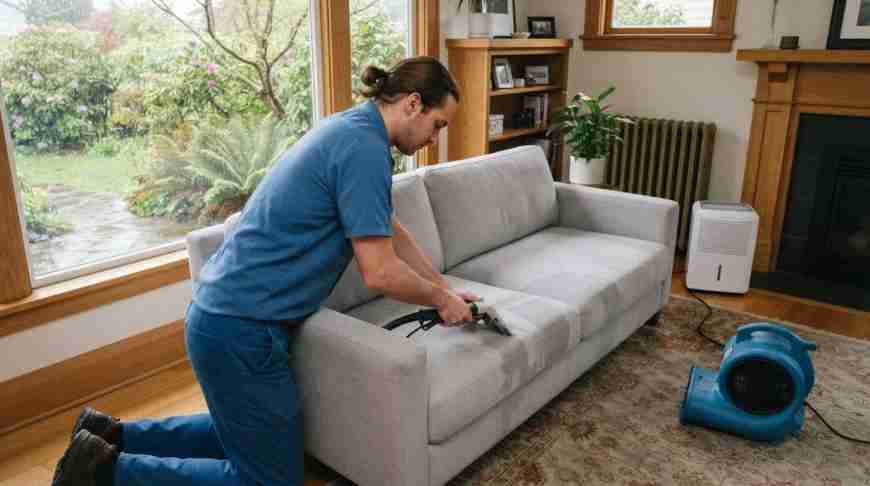
A clean sofa is most convenient when you know when it will be ready to use again. Upholstery drying time depends on the fabric, how much moisture is used, room airflow and indoor humidity. During a cool or damp spring in Victoria, Sidney, Sooke and Mill Bay, ventilation and drying plans matter.
A seasonal refresh should lift soil and stale odours without keeping furniture out of use longer than necessary. Spring cleaning carpet and upholstery can include thorough cleaning, careful stain pre-treatment and deodorizing. The right method depends on the fibre, rather than a one-size-fits-all approach, helping preserve the material’s look and feel.
This guide explains what affects drying, how to prepare carpets and treat spots carefully, and when professional carpet and upholstery cleaning can help refresh high-use areas. You’ll learn how the cleaning method and conditions at home affect drying, so you can plan a practical spring clean with confidence.
Key Takeaways
- Fibre-aware cleaning methods help refresh carpets and furniture while caring for their materials.
- Dry vacuuming and careful stain pre-treatment can prepare carpet for a deeper clean.
- Pet urine and set-in odours may need a targeted treatment, rather than deodorizing alone.
- Consider specialist care for mattresses, tile and grout, and upholstered furniture as part of a seasonal refresh.
Spring Carpet and Upholstery Cleaning Services
A spring refresh pairs carpet and upholstery cleaning with methods suited to each fibre, soil level and moisture requirement. Careful treatment lifts embedded debris while helping preserve colour and texture.
Carpet and Upholstery Service Options
Carpet cleaning may use hot water extraction, while upholstery cleaning needs to suit the fabric and its care instructions. An assessment considers fibre, colour fastness and soil before a method is selected. For homes with children or pets, use products labelled for the surface and follow the directions. “Natural” alone doesn’t mean a product is suitable.
DIY Cleaning and Professional Steam Cleaning
DIY machines can help with routine upkeep, but professional steam cleaning is designed to clean carpet thoroughly and extract moisture. Incorrect heat, cleaning agents or moisture can damage some fabrics, and warranty terms depend on the manufacturer’s instructions. A trained assessment matches the method to the fibre and soil, helping limit dye migration and fabric distortion.
Professional spring carpet cleaning can help maintain indoor air quality and reduce allergens, particularly in homes with children or pets. Thorough carpet cleaning removes stubborn dirt and extends carpet life, making it a useful part of seasonal care. Professional carpet cleaning is recommended at least once a year, with additional treatments as needed in high-use areas. The level of attention can reflect how heavily each area is used.
Rugs and runners can trap dirt and allergens just like wall-to-wall carpet. Vacuum them regularly and consider professional cleaning to remove embedded soil. Wool rugs can be damaged by harsh chemicals or unsuitable cleaning techniques, so their material should guide the approach. Including rugs and runners in spring cleaning reaches beyond carpeted floors.
Carpet Preparation, Furniture Moving and Drying Times
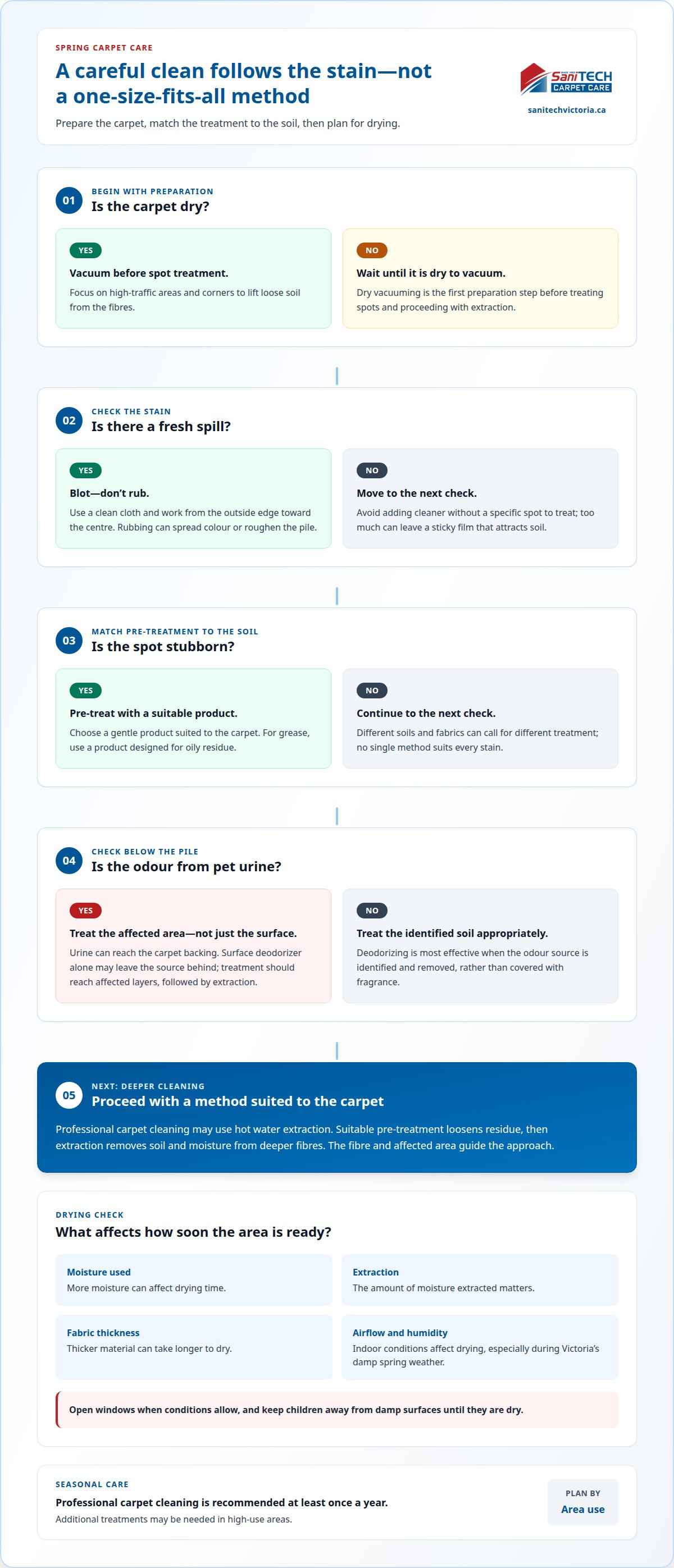
For a spring deep clean, vacuum carpet while dry before treating spots and proceeding with extraction. In Victoria’s damp spring weather, airflow and indoor humidity also affect drying.
- Vacuum high-traffic areas and corners to remove loose soil from carpet fibres.
- Blot fresh stains from the outside toward the centre. Don’t rub, which can spread soil or damage fibres.
- Pre-treat stubborn spots, including grease, with a gentle product suited to the carpet.
Pet urine can reach carpet backing, so odour treatment needs to address the affected area, not just mask smells. A stain-treatment guarantee should identify covered stains and exclusions; no single method suits grease, urine and every fabric. Furniture may be moved when practical, while area rugs, mattresses and couches need fibre-specific care. Drying depends on moisture used, extraction, fabric thickness, airflow and humidity. Open windows when conditions allow, and keep children away from damp surfaces until they’re dry.
Carpet Deodorizing, Stain and Pet Odour Removal
Carpet odours can linger when residue remains below the visible pile. Deodorizing works best when the source is identified and removed, rather than covered with fragrance. Suitable pre-treatment loosens residue, then extraction removes soil and moisture from deeper fibres.
For a fresh spill, blot with a clean cloth from the outside edge toward the centre. Avoid rubbing, which can spread colour or roughen the pile. Set-in stains need spot treatment suited to the substance. Grease requires a product designed for oily residue. Too much cleaner can leave a sticky film that attracts soil.
Pet urine may pass through carpet pile into the backing, so surface deodorizer alone can leave the source behind. Treatment should reach the affected layers, followed by extraction to remove loosened residue. Fibre and backing guide the method. Thorough drying limits residual moisture and helps refresh the carpet without masking odour with perfume.
Organic Mattress Cleaning
Mattresses collect body oils, dust and occasional spills, so cleaning should address the surface without saturating the interior. Organic mattress cleaning uses carefully selected solutions and fibre-aware handling. Foam, latex and spring mattresses respond differently to moisture; assessment helps match treatment to the cover and construction.
A careful process starts by inspecting seams, cover fabric and care instructions. Dry vacuuming removes loose surface soil before targeted treatment addresses marks, such as a small beverage spill. Controlled moisture and thorough extraction help limit dampness inside the mattress. Non-toxic, biodegradable cleaning solutions suit household spaces.
After cleaning, drying depends on the moisture used, room airflow and indoor humidity. In Victoria’s damp spring weather, allow airflow and keep bedding off until the mattress is dry. This helps avoid trapping moisture against the fabric. Material-specific cleaning can refresh the sleep surface while preserving its structure.
Grout and Tile Cleaning for Homes and Businesses
Tile and grout collect soil differently. Glazed tile has a sealed surface, while grout can absorb spills and cleaning residue. Assessment considers tile material, grout condition and traffic patterns before choosing a method. This helps protect the finish while addressing soil in joints and textured areas.
Professional grout and tile cleaning loosens embedded soil with a surface-appropriate solution and controlled agitation. Extraction or rinsing removes loosened residue from textured tile and grout lines. In a commercial hallway or restaurant service area, tracked-in soil and frequent spills call for attention to traffic patterns and access, not just visible marks.
Once grout is clean and dry, sealing applies a protective barrier to reduce absorption and staining. It doesn’t make grout stain-proof or replace prompt spill removal. The decision depends on grout porosity, tile material and existing finish. A suitable process refreshes residential floors and commercial tile without abrasive scrubbing that can wear surfaces.
Restaurant Carpet Cleaning
Restaurant carpet collects tracked-in grit, food crumbs, drink spills and grease. Soil builds quickly around entrances, dining aisles and chair paths, so an inspection identifies these areas before treatment. Fibre type, pile condition and stain history guide the cleaning agents and agitation, helping protect the carpet while targeting embedded residue.
A professional cleaning sequence starts with removing dry soil, followed by spot pre-treatment for marks such as coffee or cooking oil. The method must suit the carpet and type of soil. Hot water extraction flushes loosened residue from carpet, then vacuum extraction removes moisture and slurry. Controlled application matters: excess moisture can extend drying, especially in Victoria’s damp conditions.
Plan the work around room access and the time needed for carpet to dry before diners return. Dining furniture and access routes affect which areas can be cleaned together. Regular attention to entrances and food-spill zones helps maintain appearance between deeper cleans. A usage-based schedule reflects actual traffic instead of treating every area equally.
Professional Office Disinfecting
Office disinfecting focuses on frequently touched surfaces, such as desk edges, door handles, meeting-room tables and shared counters. Cleaning removes visible soil first; disinfecting then treats surfaces with an appropriate solution. This sequence addresses hygiene needs without confusing routine carpet cleaning with surface disinfection.
In occupied workplaces, the process should account for staff movement, shared equipment and the product’s required contact time. Sani-Tech Victoria uses non-toxic, biodegradable cleaning solutions for a considered approach in workplaces. Clear communication about treated areas and drying helps teams avoid disruption and touching surfaces before the process is complete.
Surface material matters: a product suitable for a hard desk may not suit upholstery or electronics. Professional disinfecting services can cover up to 18,000 square feet per hour, depending on the space and work required. A site-specific plan helps prioritize reception areas, break rooms and other shared spaces while preserving workplace materials.
Upholstery Cleaning for Couches and Other Furniture
Professional upholstery cleaning starts by identifying the fabric, construction and care instructions. Cotton blends, velvet and synthetic microfibre can react differently to moisture and agitation. Cushion covers, seams, piping and colour fastness also guide the method. This assessment helps limit dye migration and fabric distortion while directing attention to high-contact areas such as armrests and headrests.
For a coffee mark, treatment starts by identifying the stain and selecting a compatible solution. Technicians apply controlled pre-treatment, gently agitate when suitable, then extract loosened soil. Grease and pet-related marks need different treatment from water-based spills; aggressive scrubbing can push residue deeper or damage the weave.
Drying depends on fabric thickness, moisture used, extraction and airflow. In Victoria’s damp spring weather, ventilation can affect how quickly a couch is ready to use. Separate cushions and allow air to circulate around the furniture. Professional cleaning suits embedded soil, recurring marks or delicate fabric that needs a fibre-aware method.
Sani-Tech Victoria Carpet and Upholstery Cleaning
Sani-Tech Victoria provides carpet steam cleaning and upholstery cleaning in Victoria, Sidney, Sooke, Mill Bay and surrounding areas on Southern Vancouver Island. Spring cleaning carpet and upholstery can refresh rooms where embedded soil, everyday use or visible marks have dulled the materials. Fibre-aware methods match treatment to carpet and furniture.
Hot water extraction removes loosened soil from carpet, while upholstery cleaning is tailored to the fabric, construction and stain type. Sani-Tech Victoria also cleans area rugs that need careful attention. Planning spring cleaning for carpets and upholstery together helps coordinate care for rooms with both floor coverings and upholstered furniture.
Contact Sani-Tech Victoria to discuss the cleaning needs of your home or business and plan a seasonal refresh.
Plan a Fresh Start for Your Home
A thoughtful spring refresh starts by choosing which spaces matter most to your household. Consider how each room is used, which furnishings you want to preserve, and what would make your home feel ready for the season. Planning spring cleaning for carpets and upholstery around these priorities turns a broad seasonal task into a clear, manageable plan.
Think beyond visible marks. A room may need attention because it feels less comfortable or welcoming, even when the cause isn’t obvious. Setting priorities first helps you describe what you’d like addressed and decide which areas to focus on now.
When you’re ready to plan the next step, get in touch with Sani-Tech Victoria to discuss your home’s needs. A considered refresh can help make your spaces feel ready for the months ahead.
Frequently Asked Questions
How to remove common carpet stains like coffee, wine, and mud
Blot the stain gently from the outside toward the centre, and don’t rub. For spot cleaning, use a water-and-vinegar solution or a gentle detergent suited to the carpet.
How often should carpets and upholstery be deep cleaned
Deep-clean carpets at least once a year, with extra cleaning for high-use areas. The Carpet and Rug Institute recommends hot water extraction every 12 to 18 months for average households, or every 6 to 9 months for households with pets, young children or allergies.