
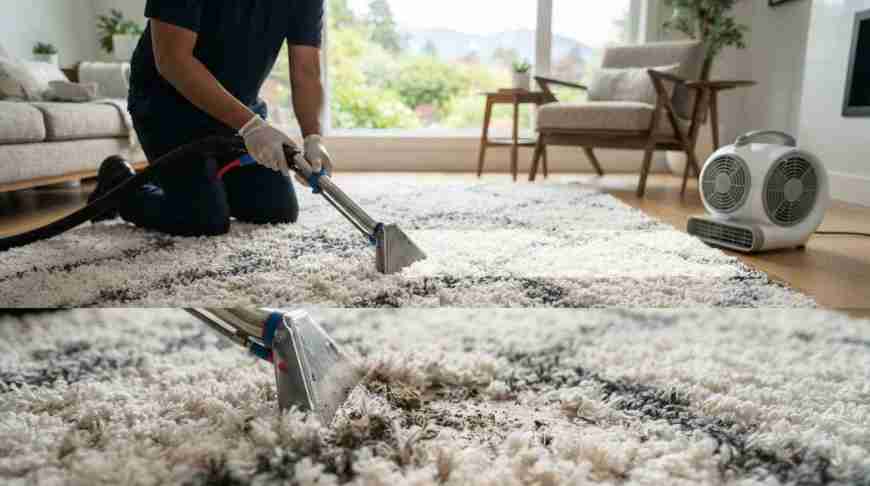
How do you remove ground-in grit from a shag rug without matting its pile or leaving the backing damp? It’s a fair concern: long, loose fibres can hold soil deep below the surface, and the right cleaning method depends on the rug’s materials and construction. Shag rug deep cleaning calls for more than a vigorous vacuum or a generous amount of water.
This guide explains what makes shag rugs challenging to clean and how fibre, construction, colour fastness, and condition affect a careful approach. You’ll learn why controlled moisture matters, what to watch for with odours, dye migration, and fabric distortion, and when professional rug care may help protect your rug’s appearance. Southern Vancouver Island’s damp conditions also make drying an important part of the process. Sani-Tech provides area rug cleaning in Victoria, Sidney, Saanich, Mill Bay, Cobble Hill, Sooke, Shawnigan Lake, and surrounding communities. Locally owned and operated since 1983, the company’s certified technicians are trained in fibre types and rug construction. They use non-toxic, biodegradable solutions that are pet- and child-friendly.
Key Takeaways
- Shag rug deep cleaning should address soil below the visible pile, with the cleaning approach guided by the rug’s fibre and construction.
- Use the care label and known fibre composition to inform cleaning decisions, especially when colour fastness or delicate construction is a concern.
- Before cleaning, inspect the rug and clear the work area. After cleaning, allow for airflow and consider indoor humidity in Southern Vancouver Island homes.
- Routine upkeep may be suitable for everyday care, while visible stains, odours, or uncertain fibres call for a more cautious assessment.
- Sani-Tech’s certified technicians are trained in fibre types and rug construction, providing area rug cleaning in Victoria and communities across Southern Vancouver Island.
What makes shag rug deep cleaning different from routine care?
Shag rug deep cleaning has to address more than what’s visible at the surface. Long, loose fibres create spaces where dust, crumbs, and grit can settle out of sight. Routine vacuuming and spot care are mainly for ongoing upkeep, so a rug can look tidy on top while still holding debris deeper in its pile.
Deep cleaning reaches soil within and beneath the visible pile; routine care maintains the surface between deeper cleans. Embedded grit can rub against fibres as people walk on the rug, contributing to wear over time. The aim isn’t to treat every shag rug the same way. Instead, choose care to suit its materials, construction, and condition.
Shag describes a pile style, not a single fibre or construction. The Shag Carpet overview describes the style’s characteristics and materials, helping explain why two rugs with similarly long pile may need different care. Start with the care label, if available. Visible wear, previous repairs, or a loose backing can also affect which cleaning approach is appropriate.
How shag pile changes everyday soil removal
In long pile, debris can settle between strands rather than stay exposed on top. A low-pile rug has less depth for particles to hide in, so a surface check may give a clearer impression of its condition. With shag, gently part the pile in a few places to look for settled dirt. A single inspection, however, won’t show the rug’s full condition.
Flattening alone doesn’t confirm that deep cleaning is needed. Pile can look compressed where people walk or furniture rests, and the direction of the fibres can change how the surface appears. Consider the rug’s overall condition and maintenance history as well as its appearance.
Why fibre and construction matter before cleaning
Shag rugs may use natural fibres such as wool or synthetic fibres such as polyester, polypropylene, or nylon. These are broad categories, not interchangeable materials. The fibre, backing, pile construction, and care label all help determine suitable cleaning methods and moisture levels. If the label is missing or the fibre is uncertain, don’t assume a method that worked on another rug will be appropriate.
Colour fastness describes a textile’s resistance to dye loss or movement during cleaning. If the colour isn’t stable, moisture or cleaning agents may cause dye migration, where colour bleeds from one area into another. An unsuitable process may also contribute to fabric distortion, an unwanted change in the fibres’ shape or texture. Just as fabric specialists like The Laundry Hub assess garment composition to prevent shrinkage or dye bleed during professional cleaning, evaluating these risks beforehand helps protect the rug’s appearance.
How fibre, pile, and moisture affect shag rug deep cleaning
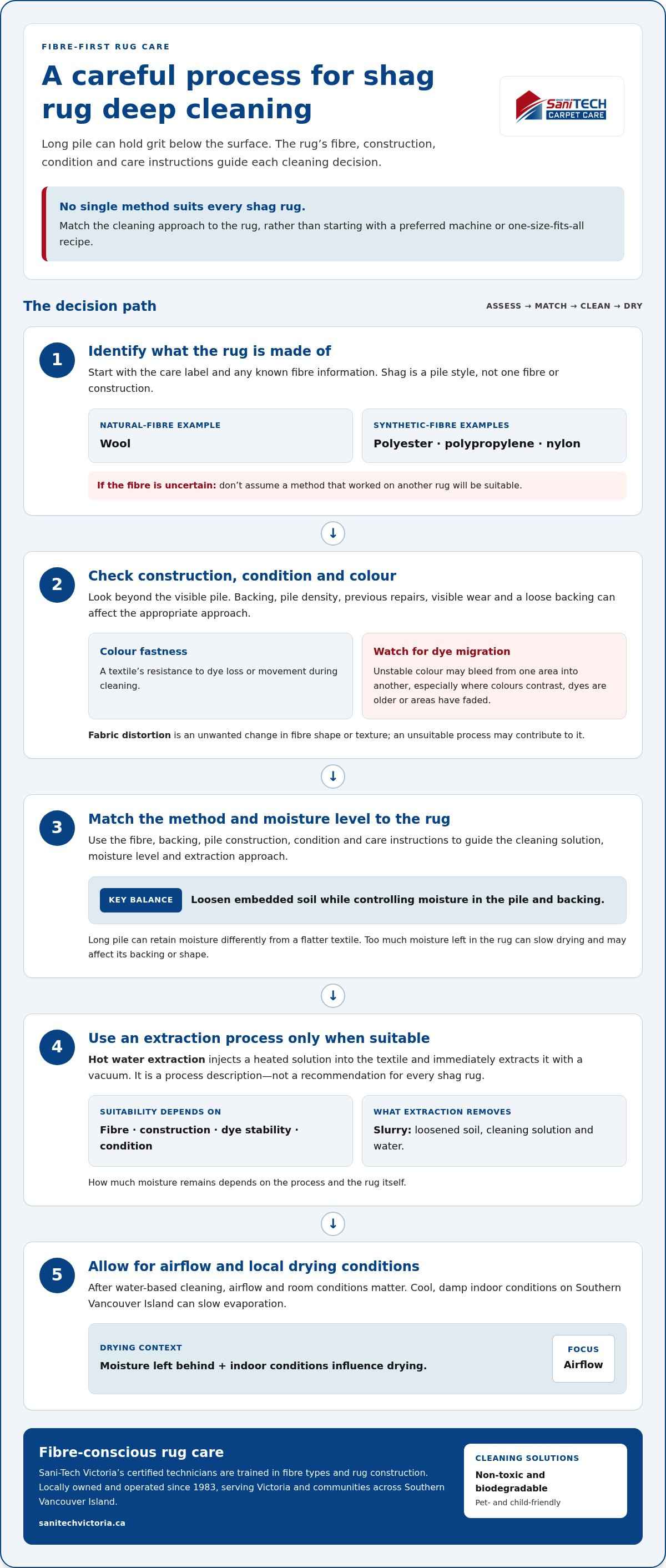
A careful cleaning plan starts with the rug, not a preferred machine or one-size-fits-all recipe. Check the care label and use known fibre information to guide the choice of cleaning solution, moisture level, and extraction approach. The backing, pile density, condition, and any previous repairs also matter. A method that suits one rug could be unsuitable for another.
No single method suits every shag rug; the right approach depends on its fibre, construction, condition, and care instructions. Long pile can retain moisture differently from a flatter textile. The goal is to loosen embedded soil while controlling how much moisture enters the pile and backing, then extract the resulting slurry as effectively as the chosen process allows.
Natural and synthetic fibres may need different care
Wool and synthetic fibres are useful examples, but neither category represents a single uniform material. A synthetic rug’s yarn, backing, and construction still affect how it should be cleaned. Wool rugs also vary in weave, finish, and condition. Follow the care label where available. If the fibre content is uncertain, avoid applying a cleaning solution broadly based on assumptions.
Colour fastness is a textile’s resistance to dye loss or migration during cleaning. Moisture or cleaning agents may pose a risk if dyes are unstable: dye migration means colour moves or bleeds from one part of the textile into another. A trained assessment can help identify concerns before cleaning begins. This is particularly relevant for rugs with contrasting colours, older dyes, or areas that have already faded.
What controlled moisture and extraction mean
Moisture management means matching the process to the materials, not simply using as little or as much water as possible. Excess moisture left in a rug can slow drying and may affect its backing or shape. On Southern Vancouver Island, cool, damp indoor conditions can also slow evaporation, so airflow and room conditions matter after water-based cleaning.
Hot water extraction injects a heated solution into the textile and immediately extracts it with a vacuum. This describes a cleaning process, not a recommendation for every shag rug. Its suitability depends on fibre, construction, dye stability, and condition. Extraction removes the slurry, the liquid mixture of loosened soil, cleaning solution, and water. The amount of moisture left behind depends on the process and the rug itself.
The IICRC S100 Standard for Textile Floor Cleaning outlines professional cleaning procedures, chemistry, and equipment for textile floor coverings. For fibre-conscious care close to home, Sani-Tech area rug cleaning serves rug owners in Victoria and surrounding communities.
DIY or professional shag rug deep cleaning: how to weigh the risks
Routine care and deep cleaning serve different purposes. At-home maintenance can help manage everyday debris. A deeper clean may be worth considering when soil, stains, or odours persist, or when the rug’s condition makes the right method uncertain. The care instructions matter too. If you’re unsure how the fibre or backing will respond, pause rather than guess.
Use this comparison as a starting point, not a diagnosis. Let the rug’s care label, construction, and current condition guide the decision.
| Situation | Care to consider |
|---|---|
| Loose surface debris and regular upkeep | Follow the care label and use suitable routine debris removal. |
| Embedded soil, lingering odour, or persistent marks | Consider an assessment before attempting more intensive cleaning. |
| Uncertain fibre, delicate backing, repairs, or fringe damage | Seek experienced handling to help inform a fibre-conscious approach. |
| Colour transfer or a change in texture during home care | Stop and avoid applying more solution or agitation. |
When routine at-home care may be enough
For everyday upkeep, follow the rug’s care instructions and focus on removing loose debris without pulling or stressing the pile. Choose care methods that suit the label and the rug’s condition. Avoid unverified household mixtures or forceful brushing, which may affect fibres, colour, or texture.
Pay attention to changes as you work. If colour transfers to a cloth or the pile begins to feel or look different, stop. That response is a reason to avoid further treatment, not to scrub harder. Visible flattening by itself doesn’t establish that the rug needs a deep clean. Consider its overall condition and maintenance history.
When professional rug cleaning is worth considering
Professional shag rug deep cleaning may be suitable when ordinary upkeep isn’t addressing embedded soil or persistent odours, or when the rug has delicate construction or uncertain fibres. At-home care isn’t always wrong. The risk is applying moisture or agitation without knowing how a specific rug will respond, particularly if it has existing repairs, unstable colour, or a weakened backing.
Sani-Tech’s certified technicians are trained in fibre types and construction, knowledge that informs method selection for area rug cleaning. Cleaning can address some soils and odours, but results depend on the rug and the condition being treated. If you’ve noticed damage or loose fringe, cleaning may not be the only consideration. Sani-Tech also provides Oriental rug repair in Victoria, BC, with guidance on repair concerns separate from cleaning.
How to prepare and dry a shag rug after deep cleaning
Preparation helps protect both the rug and the floor beneath it. Before shag rug deep cleaning, note existing stains, colour changes, fraying, loose fringe, or damaged areas. This gives you a clear reference afterward and helps distinguish existing wear from changes that may occur during cleaning. Follow the care label, and don’t pull at loose threads or brush the pile forcefully.
Use this short sequence to get the space ready:
- Check the care label. Note any fibre-specific instructions or restrictions, and keep them in view while planning care.
- Inspect the rug. Look over the pile, edges, backing, stains, and any areas that already feel weak or appear misshapen.
- Clear the work area. Move nearby furniture and household items, then protect the surrounding floor from moisture with a suitable barrier.
Keep the rug’s construction in mind as you prepare. Pulling or sharply folding a shag rug can stress the pile or backing, particularly if it’s already worn. If you notice damage, avoid extra handling or moisture until you’ve decided how to proceed.
Support careful drying in local homes
Drying depends on more than the rug alone. Fibre, pile depth, backing, the amount of moisture left after cleaning, airflow, and room conditions all affect how quickly it dries. Southern Vancouver Island’s coastal setting can bring damp conditions, so opening a window won’t always provide suitable drying conditions. Follow the rug’s care instructions and aim for steady airflow in a well-ventilated space.
A fan may help circulate air around the rug. A dehumidifier can help remove moisture from indoor air. Keep the space clear so air can move around the rug, and avoid placing furniture or other items on it while it dries. Don’t rely on a fixed number of hours: pile and backing can retain moisture differently, and room conditions vary.
Keep a shag rug out of use until it’s dry, including through the pile and backing. The surface may feel dry before moisture deeper in the rug has dispersed. Check more than one area, especially thicker sections and places with limited airflow. If the rug still feels damp, give it more time and maintain suitable airflow rather than covering it or returning it to a busy area.
Careful preparation and drying help protect the rug’s condition after cleaning. For local area rug care and a free estimate, request a rug-cleaning estimate from Sani-Tech.
Professional shag rug deep cleaning in Victoria and Southern Vancouver Island
Some shag rugs need more than routine upkeep, particularly when embedded soil, stains, or odours remain, or when the rug’s materials make home cleaning uncertain. Sani-Tech provides area rug cleaning for local owners, with an approach informed by the rug’s fibre and construction. Its cleaning solutions are non-toxic, biodegradable, and pet- and child-friendly, supporting a considered choice for your household and your rug.
Professional shag rug deep cleaning should put the rug’s characteristics at the centre of the process. Sani-Tech’s certified technicians are trained in all fibre types and construction, so they can take the rug’s materials and condition into account when assessing its care. This is especially useful when a label is missing, the pile is delicate, or a stain or odour has been difficult to address through routine maintenance. No cleaning process can promise removal of every mark or odour, but careful assessment helps set realistic expectations.
Local rug care backed by established experience
Sani-Tech is locally owned and operated, serving the Victoria area since 1983. The company has over 200 5-star reviews across Vancouver Island. Service reaches rug owners in Victoria, Sidney, Saanich, Mill Bay, Cobble Hill, Sooke, Shawnigan Lake, and surrounding communities, bringing local experience to homes across Southern Vancouver Island.
Local service matters when a rug needs care tailored to its materials, rather than an approach based only on its shag appearance. The team’s training in fibre types and construction supports thoughtful method selection. Its non-toxic, biodegradable solutions are pet- and child-friendly. These details can help households make an informed decision about care while protecting the appearance and condition of a valued rug.
What to expect when requesting a rug-cleaning estimate
To make an estimate more useful, describe the rug as clearly as you can. Share its known material or what the care label says, its approximate size if you know it, and any concerns about the pile, backing, fringe, stains, or odours. Mention visible wear or previous cleaning as well. These details help explain the rug’s condition and identify the questions that matter before care begins.
Sani-Tech offers a free estimate by phone or on-site. It’s a straightforward way to discuss the rug and understand the next step without assuming every shag rug needs the same treatment. If your question also involves wall-to-wall carpet, the guide to professional carpet steam cleaning in Victoria covers that separate surface and service.
For a rug that needs more than routine upkeep, request a free estimate and describe the fibre, condition, and concerns you’ve noticed. A careful conversation is a practical first step towards suitable local rug care.
Give your rug a considered next step
A shag rug contributes comfort and character to a room, and good care starts with an informed decision. If you’re weighing shag rug deep cleaning, note what concerns you most, such as a change in texture, a mark that remains after routine care, or uncertainty about the rug’s materials. This gives a cleaning conversation a useful starting point without committing to a method that may not suit the textile.
Care should protect the rug as well as refresh its appearance. A thoughtful assessment can help you understand the appropriate approach for its condition and what to expect, so you can make a confident choice for your home.
Ready to discuss your rug? Request a free shag rug cleaning estimate and take the next step towards fibre-conscious care. With the right guidance, you can feel more confident about preserving a rug you enjoy underfoot.
Frequently Asked Questions
Can you vacuum a shag rug without damaging the pile?
Yes, gentle vacuuming can remove loose debris without damaging the pile if the rug’s care instructions allow it. Use suction without a rotating brush where possible, and move the vacuum head slowly rather than forcing it through dense fibres. Avoid running the vacuum over fringe. If strands catch, pull, or become tangled, stop and use a gentler method suited to the rug.
How often should a shag rug be deep cleaned?
There’s no single interval that suits every shag rug. Consider foot traffic, pets, spills, and how quickly the rug appears soiled. A rug in a seldom-used room may need less frequent deep cleaning than one near an entryway. Follow its care label and keep up with routine maintenance. If soil or odours persist, an assessment can help determine whether a deeper clean is appropriate.
What should I do if a shag rug’s colours bleed during cleaning?
Stop cleaning as soon as you notice colour transferring. Don’t add more solution or rub the area, since that can spread the dye or disturb the fibres. If the area is wet, gently blot with a clean, white cloth without scrubbing. Keep the rug undisturbed and avoid treating it with another product until you’ve received fibre-conscious advice about the colour transfer.
How can I tell whether my shag rug is fully dry?
A clean, dry white cloth can help reveal residual moisture: press it gently into a dense area of pile and against the backing, then check for dampness or moisture marks. Test more than one spot, since thick sections may dry at different rates. If the cloth picks up moisture, don’t put the rug back into use. Avoid placing it on a moisture-sensitive floor until dry.
Are non-toxic rug-cleaning solutions safe for children and pets?
Sani-Tech’s rug-cleaning solutions are non-toxic, biodegradable, and pet- and child-friendly. Keep children and pets clear of the work area while cleaning is underway, and follow any instructions provided for the rug and its care. Store cleaning products out of reach, and wait until the rug is fully dry before allowing household members to use it again. These steps support careful cleaning in a family home.
Can professional cleaning remove every stain or pet odour from a shag rug?
No, professional cleaning can’t promise to remove every stain or pet odour. Results depend on factors such as the substance, how long it has been present, and whether it has affected the backing. Tell the technician what caused the mark or odour, when you first noticed it, and what treatments have already been tried. This context helps set realistic expectations before cleaning begins.
Does Sani-Tech serve shag rug owners in Sidney, Saanich, and Sooke?
Yes, Sani-Tech serves shag rug owners in Sidney, Saanich, and Sooke, as well as Victoria, Mill Bay, Cobble Hill, Shawnigan Lake, and surrounding communities. If you live in one of these areas, you can request a free estimate by phone or on-site. Sharing the rug’s known material and main concern can make the estimate conversation more specific to your needs.