
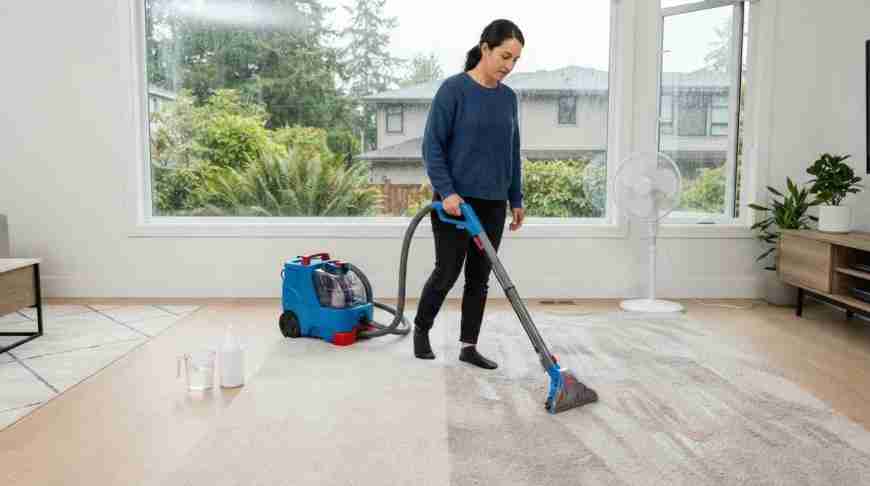
What if a carpet cleaner leaves your floors wetter and stickier than before? The problems with rental carpet cleaners often come down to how much water and solution the machine applies, how effectively it extracts them, and whether the directions are clear. In Victoria, Sidney, Sooke and other communities across South Vancouver Island, humid or rainy weather can also make indoor drying more challenging.
A rental machine may freshen a carpet, but uneven passes, leftover cleaning solution and slow drying can lead to disappointing results. It can also be difficult to judge how much detergent to add or whether a delicate fibre or dye can tolerate the process.
This guide covers common machine, technique and drying issues, with practical steps for using a rental cleaner more carefully when it suits the carpet. You’ll also learn when professional carpet steam cleaning may be a better fit for persistent odours, patchy results or carpets that need specialist fibre care. Sani-Tech Victoria is locally owned and operated, with carpet cleaning experience serving South Vancouver Island.
Key Takeaways
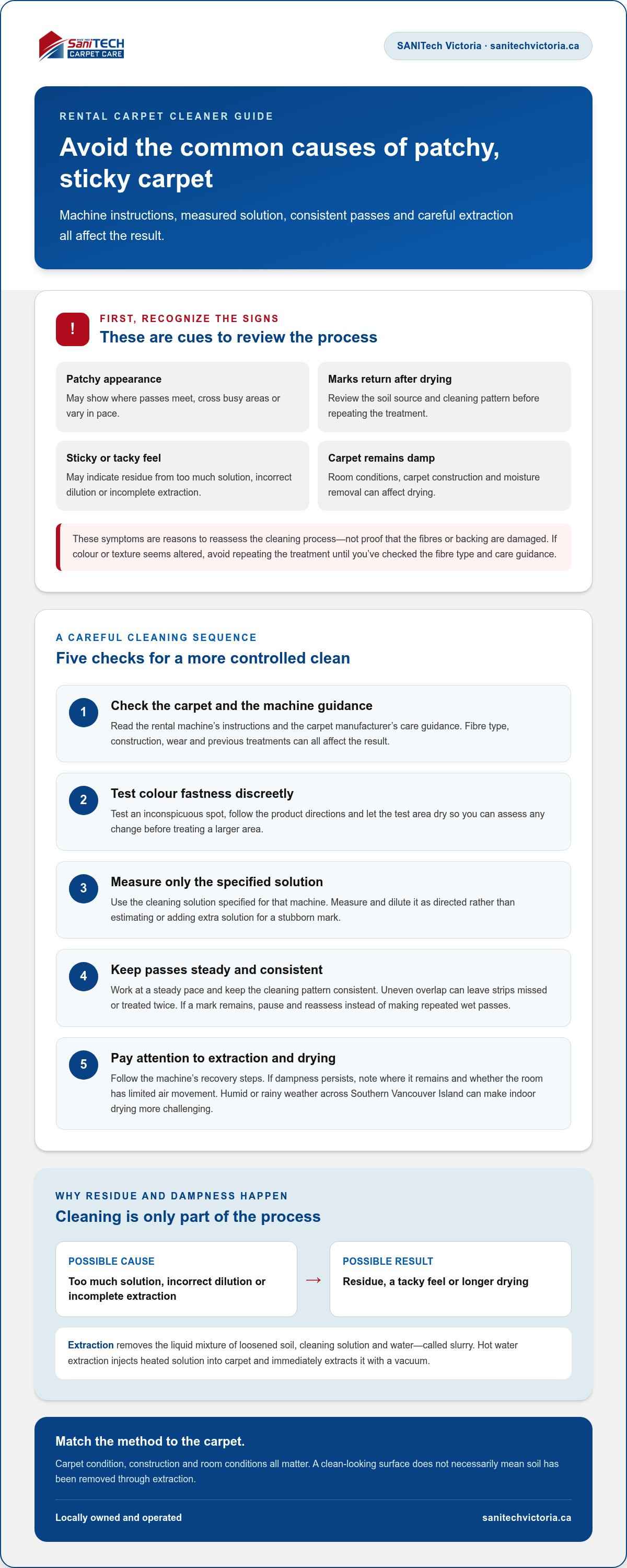
- Patchy results, recurring soil, a sticky feel or prolonged dampness can point to issues with the machine, technique or carpet condition.
- Learn how cleaning and extraction differ, and why hot water extraction pairs heated solution with immediate vacuum extraction.
- Reduce problems with rental carpet cleaners by following the machine’s instructions, testing discreetly and using only its specified solution at the directed dilution.
- Choose a rental cleaner when the carpet and task suit a careful DIY approach. Seek specialist attention when fibre-care needs or uneven results call for more control.
- Find out when Sani-Tech Victoria’s professional carpet steam cleaning may be a suitable next step for persistent soil or recurring odours.
Problems with rental carpet cleaners: common signs and frustrations
Results from a rental carpet cleaner depend on the machine, the carpet’s condition and construction, and how the unit is operated. A rental carpet cleaner is a self-operated machine intended for carpet cleaning. It may suit a particular job, but inconsistent technique or poor moisture removal can affect how the carpet looks and feels afterwards.
Watch for signs such as:
- A patchy appearance, especially where cleaning passes meet or cross busy areas.
- Marks that reappear after the carpet dries, or soil that returns quickly.
- A sticky feel that may indicate cleaning solution residue.
- Carpet that stays damp longer than expected for the room’s conditions.
These symptoms are reasons to review the cleaning process, not proof that the fibres or backing are damaged. A temporary change in appearance can have several causes. If the carpet’s colour or texture seems altered, avoid repeating the treatment until you’ve considered the fibre type and care guidance.
A clean-looking surface isn’t the same as soil removed through extraction. Carpet can look refreshed while soil remains within the pile, and a mark that returns does not, by itself, confirm permanent damage. This overview of carpet cleaning methods explains how approaches such as extraction and dry cleaning work.
Why can a rental carpet cleaner leave carpet looking uneven?
Uneven results can come from the cleaning pattern, not necessarily a faulty machine. If passes don’t overlap consistently, narrow strips may be missed or cleaned twice. Changing speed can also leave some areas with more solution or attention than others. Traffic patterns matter: a hallway or doorway may hold more embedded soil than a less-used area, so it may look different after the same number of passes.
Recurring marks are a cue to review the process and the source of the soil. They aren’t automatic evidence of permanent damage. Check whether the pattern follows a traffic route, a join between passes or a spot that needed separate treatment. Repeating a full cleaning without understanding the difference can add moisture without resolving the uneven appearance.
Why does carpet feel sticky or stay damp after cleaning?
Too much cleaning solution, incorrect dilution or incomplete extraction can leave residue that feels tacky and may attract soil. Extraction removes the liquid mixture of loosened soil, cleaning solution and water, known as slurry. If the machine’s passes or recovery steps don’t remove enough moisture, the carpet can take longer to dry. Follow the machine’s instructions rather than adding extra solution to address a stubborn mark.
Drying depends on room conditions and carpet construction, so there’s no single timeframe for every home. Humid or rainy weather across Southern Vancouver Island can make indoor drying more challenging. If dampness persists, note where it remains and whether the room has limited air movement. This can help distinguish a slow-drying area from a broader issue with the cleaning process.
What causes rental carpet cleaner problems: machine, method, or carpet?
A disappointing result rarely has just one cause. Technique, the machine’s condition and design, carpet fibre and construction, existing soil, and past cleaning can all influence the outcome. These factors can combine: a heavily soiled traffic lane may need a different approach from a lightly soiled room, while extra solution or incomplete extraction can leave the carpet unpleasant to walk on.
Extraction quality affects both residue and feel: the more solution left in the carpet, the greater the chance it feels tacky or takes longer to dry. Hot water extraction is a process that injects heated solution into carpet and immediately extracts it with a vacuum. The machine’s appearance alone can’t establish how effectively it cleans or extracts moisture. A clean exterior is not proof of performance, and a rental unit’s label or design is no substitute for using it correctly.
For general care guidance, the Carpet and Rug Institute recommendations can help readers understand why cleaning practices should suit the carpet. The right method depends on the material and its condition, not a one-setting-fits-all assumption.
How technique and solution use affect cleaning results
Follow the machine’s instructions and use only the cleaning solution specified for that unit. Measure and dilute it as directed rather than estimating. A solution that is too concentrated can leave residue, while repeatedly wetting the same area may add moisture without lifting more soil. Before treating a larger area, test colour fastness in an inconspicuous spot. Follow the product directions and allow the test area to dry so you can assess any change.
Work at a steady pace and keep passes consistent. If a mark remains, pause and reassess instead of making repeated wet passes. The carpet manufacturer’s care guidance can also help you avoid applying a method that doesn’t suit the material.
How carpet fibres, dyes, and existing conditions matter
Carpet fibres respond differently to moisture, agitation and cleaning agents. Wear, loose or damaged areas, and previous treatments can also affect the result. Existing stains may have altered the colour, while soil embedded over time may not respond like fresh surface dirt. That’s why an area can look different after cleaning even when the same process was used throughout the room.
Take extra care if the fibre type or care history is uncertain. Dye migration is the movement or bleeding of dye from one textile area into another. Fabric distortion is an unwanted change in the shape, texture or structure of textile fibres. These terms describe possible textile changes, not outcomes to assume from a disappointing clean. If you’re concerned about colour or texture, stop before repeating the treatment. Professional carpet steam cleaning is a specialist option when the carpet’s condition calls for a more controlled assessment.
Rental carpet cleaner vs. professional cleaning: which fits the situation?
Neither option suits every carpet or task. A rental machine can be a practical choice for limited, routine cleaning if you’re comfortable operating it and can follow its instructions. Professional cleaning may be a better fit when carpet condition, fibre care, persistent soil or odour calls for a more controlled assessment. Consider the task, not just the equipment.
Here are the main differences to weigh:
- Access: A rental machine lets you clean on your own schedule. Professional service brings equipment and a cleaning process to your home.
- Effort: DIY cleaning involves operating the machine, managing solution and planning for drying. A professional team handles the cleaning process.
- Equipment: Rental units are designed for self-operation. Professional cleaning uses specialized equipment selected for the work.
- Process control: DIY results depend on following directions and keeping your technique consistent. A professional process can be adjusted to the carpet’s condition and cleaning needs.
- Carpet care: Routine carpet may suit a careful DIY approach. Delicate fibres or uncertainty about previous treatments can call for specialist attention.
When might renting a carpet cleaner be a reasonable choice?
For a modest, routine task on carpet whose care instructions you understand, renting may be reasonable. Start with a small, inconspicuous test area and set realistic expectations: a rental machine may freshen the carpet, but it may not address every embedded mark or odour. Follow the machine and solution directions, allow adequate ventilation, and plan for the carpet to dry before returning furniture or normal foot traffic.
In Victoria, Sidney, Sooke and nearby communities, damp or humid weather can make drying conditions less predictable. Choose a time when you can support airflow and avoid treating more carpet than you can manage properly. If the test area changes in colour or texture, stop rather than applying the method across the room.
When is professional carpet cleaning worth considering?
Consider professional care if residue or uneven results remain, odours keep returning, or you’re unsure how a particular fibre will respond. These signs don’t prove damage, but repeating a process without understanding the carpet’s needs may not resolve the issue. A professional can assess the carpet’s condition and select a process suited to its fibres, soil and moisture-management needs.
Sani-Tech Victoria provides professional carpet steam cleaning with IICRC-certified expertise, specialized equipment and a 12-step cleaning methodology. This offers an informed alternative when DIY work hasn’t produced the result you hoped for, without suggesting rental cleaning is inherently ineffective. For more detail on what a specialist process involves, see this professional carpet steam cleaning guide.
How to reduce rental carpet cleaner problems at home
A careful process can help reduce problems with rental carpet cleaners, but it starts before you switch the machine on. Check that the carpet’s care guidance permits the planned method, and leave enough time to clean methodically and support drying. If the fibre or care instructions are unclear, avoid guessing.
- Prepare the area. Vacuum first to remove loose debris, and move furniture where practical. This gives you a clear working area and helps prevent loose soil from mixing with cleaning solution.
- Read both sets of instructions. Review the rental machine directions and carpet-care guidance before filling the tank. Use only the solution specified for that machine, and follow its dilution instructions exactly. Don’t estimate the amount or add extra detergent to tackle a stubborn spot.
- Test discreetly. In an inconspicuous location, follow the product directions to test colour fastness. Let the test area dry so you can check for a change before treating a larger section. If colour or texture appears altered, stop and reassess.
- Clean in a consistent pattern. Work steadily and follow the machine’s directions for cleaning and extraction passes. Keep your pace and coverage consistent, and avoid repeatedly wetting the same area. Extra wet passes can add moisture without necessarily improving soil removal.
- Support drying. Follow the machine’s instructions for extracting moisture, then promote airflow and consider the room’s ventilation and humidity. Keep furniture off damp carpet unless the machine or carpet instructions advise otherwise.
What should you do before using a rental carpet cleaner?
Preparation reduces guesswork. Check the carpet’s care guidance, clear movable furniture where practical, and vacuum before cleaning. Read the machine and solution instructions before filling or operating the unit, including how to dilute the solution and make extraction passes. A small test area can reveal a possible colour response before you treat a larger section.
Plan the work so you can complete the room without rushing. Inconsistent pace and rushed coverage can leave sections treated differently. If a mark doesn’t respond, don’t assume more solution or repeated wetting is the answer. Stay within the machine and carpet guidance. When room preparation or post-cleaning reveals minor trim, door, or wall damage, reaching out to a dependable home repair provider like American Handyman is a practical way to keep broader property upkeep on schedule.
How can you help carpet dry after rental cleaning?
Moisture management matters, particularly in coastal Southern Vancouver Island, where humid or rainy conditions can limit how readily indoor spaces dry. Follow the machine’s extraction directions, encourage air movement, and use available ventilation where appropriate. Avoid closing off the room if that prevents airflow, and don’t return furniture to damp carpet unless the instructions recommend it. There’s no universal drying time because room conditions and carpet construction vary.
Extract as directed, improve airflow, and keep furniture off damp carpet while you consider the room’s humidity. If the carpet stays damp or the result remains uneven despite careful use, professional carpet steam cleaning can provide a specialist assessment. Learn about professional carpet cleaning from Sani-Tech Victoria.
When rental carpet cleaning is not enough: professional care in Victoria
Rental cleaning may not address every carpet concern. If soil remains after careful use, odours return, or the carpet’s fibres seem especially delicate, another DIY treatment may not be the best next move. These signs don’t establish that the carpet is damaged or that a particular stain can be removed. They’re reasons to pause and consider the carpet’s condition before choosing what to do next.
An assessment can be especially useful when the carpet has a history of previous cleaning, visible wear or an unexplained change in appearance. In South Vancouver Island’s damp conditions, moisture management also deserves attention. Adding more solution without understanding the concern may make it harder to assess the carpet clearly.
What can a specialist carpet-cleaning process add?
Professional carpet steam cleaning offers a specialist option when routine rental cleaning hasn’t met the need. A considered process takes the carpet’s condition and cleaning requirements into account rather than treating every fibre, stain or room in the same way. Sani-Tech Victoria is locally owned and has served the region since 1983. Its carpet-care work focuses on assessment, appropriate soil removal and attention to moisture, with the aim of helping protect your carpet investment. No cleaning method can guarantee that every odour or mark will disappear.
Business carpets can have different demands from those in a home, particularly where use and traffic vary across a space. For readers considering workplace care, Sani-Tech Victoria’s commercial carpet cleaning guide discusses the needs of commercial carpet and protecting that investment.
Sani-Tech Victoria serves Victoria, Sidney, Saanich, Mill Bay, Cobble Hill, Sooke and Shawnigan Lake. Local experience helps keep the conversation focused on the carpet, its setting and practical conditions affecting care, including the region’s humid weather. Sharing what you’ve noticed can help distinguish a persistent cleaning issue from wear or an existing stain.
How to take the next step for carpet care in South Vancouver Island
When requesting an estimate, describe what’s happening and where the carpet is located. Mention whether the concern is recurring soil, a persistent odour, a change in texture or uncertainty about fibre care. If you know what cleaning method or solution was used, include that detail too. Clear information helps focus the discussion on suitable carpet care without assuming the result in advance.
Protecting carpet starts with choosing a considered next step, not repeating a treatment that hasn’t helped. Request a carpet-cleaning estimate from Sani-Tech Victoria.
Choose the next step that protects your carpet
Before attempting another clean, consider what the carpet is telling you. If the concern is limited and the carpet responds well to careful treatment, routine upkeep may be enough. If the same soil or odour returns, or you’re uncertain how the fibres will respond, pause before applying more solution. A measured decision can help prevent an unresolved spot from becoming a larger carpet-care concern.
Keep a note of what you’ve observed, including where the issue appears and whether it changes as the carpet dries. Sharing those details can help guide a suitable approach with the carpet’s condition and long-term care in mind. For homeowners managing broader residential deep cleaning across different surfaces, specialist resources like athenacleaningservices.sg illustrate how proper techniques and targeted cleaning solutions safeguard delicate tiles and fixtures.
If problems with rental carpet cleaners have left you unsure what to try next, choose informed care over guesswork. Request a carpet-cleaning estimate from Sani-Tech Victoria to discuss the next step for your carpet.
Frequently Asked Questions
Can rental carpet cleaners damage carpet?
Yes, an unsuitable treatment can damage carpet, but using a rental machine doesn’t automatically mean damage has occurred. If colour or texture changes, note the affected area and take a photo in consistent lighting. Record which machine and product you used, as those details can help a carpet-care professional assess what happened. A difference in shade can also result from pile direction, so compare the area from more than one angle.
Why does carpet feel sticky after using a rental cleaner?
A sticky feel can mean material remains on the fibres, but the pattern can offer clues. Check whether tackiness is limited to a spill or high-traffic spot, or extends across the cleaned area. That distinction can help show whether the concern is localized or related to the overall treatment. Avoid adding a second product, and note where the sensation occurs if it persists.
How long does carpet take to dry after using a rental cleaner?
There isn’t one drying time that applies to every carpet. Fibre and pile construction, the amount of moisture retained, and indoor humidity all affect drying. In Southern Vancouver Island’s coastal climate, conditions can vary from room to room. The surface may also feel different from deeper carpet layers, so don’t rely on a quick touch alone. Follow the carpet and machine guidance before replacing rugs or resuming normal use.
Is it normal for carpet to look worse after rental cleaning?
A temporary change in appearance can happen, and it isn’t automatically evidence of lasting damage. After the carpet has dried, compare the area under similar lighting and from the same direction. Pile can reflect light differently when viewed from another angle. If you still see a distinct change, note its shape and location, such as whether it follows a furniture edge or room boundary. This record can help with assessment.
Can I use any carpet shampoo in a rental carpet cleaner?
No. A product labelled for carpet isn’t necessarily intended for use in an extraction machine. Don’t mix shampoos, spot treatments or household detergents in the tank, since incompatible products may leave unwanted material in the fibres. Keep the product container or label available while checking the machine’s directions. The exact product and dilution instructions matter. If the carpet’s care guidance recommends a different approach, don’t assume the machine’s solution overrides it.
What should I do if a rental carpet cleaner leaves an odour?
If an odour remains, note where it’s strongest and when you notice it, such as near a previous spill or after the room has been closed. The location and timing may help distinguish a localized concern from a room-wide one. Also record any earlier treatments or incidents involving the carpet. Share those details during a professional assessment so the next cleaning approach can account for the carpet’s history.