
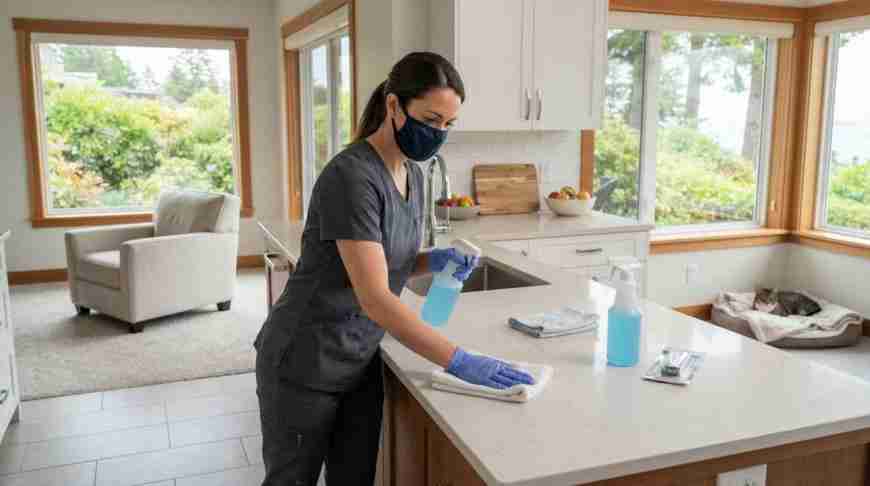
The right post-illness home disinfection plan depends on the surface, not just the room. A hard countertop, carpet and upholstered chair each need a different approach. Using a product or method that is unsuitable for the material can damage it or leave the cleaning task incomplete.
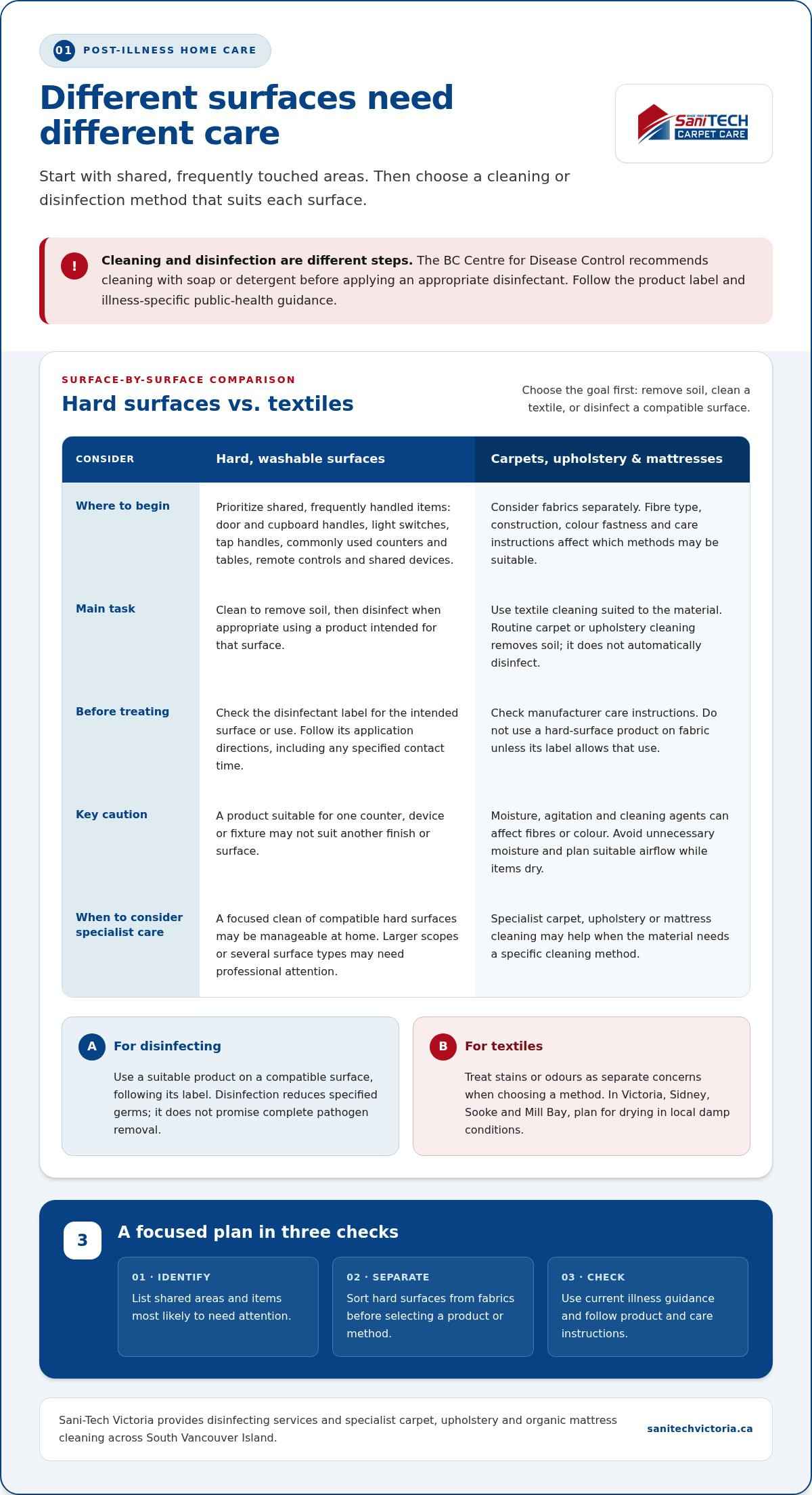
If you’re unsure what to tackle first, begin with shared, frequently touched surfaces. Disinfection isn’t the same as routine cleaning: the BC Centre for Disease Control recommends cleaning with soap or detergent before applying an appropriate disinfectant. Follow the product label and any illness-specific public-health guidance.
This checklist explains which rooms and surfaces to prioritize, how to approach hard surfaces, carpets and upholstery, and when professional disinfection or specialist textile cleaning may help. Sani-Tech Victoria has served South Vancouver Island since 1983, with IICRC-certified expertise and methods suited to different materials. Use the steps below to plan the work without treating every surface the same.
Key Takeaways
- Start with shared, frequently handled surfaces, then tailor your post-illness home disinfection plan to each material.
- Separate hard, washable surfaces from carpets, upholstery and other porous materials; choose care methods suited to each surface.
- Decide between household cleaning and professional help based on the area, the materials and the level of specialist attention needed.
- Follow disinfectant label directions, including contact time, and allow compatible surfaces to dry as directed.
- Sani-Tech Victoria provides disinfecting services across Victoria, Sidney, Saanich, Mill Bay, Cobble Hill and Sooke.
Post-Illness Home Disinfection: What Cleaning Can and Cannot Do
After an illness, it can be hard to know where to begin. Focus first on shared areas and frequently handled items, then consider whether fabrics need separate care. Cleaning removes soil; disinfection uses a suitable product on a compatible surface. The right steps depend on the illness, the surfaces involved, household needs and current public-health advice, not a single approach for every home.
When is post-illness home disinfection worth considering?
Post-illness home disinfection may be appropriate when illness-specific guidance recommends it or household circumstances call for extra attention to shared spaces. Consider who lives in the home, which areas were used and what materials are present. Consult current advice from the BC Centre for Disease Control or another relevant public-health authority for instructions related to the illness. Not every illness calls for the same level of disinfection, and treating every room alike may be unnecessary.
To make a focused plan, list the shared areas and items most likely to need attention, then compare that list with the applicable guidance. Separate hard surfaces from fabrics before selecting products or methods. This helps keep the work targeted instead of applying products indiscriminately throughout the home.
Cleaning versus disinfection: why the distinction matters
Cleaning physically removes dirt, spills and other soil from a surface. Disinfection is a separate step that uses a suitable chemical product on a compatible surface. These steps have different purposes, so the terms shouldn’t be treated as interchangeable. Understanding the distinction helps set clear expectations about what each task can address.
Disinfection uses a suitable product on a compatible surface, following its label directions to reduce specified germs; it does not promise complete pathogen removal. The label states which surfaces the product is intended for, how to apply it and any specified contact time. Don’t assume a product suitable for a counter is appropriate for every finish or material. For a general overview of the principles of disinfection, see the linked reference.
Soft materials need a different decision. Routine carpet or upholstery cleaning removes soil using methods suited to the textile, but that does not automatically make the work disinfection. A product intended for hard surfaces may be unsuitable for fabric, while an aggressive treatment can affect fibres or colour. For carpets, upholstery and mattresses, choose care based on the material and its cleaning requirements. Sani-Tech Victoria provides specialist carpet, upholstery and organic mattress cleaning, as well as disinfecting services, with methods suited to different surfaces.
For each item, identify the goal first: remove visible soil, clean a textile or disinfect a compatible surface. Then select the method that fits the material and the applicable guidance. This is a practical starting point for the room-by-room checklist.
Which Home Surfaces Need Attention After an Illness?
For post-illness home disinfection, start with surfaces household members handle or share most often. Consider fabrics separately, since their fibres, finishes and care requirements can limit which products or methods are suitable. A surface-focused plan directs attention without treating every item in the home alike.
High-touch hard surfaces and shared household items
In shared spaces, list the items several people regularly touch. Common starting points include:
- Door and cupboard handles, light switches and tap handles
- Frequently used counters and table surfaces
- Shared items such as remote controls and commonly handled devices
Check that the disinfectant label names the surface or intended use, then follow its application directions. A finish may need different care from another hard surface, so don’t assume one product suits every counter, device or fixture. The American Cleaning Institute also outlines best practices for cleaning after illness, including attention to frequently touched areas.
Carpets, upholstery, mattresses, and other textiles
Textiles call for material-specific care. Carpet pile, upholstery fabric and mattress coverings can respond differently to moisture, agitation and cleaning agents. Fibre type, construction and colour fastness all matter. Before treating an item, check its manufacturer care instructions and avoid applying a hard-surface product to fabric unless the product label allows that use. If a stain or odour is also a concern, account for that separately when choosing the cleaning method.
For upholstered furniture, fibre-conscious professional upholstery cleaning can help address soil while respecting the fabric’s care requirements. For mattresses, follow the maker’s instructions and choose a method suited to the materials. In Victoria, Sidney, Sooke and Mill Bay, local damp conditions make drying worth planning for: avoid unnecessary moisture and provide suitable airflow as cleaned items dry. For specialist carpet, upholstery or mattress care, explore Sani-Tech Victoria’s cleaning services.
DIY Cleaning or Professional Disinfection: How to Choose
The choice between household cleaning and professional help depends on the size of the task, the surfaces involved and the process required. A focused clean of compatible hard surfaces may be manageable at home. A larger scope, several material types or textiles that need specialist care may call for professional attention—from established companies like Deepclean Services that specialize in residential and commercial cleaning to local sanitation experts. For post-illness home disinfection, match the method to the job rather than applying one treatment throughout the property.
What a careful home cleaning approach can cover
For a defined task, follow current illness-specific public-health advice and the instructions on each product. Household cleaning may suit washable items and hard surfaces the product label identifies as compatible. Read care labels before treating an item, and don’t assume a product made for one surface is appropriate for another.
- Gather the supplies needed for the surfaces you plan to clean, and read product directions before starting.
- Use cleaning products only as their labels direct, including stated application and contact directions.
- Never mix cleaning products. Provide suitable ventilation during use, following label precautions.
- Keep household cleaning steps separate from medical advice; seek illness-specific direction from a public-health authority or health professional.
Work within the scope you can manage safely. If product instructions are unclear for a surface, don’t improvise with a stronger concentration or combine products. Follow the care label or choose a method intended for that material.
When specialist equipment or textile care may help
Professional help can be useful when several rooms or large textile areas need attention, or when carpets, upholstery or mattresses need more than routine maintenance. A specialist process should account for the fibre or material, the type and extent of soil, and practical access to the item or area. Equipment and moisture levels matter, particularly for textiles that need careful handling and adequate drying in South Vancouver Island’s damp conditions.
Specialist textile cleaning and disinfection are not interchangeable. Professional cleaning can address soil with methods suited to a material, but it does not by itself guarantee a disinfection outcome. Any disinfection claim depends on using a product and process that are appropriate for the surface and following their directions. This distinction helps homeowners set realistic expectations and avoid unsuitable treatment of carpets, upholstery and mattresses.
For offices that need a planned approach beyond routine household cleaning, Sani-Tech Victoria provides professional office disinfecting services. For home needs involving disinfection or specialist textile care, explore Sani-Tech Victoria’s cleaning services and choose support suited to the surfaces and scope involved.
A Room-by-Room Post-Illness Home Disinfection Checklist
A steady sequence makes post-illness home disinfection easier to manage. Follow illness-specific public-health advice, use products only as their labels direct, and treat fabrics according to their care instructions. The aim is a considered process, not applying disinfectant to every surface or room.
Prepare supplies and work from cleaner areas
Before starting, gather suitable products, clean cloths and care instructions for the surfaces and textiles involved; specialized suppliers like SaniChoix offer a wide range of sanitary products and cleaning equipment for thorough maintenance. Plan a route through the areas you intend to address, moving from cleaner areas towards those needing more attention. Keep cloths and tools for different areas separate to avoid carrying soil from one surface to another. Keep children and pets away from products as directed on the label.
- Plan the rooms and surfaces. Note shared spaces and frequently used rooms that need attention, such as the kitchen, bathroom, living area and bedrooms. Use current public-health guidance to determine whether illness-specific steps apply. A cleaning checklist does not require you to impose medical isolation.
- Prepare and protect. Read product directions before use, check surface and textile care instructions, and set out clean cloths. Keep cloths and tools for different areas separate. Wash your hands at suitable points during the process, including after handling used cloths or cleaning materials.
- Clean shared areas first. Remove visible soil from compatible hard surfaces in shared spaces, then attend to frequently handled points in the kitchen and bathroom. Use a fresh cloth as needed and follow the cleaner’s label. Don’t use the same cloth across different areas without cleaning or replacing it.
- Disinfect compatible surfaces. Apply disinfectant only to surfaces named on its label. Follow application directions and specified contact time. Avoid using a hard-surface product on carpet, upholstery or other textiles unless its label specifically allows that use.
- Allow surfaces and textiles to dry. Follow label directions for drying, ventilation and safe storage of products. Arrange suitable airflow where practical, and avoid leaving carpets or upholstery damp longer than necessary.
Finish safely and decide what needs specialist attention
Southern Vancouver Island’s damp conditions can make textile drying a practical concern. Avoid adding excess moisture to carpet or upholstery, and provide suitable airflow while following the cleaning method’s directions. If a large carpeted area, upholstered furniture or mattress needs specialist attention, a material-specific process can help protect fibres and finishes. The carpet steam cleaning guide covers related textile-care considerations.
If the task extends beyond the surfaces you can safely address, Sani-Tech Victoria provides professional support for defined cleaning or disinfection needs. Arrange professional home disinfection with Sani-Tech Victoria.
Professional Post-Illness Home Disinfection in Victoria and South Vancouver Island
Professional support can help when a home needs attention across several rooms or when different surfaces require careful planning. Sani-Tech Victoria provides disinfecting services for defined household needs in Victoria, Sidney, Saanich, Mill Bay, Cobble Hill and Sooke. The work can be planned around the areas and materials in your home.
What to expect from a professional service conversation
Start by identifying the rooms and surfaces that need attention, the materials involved and your cleaning goals. This helps distinguish hard surfaces requiring disinfection from carpets, upholstery or mattresses that call for material-specific cleaning. The planned work can then reflect the scope and care needed instead of applying the same treatment throughout the home.
Specialized equipment and a careful work sequence support a thorough process. The method should account for the surface, the type of soil and practical access to each area. For textiles, fibre and colour considerations matter. For disinfection, products and application must suit the surface and follow product directions. Defining the scope makes clear what the service will address without promising a particular health result.
Why local experience and technical care matter
Sani-Tech Victoria is locally owned and has a 12-step cleaning methodology. This structured approach supports careful planning for household cleaning needs, including attention to the areas and materials identified for service. For post-illness home disinfection, the work is shaped around the home’s needs rather than a generic treatment.
The company reports disinfecting capacity of up to 18,000 square feet per hour. This describes operational capacity, not the level of disinfection or a health outcome for a particular home. The work plan depends on the areas included, the surfaces involved and the process suited to them. Clear scope-setting helps establish what the service will address.
Professional help may be useful when the work covers multiple rooms, extensive areas or a mix of hard surfaces and textiles that need different care. A defined scope can distinguish disinfection from specialist carpet, upholstery or mattress cleaning, so each surface receives an appropriate method.
Request an estimate from Sani-Tech Victoria for your home’s cleaning and disinfection needs.
Set a Clear Next Step for Your Home
A useful post-illness home disinfection plan can also guide future care. Keep product instructions and surface-care details together, and note which areas needed specialist attention. That record can make it easier to plan the right method next time, especially in a home with a mix of hard surfaces and delicate textiles.
If the work feels larger than a manageable household task, or you want expert help matching a process to your home’s surfaces, contact a local team. Sani-Tech Victoria brings IICRC-certified expertise to professional disinfection and specialist cleaning across South Vancouver Island.
Request an estimate for professional disinfection and discuss a service plan suited to your home.
Frequently Asked Questions
Is home disinfection necessary after every illness?
No, the same disinfection plan isn’t necessary after every illness. The appropriate response depends on the illness, household circumstances and current public-health guidance. Advice may differ for a home with someone at higher risk than for a household with no additional needs. Consult a relevant public-health authority or healthcare professional for illness-specific instructions, then focus your home plan on the surfaces and items those instructions address.
How long can germs remain on household surfaces?
There isn’t one timeframe that applies to every germ and surface. How long organisms may remain depends on the organism, the material and surrounding conditions, so a generic number isn’t a reliable cleaning rule. Instead, follow current guidance for the illness involved and consider which surfaces were shared or frequently handled. This helps you decide where cleaning is relevant without relying on an unsupported time estimate.
Can I use the same disinfectant on every surface?
No, don’t assume one disinfectant suits every surface in your home. Check the product label for intended uses, application instructions and precautions, and read the manufacturer’s care guidance for the item. A finish, coating or fabric may need different care from a washable counter. Never mix cleaning products, and keep children and pets away as directed while products are being used.
What should I do with bedding after someone has been ill?
Follow the bedding care label and current illness-specific public-health advice. Handle used items carefully and avoid shaking them; wash them using a cycle and method suitable for the fabric, then dry them fully before putting them back on the bed. If an item has special care instructions, don’t treat it like ordinary washable bedding. Guidance for laundry can differ from advice for carpets or upholstered furniture.
Can professional carpet cleaning disinfect carpet after an illness?
Not automatically. Carpet cleaning and disinfection are distinct processes, and ordinary professional carpet cleaning shouldn’t be taken as a guarantee of pathogen removal. The suitable approach depends on the carpet material and the intended process. Sani-Tech Victoria provides carpet steam cleaning and disinfecting services for different needs. For a carpet-specific concern, clarify whether the work is cleaning, disinfection or both, and what the process is intended to address.
Should I throw away upholstered furniture after an illness?
Not automatically. First consider the furniture’s condition, the affected material and any current advice for the illness. Review the manufacturer’s care instructions before applying a product, since an unsuitable treatment may harm fabric or finishes. If the concern is soil or general textile care, professional upholstery cleaning may be an option. It should not be treated as a guaranteed health intervention or a substitute for illness-specific guidance.