

The biggest risk when cleaning a pillow-top mattress isn’t missing a stain. It’s letting moisture soak into the thick padding, where it can be difficult to dry. If you’re wondering how to deep clean a pillow top mattress without damaging its fabric or inner layers, use a careful, low-moisture approach.
It’s understandable to want to tackle marks and odours thoroughly, especially on a mattress that gets regular use. Scrubbing or applying too much liquid can push soil and moisture deeper instead of lifting them from the surface. Pillow-top construction calls for measured cleaning and patient drying.
This guide explains how to prepare the bed, vacuum the surface, treat stains sparingly, manage odours and dry the mattress fully before replacing the bedding. It also covers when spot care may not be enough. Southern Vancouver Island’s damp conditions can slow drying, so airflow and timing matter. For persistent stains or odours, Sani-Tech Victoria provides organic mattress cleaning in Victoria, Sidney, Sooke and Mill Bay. The locally owned business has served the area since 1983.
Key Takeaways
- Check the mattress care label and manufacturer guidance before applying any cleaning solution.
- For how to deep clean a pillow top mattress, begin with dry vacuuming and address only stained or odorous areas with minimal moisture.
- Blot treated spots gently instead of scrubbing, which can disturb fibres and push residue deeper into the padding.
- Promote airflow in a well-ventilated room and wait until the mattress is fully dry before replacing bedding.
- Extensive stains, persistent odours or uncertainty about the materials are good reasons to consider professional organic mattress cleaning.
What makes a pillow-top mattress different to deep clean?
A pillow-top mattress has an additional cushioned layer attached to its upper surface. This plush layer can hold more moisture than a smooth, firm surface. If too much liquid is applied, dampness may settle in the padding instead of staying at the cover.
Deep cleaning at home means carefully removing loose soil and treating the surface, not washing or soaking the mattress. A damp cloth used sparingly on a specific mark is different from saturating the whole top. The aim is to address surface soil while limiting moisture that could reach deeper layers.
Mattress designs and materials vary. This Mattress types and maintenance reference offers general background on construction, but your mattress care label and manufacturer guidance should direct your cleaning decisions.
How pillow-top construction affects cleaning
The cover fabric, cushioned top and mattress core are separate parts of one construction, and they may respond differently to moisture or cleaning products. Quilting, seams and tufting can also trap dust and residue. Work gently around these details rather than scrubbing or pressing liquid into them. This helps reduce the risk of disturbing fibres or causing fabric distortion. Treat the mattress as a layered textile, not a washable surface.
What to check before starting
Before choosing a method, inspect the care label for cleaning restrictions. Check the visible cover for loose seams, worn areas or existing changes in texture or shape. These signs can affect how much handling the surface can tolerate.
- Identify the fabric: Use the label or manufacturer’s guidance to understand any limits on cleaning products or moisture.
- Inspect the surface: Note wear, loose stitching, quilting and tufting before you begin.
- Assess uncertainty: If a stain’s source is unknown or the material is delicate, avoid experimenting with strong products or broad wet cleaning.
A careful inspection helps you choose a suitable next step and avoid turning a small surface issue into a deeper cleaning challenge. If the instructions are unclear, keep treatment minimal until you know what the mattress materials can tolerate.
How to prepare a pillow-top mattress for deep cleaning
Good preparation keeps cleaning focused and limits unnecessary moisture. Before treating a stain or applying a solution, make sure the mattress is ready for careful surface care.
- Remove all bedding. Wash sheets, mattress protectors and other bedding according to their own care instructions. Mattress-cleaning directions don’t necessarily apply to washable bedding.
- Read the mattress care label. Follow the manufacturer’s instructions and note any restrictions on water or cleaning products.
- Inspect the surface. Look for stains, loose seams, worn fabric or areas that already show fabric distortion.
- Prepare clean cloths. Keep dry, light-coloured cloths nearby for gentle blotting and moisture control.
- Vacuum before spot treatment. Use a clean upholstery attachment to lift loose soil from the surface, quilting and seams.
Remove dry soil before treating stains
Move the upholstery attachment in gentle, overlapping passes across the pillow-top. Follow the quilting and seams without tugging at the fabric or pressing down hard on the padding. Removing loose soil first helps prevent it from being rubbed into the fibres during spot treatment. Check that the attachment is clean so it doesn’t transfer debris to the mattress.
Choose a cautious cleaning method
Let the manufacturer’s care directions guide your choice of cleaner and method. If a cleaner is permitted, test it on a small, inconspicuous area first. Apply a minimal amount to a cloth rather than spraying directly onto the mattress, then check the test area for any unwanted change before proceeding. Keep clean cloths nearby to blot the spot and pick up excess moisture. If the test area changes in colour or texture, stop instead of extending the treatment.
This measured preparation is a practical starting point for cleaning a pillow-top mattress while protecting its cover and cushioned layers. If home spot care isn’t enough, professional organic mattress cleaning offers a careful next step.
How to deep clean a pillow-top mattress step by step
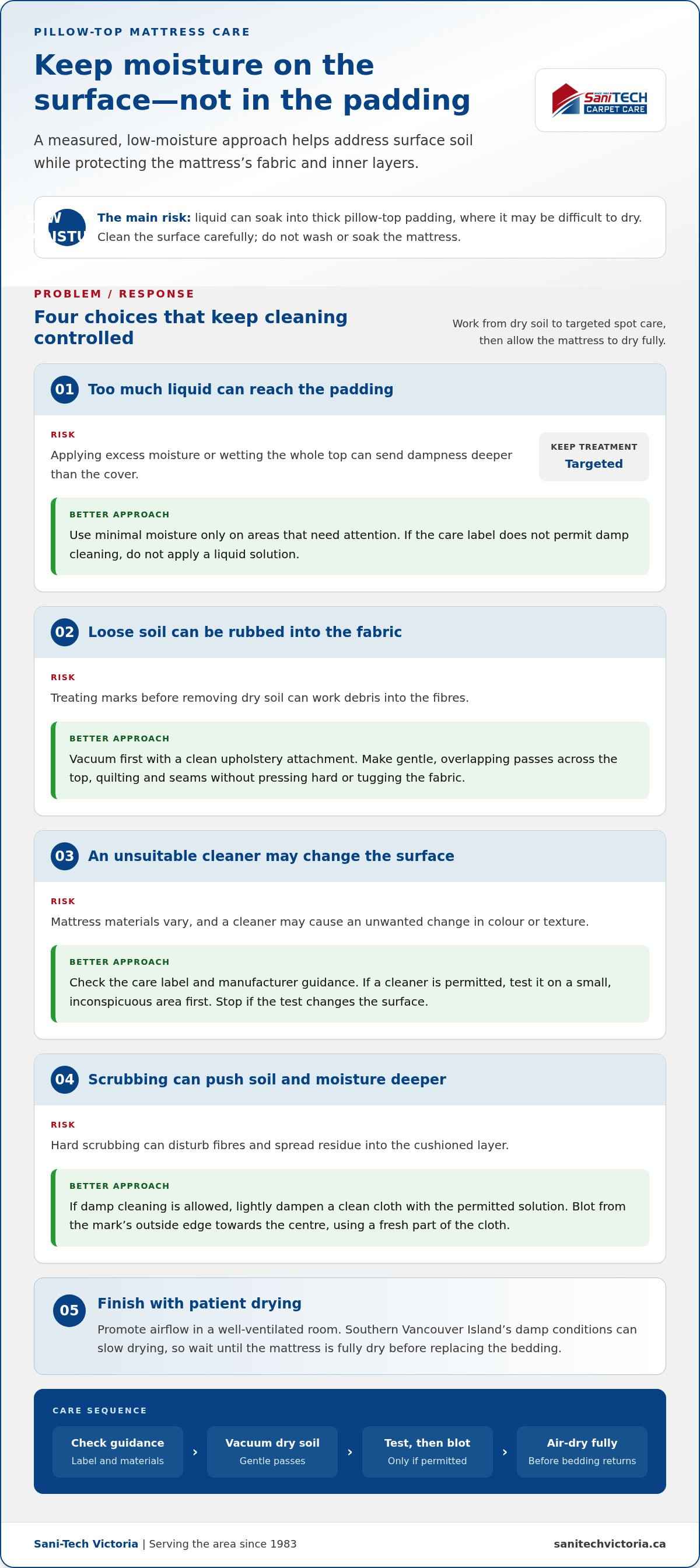
Keep the process controlled: remove dry soil first, then treat only the spots or surface areas that need attention. Follow the mattress care instructions for both cleaner choice and application. If the label doesn’t permit damp cleaning, don’t apply a liquid solution.
- Vacuum the dry surface. Use a clean upholstery attachment and gentle, overlapping passes. Work across the top, including quilting and seams, without pressing hard. This lifts loose soil before it can be worked into the fabric.
- Check the stain and care guidance. Identify the areas that need attention and confirm which cleaning methods the manufacturer permits. Avoid treating the entire mattress because only one spot is marked.
- Test any permitted cleaner. Apply it to a small, inconspicuous area as directed, then check for a change in colour or texture. Don’t proceed across a visible area if the test causes a change.
- Blot small marks carefully. If damp cleaning is allowed, lightly dampen a clean cloth with the permitted solution. Blot from the outside edge of the mark towards the centre, using a fresh part of the cloth as needed. This helps limit spreading while avoiding excess moisture in the padding.
- Address the wider surface only if needed. If the care label permits it and the surface needs attention beyond isolated spots, use a light, even application. Keep solution away from seams, don’t saturate the fabric, and avoid repeated wet passes over the same area.
- Stop if the fabric reacts poorly. If you notice colour change, fabric distortion or moisture accumulating in the padding, stop cleaning. Blot excess moisture with a clean, dry cloth if appropriate, and don’t add more solution.
Treat small marks without overwetting the padding
Gentle blotting is more appropriate than forceful rubbing on a plush surface. Rubbing can disturb fibres and may contribute to dye migration, particularly if the fabric’s colour fastness is unknown. Use a lightly dampened cloth only when the mattress care instructions allow damp cleaning, and keep the treated area as small as practical.
Clean the wider surface carefully
A broader surface treatment isn’t a default step. Use one only when the manufacturer’s instructions allow it and the surface needs more than spot attention. Applying less solution and avoiding repeated wet passes helps keep moisture from building up in the cushioned layer. A measured approach means following the label, treating only what needs attention and stopping if the fabric or padding shows signs of a problem.
How to dry a pillow-top mattress and avoid common cleaning mistakes
Drying is part of the cleaning process, not an afterthought. The cushioned top can hold moisture, so leave the mattress uncovered until the treated area and surrounding fabric feel fully dry. Replacing bedding too soon can trap dampness against the surface and make it harder for moisture to escape.
Southern Vancouver Island’s humid conditions can slow indoor drying. Allow for airflow rather than relying on a fixed drying time. The amount of moisture used, room ventilation and indoor humidity all affect how long the surface takes to dry.
Support airflow and check for remaining dampness
Keep the bed stripped and the room well ventilated while the mattress dries. A fan can help circulate room air. A dehumidifier may also be useful when appropriate for the room and consistent with the manufacturer’s guidance. Avoid directing heat at the mattress. Before making the bed, check the cleaned area, quilting and seams for any remaining dampness.
Avoid practices that can harm the mattress
More water and harder scrubbing don’t mean a better clean. Soaking can carry moisture into the padding, while aggressive rubbing may disturb the fabric. Don’t use untested cleaning products, steam or heat unless the manufacturer specifically permits that method. Follow the care instructions, and stop if the mattress remains damp or the fabric changes during cleaning.
Persistent odours, broad stains or dampness that doesn’t resolve with careful surface treatment may call for a different approach. Repeated attempts can add moisture without addressing the underlying issue. Professional organic mattress cleaning is an option when home care isn’t enough.
If a pillow-top mattress remains damp or has persistent odours or widespread staining, book professional organic mattress cleaning. A careful cleaning process includes allowing the mattress to dry fully before you remake the bed.
When professional organic mattress cleaning is the better next step
DIY care can suit limited surface soil, but it isn’t always the right choice for every pillow-top mattress. A thick cushioned layer, delicate cover fabric or unclear care instructions can make it difficult to judge how much moisture or cleaning product the materials can tolerate. If you’re unsure, don’t escalate treatment simply to get a deeper clean.
Signs that home cleaning may not be enough
Consider professional cleaning if stains cover a broad area, keep returning or have an unknown source. Lingering odours can also be difficult to address with surface treatment alone. If the manufacturer’s care instructions are unclear, pause before applying a new product or method.
Repeated damp treatment may add moisture without resolving the underlying issue. That can be a concern with pillow-top padding, which may take longer to dry than the surface suggests. Stop home treatment if the mattress remains damp, the fabric changes, or you can’t identify a suitable cleaning method. Results depend on the mattress materials and the nature of the soil, so no method can promise that every stain or odour will disappear.
Professional mattress cleaning on South Vancouver Island
Sani-Tech Victoria provides organic mattress cleaning with non-toxic, biodegradable cleaning solutions. The service focuses on careful mattress care and cleaning the surface while respecting the mattress materials. For more information about mattress care, read the organic mattress cleaning guide.
Locally owned and operated since 1983, Sani-Tech Victoria serves communities across South Vancouver Island, including Victoria, Sidney, Sooke and Mill Bay. When home spot care isn’t enough, professional cleaning offers a considered next step. Knowing when to stop is part of caring for a pillow-top mattress.
If your mattress has broad staining, persistent odours or care instructions you can’t interpret, request an estimate for mattress cleaning from Sani-Tech Victoria.
Protect your pillow-top with careful cleaning
The safest approach is a measured one: follow the mattress care instructions, vacuum dry soil first and treat only the areas that need attention. Use minimal moisture, blot rather than scrub, and leave the mattress uncovered until it’s fully dry. These steps help protect the fabric and cushioned layers during home cleaning.
If stains are widespread, odours persist or you’re unsure how the material should be cleaned, repeated home treatments may not be the right next step. Sani-Tech Victoria provides organic mattress cleaning with non-toxic, biodegradable cleaning solutions. Locally owned and operated since 1983, the business serves Victoria, Sidney, Sooke and Mill Bay.
Give your mattress careful attention, and choose professional support when the cleaning challenge calls for it. Request an estimate for organic mattress cleaning.
Frequently Asked Questions
Can I use a steam cleaner on a pillow-top mattress?
Only use a steam cleaner if the mattress manufacturer specifically permits it. Steam can introduce moisture into the plush top layer, and the padding may be difficult to dry fully. Check the care label before choosing a method. If steam cleaning isn’t approved, follow the permitted surface-care instructions rather than applying heat or moisture that could affect the mattress materials.
How do I remove a stain from a pillow-top mattress?
Start by checking the care label and testing any permitted cleaner on a small, inconspicuous area. If damp treatment is allowed, apply a small amount to a clean cloth and blot from the stain’s outer edge towards the centre. Don’t scrub or soak the padding. Stop if the fabric changes colour or texture, or if moisture begins to build up.
Is baking soda safe to use on a pillow-top mattress?
Check the mattress manufacturer’s care instructions before applying baking soda. If the label permits it, use a light sprinkling on the surface, then vacuum it thoroughly with a clean upholstery attachment. Don’t mix it with liquid or use it to treat a stain unless the manufacturer’s instructions allow that approach. If the material or care guidance is uncertain, avoid experimenting.
How long does a pillow-top mattress take to dry after cleaning?
There’s no reliable set drying time because it depends on how much moisture was used, room ventilation and indoor humidity. Keep the mattress uncovered in a well-ventilated room, and use a fan or dehumidifier when appropriate and allowed by the manufacturer. Check the surface and seams for dampness before replacing bedding. Southern Vancouver Island’s humid conditions can slow indoor drying.
What happens if a pillow-top mattress gets too wet?
Excess moisture can remain in the cushioned padding even when the cover feels dry. Prolonged dampness may contribute to musty odours, mould or mildew, and deterioration of mattress materials. If the mattress becomes wet, remove bedding, keep the surface uncovered and support airflow. Don’t add more cleaner or heat. If dampness persists, seek professional advice rather than repeating wet treatment.
Can I deep clean a pillow-top mattress myself?
Yes, careful home surface cleaning may suit light soil or a small mark if the care label permits the method. Vacuum first, use minimal moisture and allow the mattress to dry fully. Extensive staining, persistent odours or unclear care instructions are reasons to consider professional help. Sani-Tech Victoria, locally owned since 1983, provides organic mattress cleaning in Victoria, Sidney, Sooke and Mill Bay.