

Could the wrong cleaning method leave slate looking dull, change its colour or leave residue in the grout? Slate floors vary in finish and condition, so a standard cleaning recipe may not suit every surface. Effective slate floor cleaning Victoria homeowners can rely on starts with assessing the stone, grout and moisture levels before choosing an approach.
This guide explains how to judge whether routine care is enough or professional attention may help. You’ll learn what a slate floor assessment and cleaning can involve, why product choice and moisture control matter, and how practical maintenance can protect the floor and grout through Southern Vancouver Island’s damp seasons.
Sani-Tech Victoria is locally owned and operated, with IICRC-certified expertise in grout and tile cleaning and tile sealing. The company provides slate floor cleaning as part of its tile and grout care. An informed assessment helps match the work to your floor’s finish and condition.
Key Takeaways
- Slate’s finish, condition and grout affect which cleaning approach is appropriate, so inspection should guide the plan.
- Controlled cleaning, residue removal and suitable drying help protect the floor’s appearance.
- Routine dust and soil care may be enough, while persistent dullness or recurring buildup can call for professional assessment.
- Prepare your home or business by clearing access, moving furnishings where practical and noting visible concerns or past maintenance.
- Slate floor cleaning Victoria property owners need can connect with Sani-Tech Victoria’s tile and grout cleaning expertise, backed by local experience since 1983.
Slate Floor Cleaning in Victoria: What the Stone and Finish Need
Slate is natural stone, so its finish and current condition matter before choosing a cleaning method. Slate floor cleaning is the careful removal of soil from slate and its grout using an approach suited to the surface finish and condition. It isn’t a one-size-fits-all wash. Textured slate, a smoother honed finish and a sealed floor can respond differently to moisture and cleaning products. An assessment helps determine how to proceed.
Slate is a metamorphic rock with a layered structure. A brief explanation of what slate is helps explain why identifying the actual surface matters: natural variation is part of the material and is not automatically a sign of damage.
How slate finish and condition affect cleaning
Texture can create small recesses where soil collects, while a smoother surface may make residue or changes in sheen more noticeable. A sealer can affect how the surface absorbs moisture. These visible differences don’t tell the full history of a floor, so they shouldn’t be the only basis for choosing a cleaning solution or process.
An initial assessment should look at worn or heavily trafficked areas, existing residue and grout condition. Soil in grout can make the whole floor look uneven, while residue may contribute to a dull or hazy appearance. Record the floor’s existing colour variation and finish before work begins, including areas that already look different. This baseline helps distinguish the stone’s natural character from changes after cleaning.
Why Victoria-area conditions deserve attention
Damp periods around Victoria can affect how quickly a cleaned floor dries indoors. Ventilation, room conditions and the amount of moisture used all matter, particularly in enclosed spaces. A considered plan accounts for drying so moisture does not linger in the slate’s texture or grout.
Homes and businesses in Victoria, Sidney, Sooke and Mill Bay also experience coastal conditions. Salt-laden air may affect some interior materials, but it shouldn’t be assumed to cause a particular change in slate. The floor’s own appearance and condition are the most useful starting points. For slate floor cleaning Victoria property owners can approach with confidence, careful assessment keeps the focus on the actual stone, grout and finish rather than a generic recipe.
Slate Floor Cleaning Methods: How to Protect Stone, Grout, and Finish
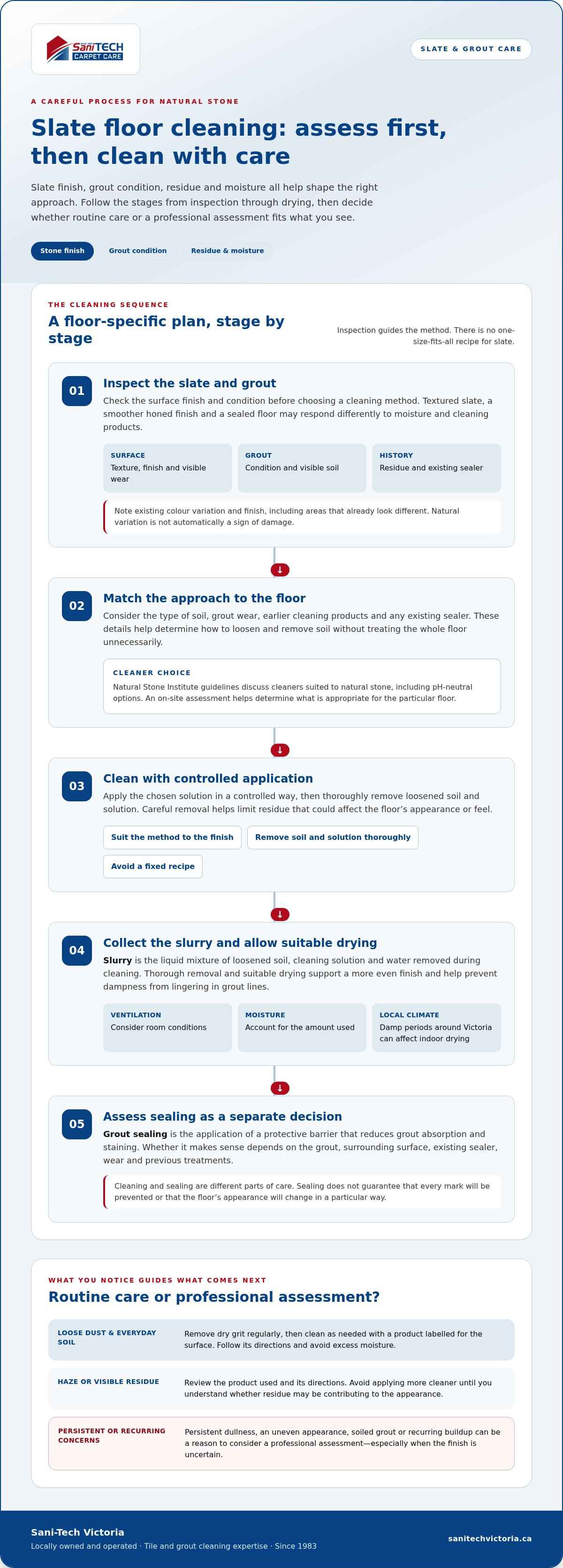
A reliable cleaning plan starts with inspection, not a fixed recipe. The surface, grout condition, residue and any existing sealer influence how soil should be loosened and removed. Slate care should match the floor’s finish because texture, absorption and wear can affect how moisture and cleaning products interact with the stone.
For slate floor cleaning Victoria homes and businesses need, the method should balance soil removal with care for the surface. The Natural Stone Institute guidelines discuss choosing cleaners suited to natural stone, including pH-neutral options. This is a useful reference, while an on-site assessment helps determine what is appropriate for a particular floor.
What a careful cleaning process should account for
Before cleaning, consider the slate’s visible condition, the amount and type of soil, grout wear, residue from earlier products and evidence of an existing sealer. These details help shape the approach and avoid exposing the whole floor to an unnecessary or unsuitable treatment. Controlled application and thorough removal of loosened soil and solution help limit residue that could affect the floor’s appearance or feel.
During extraction or collection, the removed mixture of loosened soil, cleaning solution and water is called slurry. Removing it thoroughly and allowing the floor to dry under suitable conditions supports a more even finish and helps prevent dampness from lingering in grout lines.
Sealing, grout, and appearance: what to understand
Grout sealing is the application of a protective barrier that reduces grout absorption and staining. It can be considered as part of a broader tile-care plan, but the decision should follow an assessment of the grout and surrounding surface. Existing sealer, wear and previous treatments all affect what makes sense next.
Sealing does not guarantee that every mark will be prevented or that the floor’s appearance will change in a particular way. A careful plan distinguishes cleaning from sealing and explains the role of each, helping you make an informed decision about preserving the floor and grout.
For considered tile and grout care, Sani-Tech Victoria brings its related cleaning expertise to the assessment and care plan.
Routine Care or Professional Slate Floor Cleaning: How to Decide
Routine care helps keep loose soil from building up, while professional assessment can be useful when the floor’s appearance or grout condition changes. The right next step depends on what you see and whether careful maintenance improves the concern. Not every slate floor needs the same treatment or a fixed sealing schedule.
| What you notice | A practical next step |
|---|---|
| Loose dust and everyday soil | Remove dry grit regularly, then clean as needed with a product labelled for the surface. Follow its directions and avoid excess moisture. |
| Haze or visible residue after cleaning | Review the product used and its directions. Avoid applying more cleaner until you understand whether residue may be contributing to the appearance. |
| Persistent dullness, uneven appearance, soiled grout or recurring buildup | Consider a professional assessment, especially if the finish is uncertain or routine care hasn’t resolved the concern. |
When routine maintenance may be enough
For ordinary dust and loose soil, regular dry removal helps limit grit being walked across the floor. When trying a new cleaning product, choose one labelled for the surface and test it first in a small, inconspicuous area. Follow the label, use the product only as directed, and avoid leaving excess moisture or cleaner behind. Routine maintenance is worthwhile, but it has limits when residue or a deeper concern persists.
When a professional assessment can help
Persistent buildup, an unclear finish, grout that remains visibly soiled or an appearance that differs from the slate’s established colour variation can warrant closer assessment. A professional can consider the visible condition, previous maintenance and grout together, then tailor the cleaning plan to what’s observed rather than applying one treatment across every floor. Preservation guidance also recommends using the gentlest means possible when cleaning historic masonry. This supports a measured approach, not the assumption that every surface should receive the same process.
Sealing is a separate decision from routine cleaning, and the need depends on the surface and its current condition. If you’re weighing professional slate floor cleaning Victoria homeowners can access alongside related grout care, see our professional tile and grout cleaning guide for more detail on how assessment informs floor care.
Preparing Slate Floors for Cleaning in Victoria’s Climate
Good preparation helps the cleaning professional see the floor clearly, protect nearby furnishings and plan for drying. In Victoria and across South Vancouver Island, damp indoor conditions can affect drying time, so airflow and room use deserve attention alongside access and visible concerns.
Before the cleaning visit
Use this sequence to prepare a home or business without disturbing the slate or grout:
- Clear access. Move small, portable items from the floor and keep walkways open. Leave heavy furnishings in place unless you’ve arranged otherwise.
- Point out areas of concern. Identify persistent marks, dull or uneven-looking areas, heavily soiled grout and places where residue seems to recur.
- Share maintenance details. Note any cleaning products or sealing work you know were used. Even partial information can help explain the floor’s present appearance.
- Plan around occupants and operations. For a business, consider access routes, operating hours and customer movement so the work area can be managed with minimal disruption.
Preparation makes the floor’s condition easier to assess and the drying plan easier to manage.
Drying and ongoing care after cleaning
After cleaning, follow the care guidance provided for the floor and allow suitable airflow through the room. In a damp space, ventilation may be limited; a dehumidifier can help remove moisture from indoor air where appropriate. Follow the specific instructions for the work before replacing furnishings or resuming normal foot traffic.
For facilities maintaining different floor types, a commercial carpet cleaning guide can help frame broader scheduling considerations. Slate still needs care matched to its own condition, finish and grout.
For considered tile and grout care, request an estimate for tile and grout cleaning from Sani-Tech Victoria.
Slate Floor Cleaning with Sani-Tech Victoria: Careful Local Expertise
Slate care calls for an assessment of the stone, grout and existing finish. Sani-Tech Victoria provides slate floor cleaning through its grout and tile cleaning service, as well as tile sealing. IICRC-certified expertise and a 12-step cleaning methodology support a measured approach, with the work plan guided by the surface’s observed condition rather than a generic treatment.
Locally owned and operated since 1983, Sani-Tech Victoria serves homes and businesses across South Vancouver Island. Its dual-system equipment fleet supports work at properties with difficult access. The appropriate equipment and process depend on the site and the floor being assessed.
What local experience adds to floor care
Planning for a floor in Victoria can involve practical details such as access, room use and indoor drying conditions. Local experience helps keep those considerations in view alongside the stone and grout. Service coverage includes Victoria, Sidney, Saanich, Mill Bay, Cobble Hill, Sooke and Shawnigan Lake.
More than 200 customer five-star reviews across Vancouver Island reflect the company’s established presence in the region. For slate, the central value is a careful assessment of what the floor needs, including whether tile and grout cleaning or tile sealing is appropriate.
A clear next step for slate floor care
When requesting an estimate, share the property’s location, what you know about the slate finish, visible concerns such as uneven appearance or soiled grout, and any previous sealing or cleaning products you can identify. You don’t need to diagnose the cause yourself. These details help shape an assessment around the actual surface and its history.
A professional assessment can clarify suitable next steps and distinguish routine care from work that may call for more specialized attention. For slate floor cleaning Victoria property owners can approach with an informed plan, start with the condition of the stone and grout.
Request an estimate for slate floor care and take the next step towards considered care for your floor.
Choose Slate Care That Protects Your Floor
Slate needs care guided by its finish, condition and grout, not a standard cleaning recipe. Assessing these details helps distinguish routine dust and soil removal from persistent residue or grout concerns that may benefit from professional attention. In Victoria’s damp seasons, preparation and suitable drying conditions also matter.
For slate floor cleaning Victoria homeowners and businesses can make an informed decision by noting the floor’s appearance, previous products or sealing, and areas of concern. Sani-Tech Victoria connects this careful approach with tile and grout cleaning and tile sealing, supported by IICRC-certified expertise and a 12-step cleaning methodology.
Locally owned and operated since 1983, Sani-Tech Victoria has earned more than 200 customer five-star reviews across Vancouver Island. Protect your slate with an assessment shaped around the actual surface and its needs. Request an estimate for slate floor care and take a confident next step towards preserving your floor.
Frequently Asked Questions
Can slate floors be cleaned with regular household cleaners?
Not every household cleaner is suitable for slate, so check the label and choose a product intended for natural stone and the floor’s finish. A cleaner that leaves residue or is not suited to the surface may affect its appearance. Test a new product in a small, inconspicuous area first, follow the directions and avoid excess moisture. If you’re unsure what the floor has been treated with, seek an assessment before changing products.
Does a slate floor need to be sealed after cleaning?
No. Cleaning doesn’t automatically mean a slate floor needs sealing. The decision depends on the surface, its condition and any existing sealer. Grout sealing applies a protective barrier that reduces grout absorption and staining, but it isn’t a guarantee against every mark. An assessment can help determine whether cleaning alone is appropriate or sealing merits consideration for the floor and grout.
How often should slate floors be professionally cleaned?
There isn’t one professional cleaning schedule that suits every slate floor. Consider how much foot traffic the area receives, how quickly soil accumulates, whether grout is becoming visibly dirty and whether routine care keeps the floor looking consistent. Entryways and busy commercial areas may need attention sooner than lightly used rooms. Arrange an assessment if dullness, residue or recurring buildup persists despite careful maintenance.
Can professional cleaning change the colour or finish of slate?
Professional cleaning should be planned to suit the slate’s existing finish and condition, not to change its colour. Natural variation, wear, residue and previous sealing can all affect how the floor looks before work begins. Documenting those details provides a useful baseline. A careful assessment and suitable cleaning approach help reduce the risk of an unexpected appearance change, though results depend on the surface’s current state and history.
How long does a slate floor take to dry after cleaning?
Drying time varies with the amount of moisture used, the floor and grout condition, room ventilation and indoor humidity. Damp indoor conditions around Victoria may slow drying, so airflow and room use should be considered in the plan. Follow the care instructions provided for the floor, and allow the surface to dry as directed before returning furnishings or regular foot traffic. A dehumidifier may help manage indoor moisture where appropriate.
Is slate floor cleaning suitable for homes and commercial properties in Victoria?
Yes. Slate floors in homes and commercial properties can be assessed for appropriate care. The cleaning plan should reflect the floor’s finish, condition, grout and level of use rather than assume every property needs the same treatment. Sani-Tech Victoria provides tile and grout cleaning and tile sealing across Victoria, Sidney, Sooke, Mill Bay and nearby South Vancouver Island communities. For slate floor cleaning Victoria property owners should start with the actual surface condition.
What should I do before a professional slate floor cleaning appointment?
Clear small movable items, keep access routes open and point out concerns such as persistent marks, dull patches or soiled grout. If known, note previous cleaning products or sealing work, as this information can help inform the assessment. Businesses can also plan around customer movement and operating hours. You don’t need to diagnose the issue; sharing what you’ve observed is a helpful starting point.