
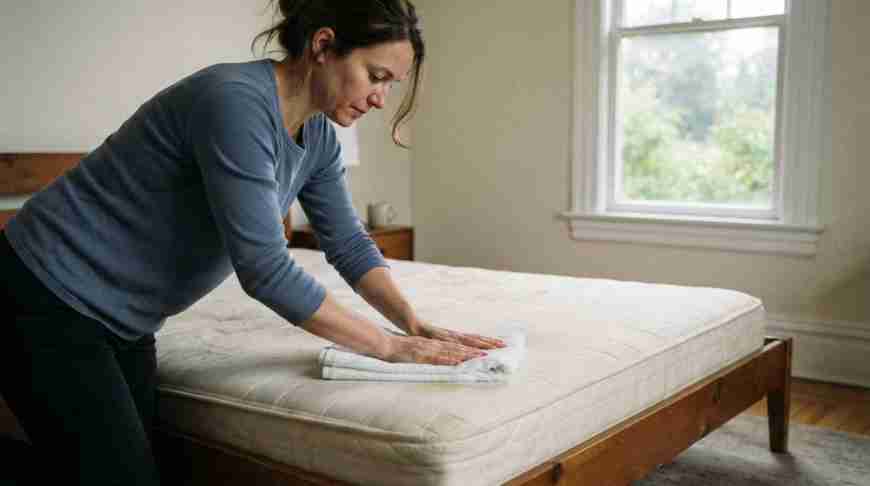
Hydrogen peroxide can help lift urine stains, but it can also bleach some fabrics and damage foam. For urine stain and odour removal from a mattress, use a 3% solution and test it on a hidden spot first. Dried yellow marks may need a different approach from a fresh spill, and applying more liquid than necessary can make thorough drying harder.
It’s frustrating when a mattress still smells after the visible stain seems to be gone. For fresh urine, blot rather than scrub; scrubbing can push liquid deeper into the mattress. Older stains need careful treatment and thorough drying, especially in the humid conditions around Victoria, Sidney, Sooke, and Mill Bay.
This guide explains when hydrogen peroxide may help, how to blot a fresh accident, and ways to treat dried stains, yellow discoloration, and lingering odour. You’ll also learn how to reduce the chance of leaving the mattress damp, so you can choose a practical next step with its fabric and condition in mind.
Key Takeaways
- Use hydrogen peroxide cautiously: test a hidden area first, as it can bleach some fabrics or damage foam.
- For a fresh spill, blot gently instead of scrubbing to avoid driving urine deeper into the mattress.
- Give the mattress time to dry fully; room humidity and airflow affect how long it takes.
- Approach dried yellow stains and lingering odour with care, since older marks may need a different treatment than fresh urine.
Can I use hydrogen peroxide to remove urine stains?
Hydrogen peroxide can help treat urine stains, but it may bleach some fabrics and damage foam. For a dried stain, mix equal parts baking soda and vinegar into a paste, apply a thin layer, and leave it for a few hours or overnight before removing it. Avoid this damp treatment on foam.
Blot fresh urine with cold water and mild soap
- Remove sheets and the topper promptly so less urine reaches the mattress.
- Press a clean, absorbent cloth onto the wet spot. Blot; don’t scrub.
- Dampen a second cloth with cold water and a little mild dish soap. Dab the surface, then blot with a clean cloth. Avoid hot water and soaking the fabric.
Use Hydrogen Peroxide and Dish Soap
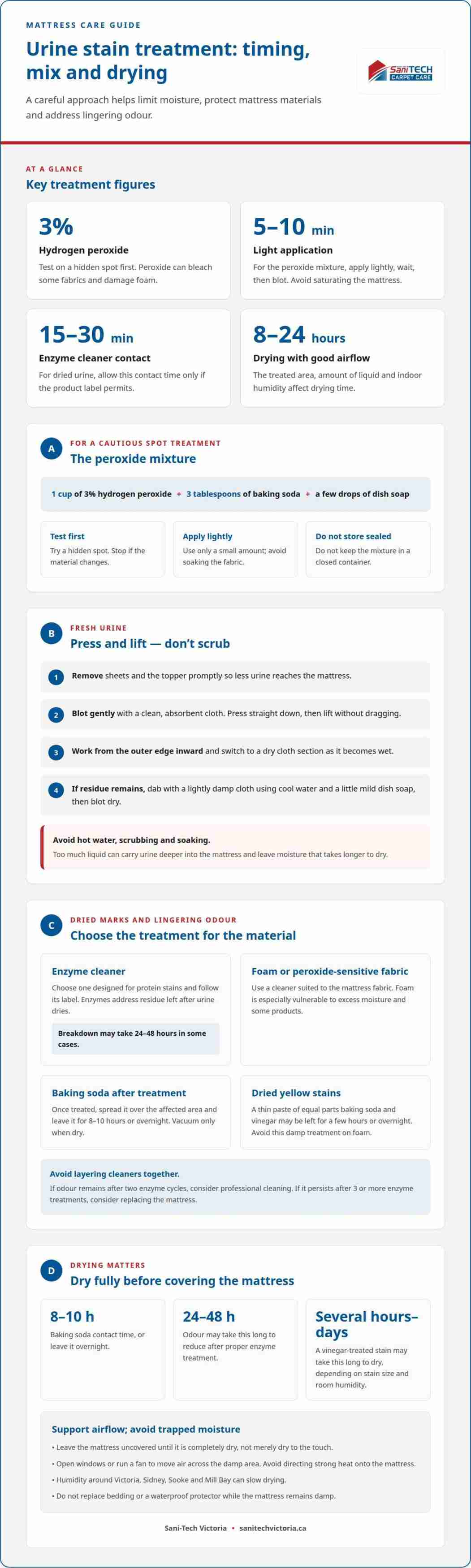
- Mix 1 cup of 3% hydrogen peroxide, 3 tablespoons of baking soda, and a few drops of dish soap. Don’t store the mixture in a closed container.
- Test it on a hidden spot first. Peroxide can bleach some fabrics and damage foam, so stop if the test changes the material.
- Apply lightly, wait 5-10 minutes, then blot. Avoid saturating the mattress.
Treat dried urine with an enzyme cleaner
- Choose an enzyme cleaner designed for protein stains and follow its label directions.
- For dried urine, allow 15 to 30 minutes of contact time if the product label permits. Enzymes address residue left after urine dries.
- Give the product time to work; breakdown may take 24 to 48 hours in some cases.
Choose Alternatives or Professional Cleaning
- For materials that may be damaged by peroxide, use a cleaner suited to the mattress fabric. Foam is especially vulnerable to excess moisture and some products.
- A careful method for removing a urine stain and its odour from a mattress matters more than adding repeated treatments. Consider professional cleaning if odour remains after two enzyme cycles.
- If the smell persists after 3 or more enzyme treatments, consider replacing the mattress. A waterproof mattress protector can help guard against future spills.
Blotting fresh urine
Act promptly: fresh urine is easier to lift before it reaches deeper mattress layers. Use a dry, absorbent cloth and gentle, controlled pressure.
Blot Fresh Urine Without Rubbing
Press a clean towel straight down on the wet patch, then lift it without dragging. Switch to a dry section of the towel as it absorbs urine. Rubbing can push liquid deeper and spread it across more fabric.
- Start at the stain’s outer edge and work inward, keeping the damp area contained.
- Use fresh cloth sections as they become wet, so you’re not transferring urine back onto the surface.
- Repeat the press-and-lift motion until the towel picks up little moisture.
- Don’t use a brush, circular scrubbing motion, or forceful rubbing on the mattress fabric.
Avoid Over-Wetting While Blotting
If residue remains after blotting, use a lightly damp cloth. Too much water or cleaning solution can carry urine deeper into the mattress and leave moisture that takes longer to dry.
- Dampen a clean cloth with cool water, then wring it out before touching the spot.
- Dab the stained surface lightly, working in small areas instead of pouring liquid directly onto it.
- Blot again with a dry towel to remove moisture after each pass.
- Stop if the fabric is becoming saturated; don’t add hydrogen peroxide, vinegar and water, or other cleaners while the area is already wet.
Continue blotting with a dry towel until it no longer picks up visible moisture. If urine odour remains, don’t cover the mattress while it’s damp. Adding more solution can widen the wet area without reaching residue deep in the fabric. Once blotted, allow air to circulate around the mattress before applying another treatment.
How long does it take for urine smell to go away from a mattress?
Drying can take 8-24 hours with good airflow, while odour may take longer to fade after treatment.
Air-Dry the Mattress
Remove the sheets and leave the mattress uncovered until it feels dry throughout. Airflow helps moisture evaporate, while humidity in Victoria, Sidney, Sooke, and Mill Bay can slow drying.
- Stand the mattress on its side if it’s safe to do so, allowing air to reach both surfaces.
- Open windows or run a fan to move air across the damp area. Avoid directing strong heat onto the mattress.
- Wait for the treated area to dry. A vinegar-treated stain may take several hours to several days, depending on stain size and room humidity.
- Don’t replace bedding or a waterproof protector while the mattress remains damp. Trapped moisture can prolong drying and leave the surface uncomfortable.
Dry Thoroughly and Remove Lingering Odours
Keep the mattress uncovered until it’s completely dry, not merely dry to the touch. A mattress usually takes 8-24 hours with good airflow; the treated area, amount of liquid, and indoor humidity affect the time.
- After treatment, spread baking soda over the affected area and leave it for 8-10 hours or overnight. It can help draw out moisture and odour.
- Vacuum the dry baking soda from the surface. Don’t vacuum while the powder or mattress is damp.
- Give enzyme cleaners the contact time their label directs. Odour can take 24-48 hours to reduce after proper treatment.
- Check the area again once dry. If it still smells, repeat the appropriate treatment rather than layering cleaners together.
- Use clean, dry bedding only after the mattress is fully dry. A waterproof mattress protector can help limit moisture reaching the mattress during future accidents.
Drying and odour removal are separate: a mattress may feel dry while still smelling of urine. White vinegar may help treat residue, but let its moisture evaporate fully before covering the bed.
Removing dried urine stains and yellow discoloration
If there’s a mattress topper, remove it and follow its care label before treating or washing it. Memory foam needs very little moisture. Avoid peroxide, which can damage foam, and never saturate it.
- Prepare the dried stain. Remove sheets and any mattress protector, then vacuum loose residue from the dry surface. Keep clean towels nearby to blot moisture during treatment.
- Apply a measured vinegar solution. Mix equal parts vinegar and water in a spray bottle. Lightly mist the yellowed area, avoiding saturation. Let the solution sit for 15 minutes, then blot with clean towels. Too much moisture can travel deeper into the mattress and prolong drying.
- Use baking soda to absorb residue. After blotting, cover the treated area with a baking soda layer at least 6 mm thick. Leave it for a few hours or overnight, then vacuum the dry powder. Baking soda can help absorb moisture and lingering odour, but a yellow mark may remain.
- Adjust the method for foam. For memory foam or a foam topper, use a barely damp cloth instead of spraying liquid directly. Blot gently, then press with dry towels to remove moisture. Follow the care label, and let the item dry fully before replacing sheets or a waterproof protector.
Yellow discolouration can remain after urine residue is treated, so assess the stain and odour only once the mattress is completely dry. Don’t combine cleaners or repeatedly wet the same area, as extra moisture makes thorough drying harder.
If a dried stain or lingering odour remains, book organic mattress cleaning for careful treatment suited to the mattress material.
Sani-Tech Victoria: Stain and Pet Odour Cleaning
Sani-Tech Victoria provides Stain and Pet Odour Cleaning and Organic Mattress Cleaning for urine stains and lingering odours. Consider professional cleaning if dried stains remain visible, odour persists after careful home treatment, or repeated wetting makes the mattress hard to dry thoroughly. The treatment should suit the mattress material: some products can damage memory foam, and unnecessary moisture should be avoided.
Professional cleaning can also help when urine has affected more than the mattress surface, such as a mattress topper that cannot be machine-washed. Sani-Tech Victoria also provides Carpet Steam Cleaning and Area Rug Cleaning for related household cleaning needs.
Contact Sani-Tech Victoria to discuss cleaning your mattress.
Give your mattress a fresh start
Careful cleaning can help protect your mattress materials for continued use. If a stain or odour persists, avoid repeatedly applying household products. Instead, choose a treatment suited to the mattress and how deeply the urine has penetrated. This addresses both the visible mark and lingering smell.
For help with urine stain and odor removal from mattress surfaces, Sani-Tech Victoria provides Stain and Pet Odour Cleaning and Organic Mattress Cleaning. Carpet Steam Cleaning, Area Rug Cleaning, and Upholstery Cleaning are also available for other soft surfaces in your home.
Share what happened and which treatments you’ve already tried so the cleaning team can understand the situation. Contact Sani-Tech Victoria to discuss the next step. A clean, comfortable sleeping space is worth caring for, and support is within reach.
Frequently Asked Questions
Can you get pee stains out of a mattress?
Urine stains can be treated, but results depend on how deeply the liquid penetrated and whether the mattress fabric tolerates the cleaner. A pale mark may respond differently from a stain that has dried into foam. Avoid chlorine bleach and never mix cleaning products. Follow the mattress care label before applying any solution.
Is it safe to sleep on a mattress after cleaning it?
Sleep on the mattress only when it’s completely dry and any cleaner has been removed according to its label. Foam beneath a dry-looking cover may still be damp and retain odour. Press a clean, dry towel firmly against the treated area. If it picks up moisture, leave the bedding off and continue to air the mattress. Make the bed with fresh, dry sheets once it’s dry.
What happens if pee dries in a mattress?
As urine dries, water evaporates but residue can remain inside the mattress, leaving yellow discolouration and a persistent smell, especially if it reached foam or seams. A dry surface doesn’t reveal how far the spill travelled. For an older accident, check the underside and nearby seams as well as the top fabric.
What kills the scent of pee in a mattress?
An enzyme cleaner labelled for urine or protein stains may help address odour-causing residue; follow the product directions. Once the treated area is dry, baking soda may absorb some moisture and help reduce smells. Avoid perfume sprays, which can mask the scent. Don’t mix enzyme products with vinegar, peroxide, or bleach, as combining cleaners can damage materials.
Why is my husband’s side of the mattress yellow?
A yellow patch isn’t necessarily from urine. Body oils, perspiration, lotions, spills, or fabric ageing can also change a mattress’s colour. Compare the patch with nearby fabric and look for a distinct stain edge or lingering odour, but these signs alone can’t identify the cause. Follow the care label when choosing a cleaning method.
How do you remove fresh urine stains and odour from a mattress step by step?
For a fresh accident, work in this order:
- Remove the bedding and washable protector.
- Press dry towels onto the spill without rubbing.
- Replace towels as they absorb liquid.
- Dab lightly with cool water if residue remains.
- Blot again to lift excess moisture.
- Air-dry the mattress fully before remaking the bed.
Use a suitable cleaning product only after checking its label and the mattress care instructions.