
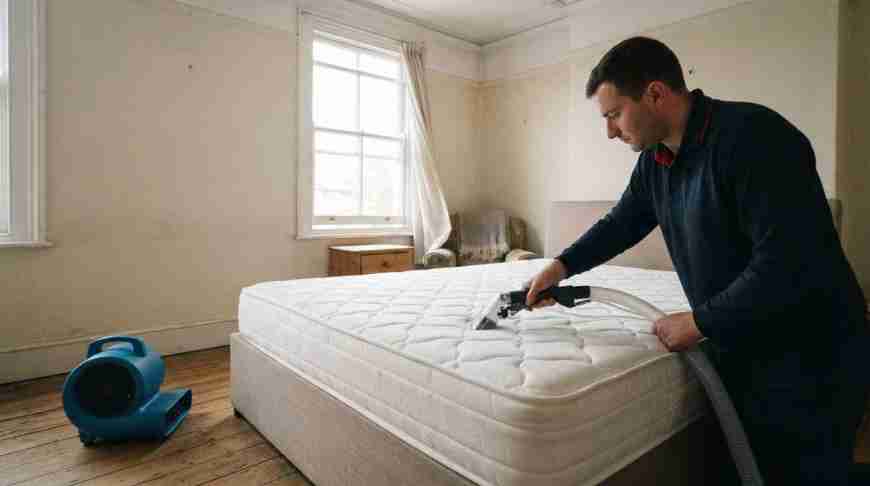
A clean mattress isn’t ready for bedding until it’s fully dry. For memory foam mattress cleaning in Victoria, use a method suited to the material, follow product directions and let the foam dry completely before sleeping on it. Drying depends on moisture, airflow and humidity, so there’s no single time estimate for every mattress.
It’s reasonable to ask whether cleaning solutions are safe to sleep on. Product choice and careful application both matter, as does thorough drying. Sani-Tech Victoria uses non-toxic, biodegradable solutions that are pet- and child-friendly. Cleaning can help remove dust, dead skin cells and allergen-bearing debris, but it can’t promise a particular health outcome.
This guide explains how cleaning can address dust mites and allergens, when to consider booking a service and what affects drying in Southern Vancouver Island’s coastal climate. You’ll also learn what to expect from a process designed to care for memory foam and how to plan for using the bed again.
Key Takeaways
- Professional cleaning can help remove dust, dead skin cells and allergens, but the method should suit memory foam rather than saturate it.
- Choose cleaning frequency based on mattress use, household needs and visible soil instead of relying on a one-size-fits-all schedule.
- Drying depends on moisture, airflow and indoor humidity; allow the mattress to dry fully before replacing bedding.
- A careful organic mattress cleaning process can address hygiene concerns while considering the foam’s care needs and your home’s coastal conditions.
Dust mite and allergen extraction
A mattress collects dead skin cells, household dust and other particles with use. Dust mites feed on shed skin, and their waste and body fragments can contribute to allergen exposure. Fine debris can settle into the cover and seams even when the surface looks clean. Laundering removable bedding cleans sheets and pillowcases, but not debris in the mattress itself.
An average mattress harbours millions of dust mites, dead skin cells and allergens. Cleaning with temperatures over 130 degrees Fahrenheit is recommended to reduce dust mites. That temperature guidance does not mean every memory foam mattress should be exposed directly to high heat. Foam construction and care instructions matter; a suitable cleaning method must address soil without damaging or saturating the material.
Cleaning focuses on loosening and removing accumulated particles, rather than masking odours with fragrance. A careful process takes the cover, seams, spots and foam beneath the surface into account. For example, a visible mark near a seam may need targeted treatment, while general dust calls for broader attention. Controlled application matters because excess liquid can remain in dense foam.
Reducing dust mites and removing allergens are related, but not identical, goals. Cleaning can remove debris and some allergen-bearing material; it doesn’t make a mattress allergen-free. Bedding care matters too: wash sheets regularly according to their care labels and dry them fully before remaking the bed. This helps limit debris reaching the mattress between professional cleanings.
For memory foam mattress cleaning in Victoria, the priority is balancing soil removal with foam care. Identify the mattress material and review its care label before choosing a suitable method. A thorough assessment distinguishes surface dust from stains or odours, helping determine where targeted treatment is appropriate and how to protect the mattress during cleaning.
How often should a mattress be professionally cleaned?
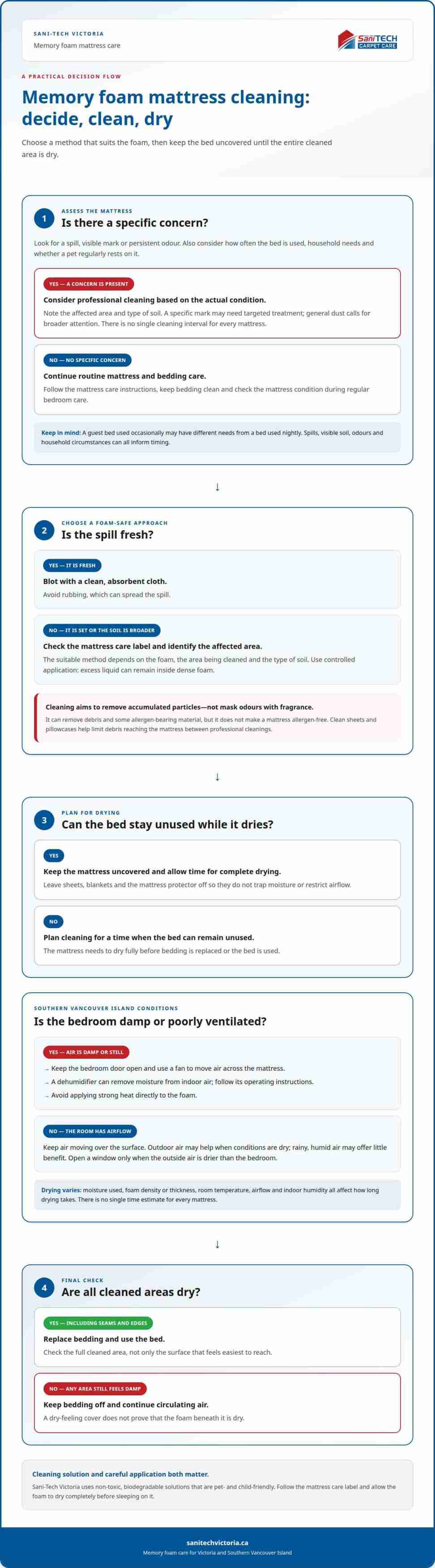
There’s no single cleaning interval that suits every mattress in Victoria. Consider how often it’s used, visible soil, spills and household needs. A guest bed used occasionally has different demands from one used nightly. Check its condition during regular bedroom care, then consider professional cleaning when a specific concern needs more than routine bedding changes.
Household circumstances can affect when a mattress needs attention. A pet that regularly rests on the bed, for example, may leave hair and outdoor debris. A spill, persistent odour or visible mark is another reason to arrange cleaning rather than wait for a routine appointment. People with sensitivities may factor their household’s needs into a cleaning plan, without treating cleaning as a substitute for medical advice.
Between professional cleanings, follow the mattress care instructions and keep bedding clean. A washable mattress protector can limit direct contact with spills and everyday soil if its care label permits regular washing. If a spill reaches the mattress, address it promptly according to the manufacturer’s guidance. Note recurring issues, such as a pet’s preferred sleeping spot, when planning future care.
Sani-Tech Victoria provides Organic Mattress Cleaning in Victoria. Plan the appointment around access to the mattress and the time it may need to remain unused after cleaning. Keeping the bed clear while it dries helps you plan when it can be used again.
Use a practical decision process: assess the mattress, note recent spills or odours, consider who uses the bed, then choose when to book. A guest mattress could be reviewed before visitors arrive, while a frequently used bed may need attention after a spill. This approach ties professional cleaning to actual conditions rather than an arbitrary timetable.
Drying time and ventilation
Drying depends on how much moisture enters the mattress, foam density, room temperature and airflow. Memory foam can retain moisture below the surface, so a cover that feels dry doesn’t prove the interior is dry. A lightly treated area may dry differently from a mattress with several cleaned spots. The amount of moisture used is a key factor.
Southern Vancouver Island’s coastal humidity can affect indoor drying. In Victoria, a closed bedroom with damp air may dry more slowly than a room with steady airflow. Keep the bedroom door open and use a fan to circulate air across the mattress. Direct airflow over the surface rather than applying strong heat to the foam.
Outdoor air can help when conditions are dry; a rainy, humid day may offer little benefit. Open a window when the outside air feels drier than the bedroom, then close it if damp air comes in. A dehumidifier can remove moisture from indoor air. Place it in the room and follow its operating instructions while the mattress dries.
Leave bedding off while the mattress dries. Sheets, blankets and a mattress protector can trap moisture against the surface and restrict airflow. For example, after cleaning the centre of a mattress, leave that area exposed instead of remaking the bed. Check the entire cleaned area, including seams and edges, before replacing the bedding.
Schedule cleaning when the bed can remain unused. Check the treated surface for dampness and keep air circulating. Don’t rely on a fixed drying estimate: indoor humidity, ventilation, foam thickness and the amount of moisture used all affect drying. These checks help protect the mattress and prevent bedding from covering damp foam.
Memory foam mattress cleaning
Memory foam needs a controlled cleaning approach because excess moisture can remain inside its structure. The suitable method depends on the care label, the affected area and the type of soil.
Cleaning Memory Foam
Check the care label and determine whether a stain is fresh or set. Blot a fresh spill with a clean, absorbent cloth; rubbing can spread it. For broader cleaning, use limited moisture and a method suited to foam. Test a small area first to see whether the surface or colour changes before continuing.
Steam cleaning isn’t a suitable default for memory foam. Heat and moisture can reach beyond the cover, and dense foam may dry slowly. Use an enzyme cleaner only if its label permits use on the mattress materials. A product made for upholstery, for example, isn’t automatically suitable for exposed foam.
Products to Avoid
Avoid bleach, strong solvents and abrasive powders on memory foam. They may affect the cover or foam, leave residue or complicate later treatment. Don’t pour cleaner onto the mattress or soak a stained area. Applying an appropriate product to a cloth gives you more control than spraying or flooding the surface.
For visible mould, consider how much of the mattress is affected and whether it has reached the foam. If growth covers a broad area, returns after cleaning or appears within the foam, seek an assessment of cleaning and replacement options. A small surface mark may need a different response. Persistent dampness also needs attention before the mattress is used.
For memory foam mattress cleaning in Victoria, focus on material compatibility and controlled application. Follow the care label, don’t mix products, and stop if treatment changes the foam’s texture or colour. These steps help match the cleaning approach to the mattress and affected area.
Sani-Tech Victoria: Organic Mattress Cleaning
Sani-Tech Victoria provides Organic Mattress Cleaning for mattresses that need more than routine bedding care. The service uses organic, non-toxic solutions and takes the mattress material into account. If dust, everyday soil or a spill has built up, professional cleaning can address the affected surface with a considered approach.
Cleaning a memory foam mattress calls for care with moisture and drying. Share the mattress type and any staining or odour concerns when arranging service, so the approach can suit its material and condition. Sani-Tech Victoria also provides Carpet Steam Cleaning, Area Rug Cleaning and Upholstery Cleaning for related fabric-care needs at home.
For professional mattress care in Victoria, contact Sani-Tech Victoria to arrange Organic Mattress Cleaning.
Plan your mattress care with confidence
Good mattress care means making a considered choice, not pursuing a perfect-looking surface at any cost. Cleaning needs vary by material and household, so a thoughtful plan takes the mattress’s condition and intended use into account. This helps you make practical care decisions instead of applying the same treatment to every stain or surface.
For memory foam mattress cleaning in Victoria, Sani-Tech Victoria provides Organic Mattress Cleaning to suit your mattress-care needs. Contact the team to discuss whether professional attention is the right next step for your mattress.
Contact Sani-Tech Victoria to discuss your mattress cleaning needs. Take the next step with a clear plan for caring for your bedroom investment.
Frequently Asked Questions
Can you remove pet stains and odours from a mattress?
Pet stains and odours can be treated, but removal depends on the material and how far the soil has penetrated. A fresh accident on a removable mattress protector differs from a mark that has reached the mattress cover or foam. Remove and launder washable bedding separately, and describe the stain’s type and location when arranging professional treatment.
How do you clean a memory foam mattress safely?
Choose a method compatible with the mattress care label and its materials. Remove bedding and any washable protector first, then keep cleaning products away from zippers and seams unless their labels permit use there. Avoid combining cleaners, as mixed products can leave residue or damage fabric. For professional treatment, Sani-Tech Victoria provides Organic Mattress Cleaning with non-toxic, biodegradable solutions.
How do you remove stains from a memory foam mattress without soaking it?
Work on a small area at a time and apply an appropriate cleaner to a cloth, not directly to the foam. Press gently to transfer the stain, then use a separate clean cloth to lift remaining moisture. Repeatedly flooding the spot can carry residue deeper. If the stain spreads beyond its original edge or keeps returning, stop adding product and arrange professional assessment.
How do you remove urine, blood, and sweat odours from memory foam?
Address the source rather than masking odour with fragrance. Blot fresh urine or sweat with an absorbent cloth, and avoid rubbing residue into the mattress. For blood, use a product only if its label permits treatment on the mattress fabric. Don’t mix cleaners or apply heat to an untreated stain. Odour that persists after surface care may need professional attention.
How long does a memory foam mattress take to dry after cleaning?
There’s no reliable drying time that applies to every memory foam mattress. A small, lightly treated patch can dry sooner than a larger cleaned area, while thick foam and humid bedroom air can slow drying. Keep the mattress uncovered and arrange the room for good airflow. Don’t make the bed just because the cover looks dry; moisture may remain below it.
Which mattress cleaning companies serve Victoria, BC, and what methods do they use?
Sani-Tech Victoria provides Organic Mattress Cleaning across Southern Vancouver Island, including Victoria, Sidney, Sooke and Mill Bay. Its cleaning solutions are non-toxic and biodegradable, and the mattress service is focused on mattress care rather than general housekeeping. The appropriate treatment depends on the mattress material and the concern, such as a stain or odour.