
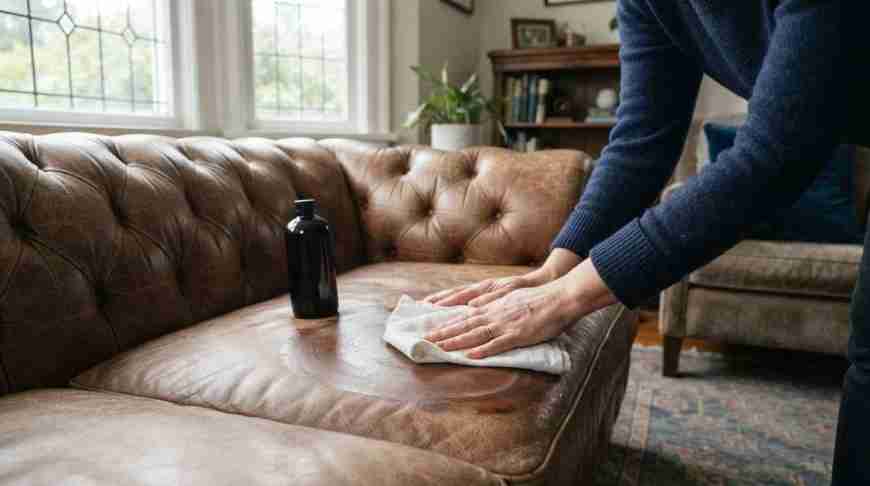
An old leather sofa needs the right conditioner more than it needs frequent treatment. Conditioning old leather furniture is generally recommended every 6-12 months, depending on daily use, and the product should be specifically approved for leather upholstery.
It’s understandable to want to restore softness and protect a well-used piece, but the wrong product or a heavy application can leave uneven marks. When conditioning old leather furniture, start by removing loose dirt, testing the conditioner on an inconspicuous spot, and letting that area dry before continuing.
In this guide, you’ll learn how to choose a suitable upholstery conditioner, apply it evenly with a soft cloth, and let the leather air-dry safely. You’ll also see how sunlight, heat, and everyday use affect care, helping you maintain older leather without adding unnecessary wear.
Key Takeaways
- Dust leather furniture weekly with a soft, dry cloth to clear loose soil before it settles into the surface.
- Plan to condition real leather every 6-12 months, adjusting for daily use and exposure to sunlight.
- Choose a conditioner labelled for leather upholstery, and test it on a hidden area before treating the whole piece.
- Apply a light amount with a soft cloth, then let the leather air-dry away from direct sunlight and heat.
How often to clean and condition a leather couch
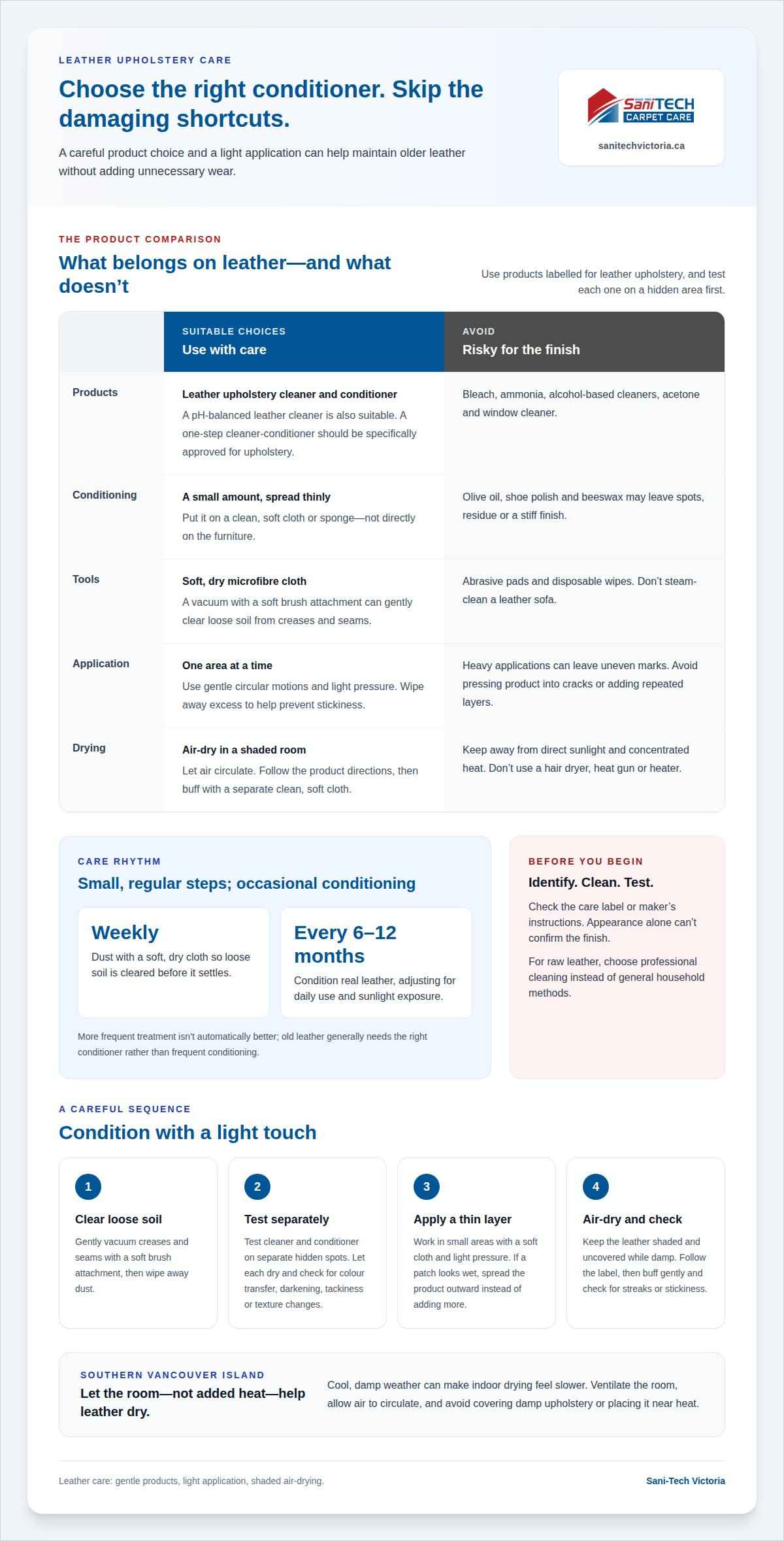
Dust weekly with a soft, dry cloth, and condition real leather every 6-12 months, based on daily use. For conditioning old leather furniture safely, identify the finish, remove loose soil, test each product, and apply conditioner sparingly.
Identify the leather type and finish
Check the furniture’s care label or maker’s instructions first. A consistent, sealed-looking surface may indicate coated leather, while absorbent, less-uniform leather may be aniline; appearance alone can’t confirm the finish. If the piece is raw leather, choose professional cleaning instead of general household methods. Identifying the finish helps guide product choice and reduce the risk of colour changes or surface damage.
Gather cleaning and conditioning materials
Gather a soft, dry microfibre cloth, a vacuum with a soft brush attachment, and products labelled for leather upholstery. Choose a dedicated leather cleaner and conditioner, or a one-step cleaner-conditioner specifically approved for upholstery. A pH-balanced leather cleaner is also suitable. Before conditioning, gently vacuum creases and seams, then wipe away loose dust so grit won’t rub against the finish.
Test cleaners on an inconspicuous area
Apply a small amount of leather cleaner to a hidden spot, such as the back edge beneath a cushion. Follow the product directions, let the area dry, then check for colour transfer, darkening, tackiness, or texture changes. Test the conditioner separately in another inconspicuous spot. Let it dry for a few minutes before treating the rest of the sofa.
Avoid unsuitable cleaning products and materials
When conditioning old leather furniture, avoid bleach, ammonia, alcohol-based cleaners, acetone, and window cleaner, which can damage the surface or strip colour. Skip olive oil, shoe polish, beeswax, and disposable wipes because they may leave spots, residue, or a stiff finish. Don’t steam-clean a leather sofa. Use a soft cloth rather than an abrasive pad, and gently wipe away excess product to prevent stickiness.
Air-drying leather away from heat and sunlight
After cleaning or conditioning, let the leather dry naturally in a shaded, comfortable room. Direct sunlight and nearby heat can fade leather or make it brittle.
Move leather away from heat and sunlight
Before applying cleaning products, position the leather sofa away from sunny windows, fireplaces, radiators, and heating vents. Direct sunlight can fade leather and make it brittle, while concentrated heat can dry the surface unevenly. If the sofa usually sits beside a window, draw the curtains or move it temporarily. Check the seat, arms, and back for sun patches, since an exposed section can change colour differently from shaded areas.
Allow leather to air-dry
Leave the cleaned or conditioned piece in a shaded spot and let air circulate around it. Don’t use a hair dryer, heat gun, or heater to speed up drying; concentrated warmth can affect the finish. Southern Vancouver Island’s cool, damp weather can make indoor drying feel slower, so ventilate the room rather than adding heat. Avoid covering the furniture while its surface is damp.
- Check the leather sofa periodically without rubbing or pressing it. If a seam or cushion edge still feels damp, leave the piece uncovered and allow more air to circulate. A soft brush attachment can gently clear dust from nearby floor edges, but don’t brush wet leather. Keep pets, blankets, and other objects off the upholstery while it dries to prevent marks or trapped moisture.
- Assess the finish in even light once the leather has dried. After 24 hours, one sofa’s leather looked lighter and more even-toned, showing that its appearance can shift as moisture evaporates. Compare sun-exposed and shaded sections, including cushion faces and sides. If the surface still looks patchy or feels tacky, don’t add more product immediately; further application can leave excess on the finish.
Applying conditioner with a soft cloth
For cracked, dry, or brittle leather, apply a conditioner approved for upholstery after cleaning and drying. It may help restore moisture and suppleness, but it won’t close cracks or reverse existing surface damage.
Apply conditioner with a soft cloth or sponge
Put a small amount of conditioner on a clean, soft cloth or sponge, not directly on the furniture. Work on one area at a time, using gentle circular motions and light pressure. This helps spread the product evenly and prevents concentrated patches. Start with a cushion side or another discreet section, then see how the finish responds before moving across the seat.
- Use only enough product to leave a thin, even layer. If the cloth leaves a wet-looking patch, pause and spread the conditioner outward instead of adding more. On cracked leather, avoid pressing into splits or pulling at raised edges. A delicate surface may absorb product unevenly, so keep each section small and follow the product directions.
Buff the conditioned leather
Follow the conditioner’s label for how long to let it sit, then buff the surface with a separate clean, soft cloth. Crate & Barrel recommends gentle circular motions and polishing leather furniture after applying conditioner. Use light, consistent strokes across seams, cushion faces, and arms. The goal is to remove excess product, not scrub the finish or force conditioner into cracks.
- After buffing, check the leather under even light. If the surface feels sticky or looks streaked, gently wipe it with a clean cloth to lift leftover product. Don’t add another coat just because an old sofa still looks dry; repeated layers can leave residue. If the leather is deeply cracked or brittle, stop if wiping or buffing loosens flakes or changes the finish.
Conditioners for leather couches and upholstery
Choose a conditioner based on the upholstery label, not promises to restore every old finish. A product made for leather furniture is the clearest fit.
- Read the conditioner’s packaging before buying or applying it. It should specifically approve use on leather upholstery, rather than leather goods in general. A product intended for shoes or car interiors may suit a different finish. For an older sofa, look for clear directions for furniture and follow the application guidance.
- Match the product to the task: cleaning, conditioning, or protection. Dedicated, pre-formulated leather cleaners and conditioners are designed for leather care. A combined cleaner-conditioner can be practical when its label approves upholstery use, but don’t assume it replaces thorough soil removal. Clean the leather first, then condition it once it’s dry.
- Consider the leather’s finish before choosing a moisturising product. Some older leather may need moisture, but oil isn’t a suitable shortcut for high-end or furniture leather. Avoid household oils, polish, and products intended to cover stains; they can leave residue or alter the surface. Conditioner helps maintain suppleness, but it doesn’t repair cracks or remove stains.
- Use the label’s directions to judge the amount and whether the product needs wiping or buffing. Start with a small quantity on a hidden area, then assess the finish after it dries. Don’t apply extra coats to chase a polished appearance; excess can feel tacky or create uneven patches. For worn or delicate upholstery, request professional leather-care help before applying more product.
Sani-Tech Victoria: Carpet Steam Cleaning
Sani-Tech Victoria also provides Leather Cleaning and Upholstery Cleaning for furniture that needs more than routine conditioning. Turn to this service when an older piece has stubborn soil, visible staining, a delicate finish, or damage that makes further home treatment unwise. A careful cleaning approach can address embedded soils while respecting the upholstery’s material and condition.
Professional care is a useful next step if you’re unsure which finish your leather furniture has, or if a small test reveals colour change, tackiness, or uneven absorption. Sani-Tech Victoria also cleans carpets and area rugs for other soft surfaces in homes across Victoria, Sidney, Sooke, and Mill Bay.
Contact Sani-Tech Victoria to discuss leather or upholstery cleaning for your furniture.
Give your leather furniture a considered next step
Base your next care decision on the leather’s current condition, not just its age. If the surface remains brittle, cracked, or uneven after gentle care, get a professional assessment before applying more product. That restraint helps protect the finish and prevents conditioning old leather furniture from becoming repeated trial and error.
For pieces that need specialist attention, Sani-Tech Victoria offers Upholstery Cleaning. Carpet and Area Rug Cleaning are also available for other soft surfaces in homes across Victoria, Sidney, Sooke, and Mill Bay. Choose the service that suits the material and cleaning need.
Contact Sani-Tech Victoria about leather care and take a thoughtful next step for your furniture.
Frequently Asked Questions
Which leather conditioners are suitable for antique or vintage furniture?
Choose a conditioner whose label specifically approves use on leather upholstery. For an antique piece, identify its finish first and follow any care instructions that came with the furniture. Raw or unusually delicate leather is better suited to professional cleaning than general home treatment. Don’t assume a product for shoes or car interiors suits a vintage sofa; its formulation may not suit furniture leather.
How often should old leather furniture be conditioned?
Condition real leather every 6-12 months, with daily use helping determine where within that interval to fall. A frequently used family-room sofa may need attention sooner than a rarely used chair. Check for a dry feel or loss of suppleness as part of routine care, but don’t apply conditioner simply because the furniture is old. Too much product can leave residue rather than improve its finish.
What are the risks of using oils, waxes, or household products on leather furniture?
Household products can leave marks or hard-to-remove residue. Olive oil may soak in and create oil spots, while beeswax can leave leather stiff and waxy. Shoe polish can build up into a gummy mess because furniture finishes vary. Alcohol-containing wipes or window cleaner may damage the protective surface, and acetone can strip colour. Stick to products intended for leather upholstery.
How do you test a leather cleaner or conditioner before applying it?
Choose a hidden patch, such as the underside of a removable cushion, and apply a small amount of one product. Follow its label, let the area dry, then inspect it in good light. Look for colour transfer, darkening, stickiness, or a change in texture. Test cleaner and conditioner separately; a successful cleaner test doesn’t show how conditioner will affect the same finish.
How do Canadian climate and winter heating affect leather furniture care?
In Canadian homes, winter heating and sunny windows can dry or fade leather, so keep furniture away from direct heat and strong sunlight. In a damp room, let air move around recently cleaned upholstery instead of covering it. In Victoria, Sidney, Sooke, and Mill Bay, indoor conditions vary by season, so base your care on the furniture’s location and surface condition.