
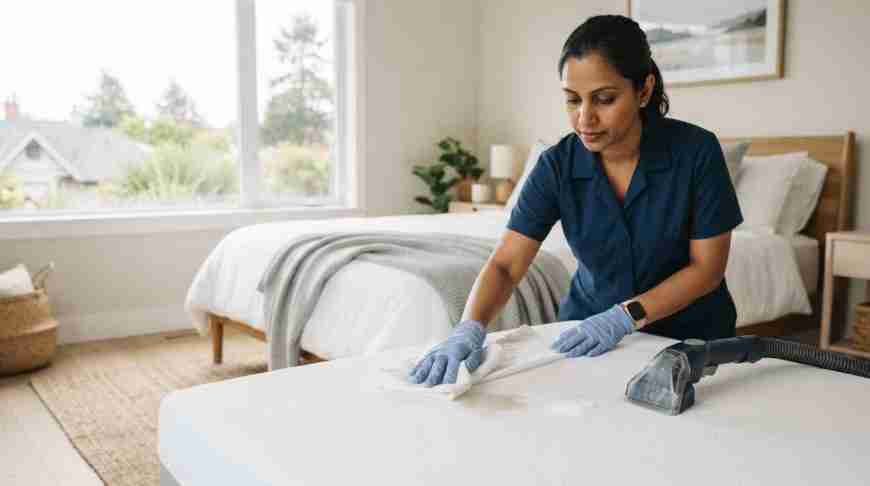
For cleaning vomit from a mattress, put on disposable gloves, lift away solid material, and blot instead of rubbing, which can spread the mess deeper into the fibres. Apply a small amount of water-and-white-vinegar solution, let it sit for 5-10 minutes, then blot again. Once the area is clean, cover it with baking soda for at least 30 minutes to absorb moisture and odours. Vacuum it up when dry, then let the mattress air-dry completely without direct heat.
A stain or lingering smell can be stressful, especially when you need the bed ready again. This guide explains how to clean fresh vomit from a mattress, treat older marks, use baking soda for odours, and disinfect and dry the mattress carefully. You’ll also learn how to handle the sheets and when professional cleaning may help with residue left after home treatment.
Key Takeaways
- Handle fresh messes gently and work from the outside towards the centre to limit spread and protect mattress fibres.
- Choose a stain treatment based on whether the mark is fresh or has dried, and avoid soaking the mattress.
- Give baking soda time to absorb moisture and odours; for persistent smells, leave it in place longer before vacuuming.
- Wash affected bedding according to its care label, and let the mattress dry fully before remaking the bed.
Disinfecting and drying a mattress
After removing residue and treating the stain, focus on surface hygiene and thorough drying. Follow these steps before putting the sheets back on the bed.
Disinfect the Mattress
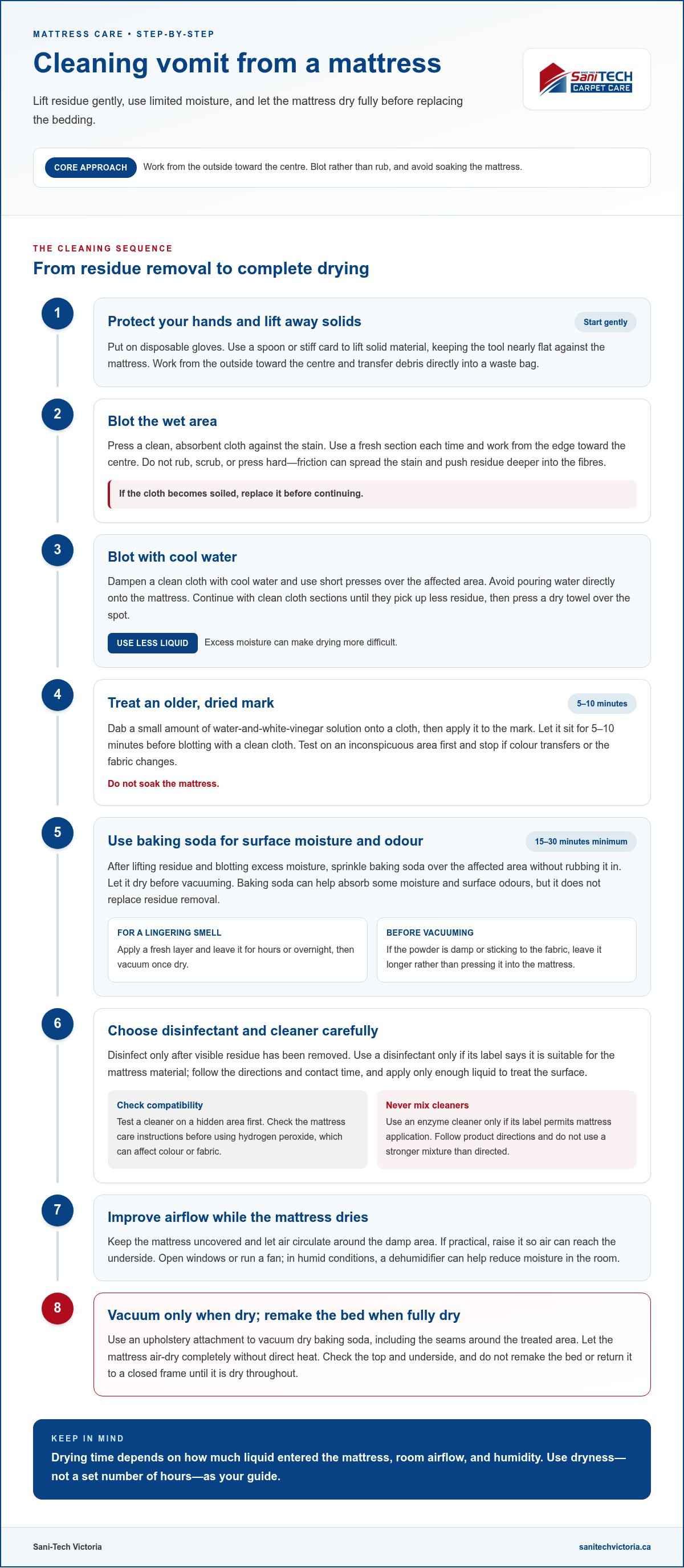
Apply a disinfectant only if its label says it’s suitable for the mattress material. Follow the product directions, including the contact time, and use only enough liquid to treat the affected surface. Avoid saturating the mattress: moisture can reach inner layers and take longer to evaporate. Keep the area ventilated, and don’t mix cleaners. Disinfecting works best after visible residue has been removed, since soil can interfere with surface treatment.
Consider Cleaner Options
Choose a cleaner suited to the stain and mattress fabric, and test it on a hidden area first. Vinegar may help treat residue, while hydrogen peroxide can affect colour or fabric, so don’t use it without checking the mattress care instructions. Use an enzyme cleaner only if its label allows mattress application, and follow the directions for application and dwell time. Never combine these products or use a stronger mixture than directed.
Dry and Vacuum the Mattress
Press a clean, dry towel against the treated area to draw out surface moisture, then let the mattress air-dry fully. Drying time depends on how much liquid entered the mattress, the room’s airflow and humidity, so use dryness rather than a set number of hours as your guide. Don’t apply direct heat, which can damage mattress fibres. Once the baking soda is dry, vacuum it thoroughly with an upholstery attachment, including the seams around the treated area.
Prevent Mould During Drying
Keep the mattress uncovered and let air circulate around the damp area. If practical, raise the mattress so air can reach the underside, and open windows or run a fan to improve airflow. In humid conditions, a dehumidifier can help reduce moisture in the room. Don’t remake the bed or return the mattress to a closed frame until it’s dry throughout. Check the top and underside before replacing the bedding. In situations where excess liquid or cleanup efforts affect adjacent flooring or walls, water mitigation specialists like DK Production Restoration can assist with thorough residential drying and restoration.
Removing solid vomit and blotting stains
To clean a mattress without damaging it, lift away solids, blot gently and use as little liquid as possible. Work carefully to avoid spreading the stain or soaking it deeper into the mattress.
Remove Solid Vomit
Put on disposable gloves, then use a spoon or stiff card to lift solid material from the mattress. Work from the outside of the mess towards the centre, keeping the tool nearly flat against the surface. This helps contain debris rather than pushing it into the fabric. Transfer the material directly into a waste bag, and avoid scraping hard enough to pull or roughen the mattress cover.
Blot the Stains
Press a clean, absorbent cloth against the wet area to lift liquid. Use a fresh section of cloth each time, working from the stain’s edge towards the centre. Don’t rub, scrub or press hard: friction can spread the stain and push residue further into the fibres. If the cloth becomes soiled, replace it before continuing to avoid transferring residue back onto the mattress.
- Dampen a clean cloth with cool water and blot the area with short presses. Avoid pouring water directly onto the mattress: excess moisture can carry residue deeper and make drying more difficult. Check the cloth after each pass. Continue with clean sections until they pick up less residue, then press a dry towel over the spot to absorb remaining surface moisture.
- For an old, dried stain, apply a small amount of water-and-white-vinegar solution to a cloth, then dab the mark. Let the solution sit for 5-10 minutes before blotting with a clean cloth. Test the solution on an inconspicuous area first, and avoid soaking the mattress. If colour transfers or the fabric changes, stop applying the solution and use a dry cloth to lift moisture.
Using baking soda to treat stains and odours
Use baking soda after lifting residue and blotting excess moisture. Apply it to the affected area, then remove it once it has dried.
Treat Stains with Baking Soda
Sprinkle a layer of baking soda over the stained area, covering the mark without rubbing powder into the mattress. Leave it for 15-30 minutes at minimum, and allow it to dry before vacuuming. The powder can absorb some moisture and help with surface odours, but it isn’t a substitute for removing the vomit residue first. Avoid adding water to the baking soda, which can leave damp clumps in the mattress fabric.
Address Lingering Vomit Odours
If a smell remains after cleaning the surface, apply a fresh layer of baking soda across the affected area. Leave it for hours or overnight, then vacuum it up once the powder is dry. Keep the mattress uncovered while the powder works so air can reach the treated area. If the odour returns, residue may remain below the surface and need further cleaning.
- Vacuum slowly with an upholstery attachment, making several passes over the powder and nearby seams. Check the attachment and vacuum canister afterwards, since fine baking soda can collect there. If the powder still looks damp or sticks to the fabric, leave it longer rather than pressing it deeper with the vacuum. Remove all visible residue before putting bedding back on the mattress.
- After vacuuming, smell the treated area and check for any remaining mark. Baking soda helps absorb moisture and odours, but it doesn’t remove every stain or reach all inner layers. If vomit has soaked deeply into the mattress, a surface application may not address the source. Avoid repeatedly adding powder to a damp spot, as it can cake instead of lifting cleanly.
If vomit odour persists, leave baking soda on the mattress for hours or overnight, then remove the powder.
Cleaning fresh vomit from a mattress
Act promptly, remove residue gently and limit added moisture. Careful cleaning vomit from a mattress helps protect the cover while treating the affected area.
Gather Cleaning Supplies
Collect disposable gloves, a spoon or stiff card, a waste bag, absorbent cloths and a dry towel. For a fresh stain, prepare equal parts water and distilled white vinegar, then add 1-2 tablespoons of mild dish soap or liquid laundry detergent. Use only a small amount at a time. Keep clean cloths separate from soiled ones, so lifted residue doesn’t transfer back onto the fabric.
Take Safety Precautions
Put on disposable gloves before handling vomit, and keep gloved hands away from your eyes, skin and mouth until cleanup is complete. Avoid touching your face while working. Place solid waste and used cloths in a waste bag, then remove your gloves carefully. Use one cleaner at a time. Use one cleaner at a time, and avoid combining cleaning products. Apply liquids to a cloth rather than pouring them directly onto the mattress.
Consider Professional Cleaning or Replacement
Lift solids with a spoon or card, then blot liquid with an absorbent cloth. Apply the vinegar mixture sparingly, wait 5-10 minutes, and blot with a clean cloth. An enzyme cleaner may help with a stain that has soaked in; follow the product label. Deeply soaked residue or a persistent odour can call for professional mattress cleaning. Consider replacement if the mattress is damaged or can’t be cleaned and dried thoroughly. If cleaning vomit from a mattress hasn’t resolved a deep-set stain, request professional cleaning rather than repeatedly wetting the material.
For a hydrogen peroxide mattress-cleaner recipe, include 3 tablespoons of baking soda. The hydrogen peroxide mattress-cleaner recipe also calls for 3 tablespoons of baking soda, so this ingredient belongs in that recipe as well. Keep the stated amount with the recipe when preparing it: 3 tablespoons of baking soda is the quantity specified. This is a recipe detail for the hydrogen peroxide cleaner, rather than a change to the vinegar mixture described above.
Sani-Tech Victoria: Carpet Steam Cleaning
If vomit or cleaning residue has also reached nearby carpet, Sani-Tech Victoria provides Carpet Steam Cleaning for homes in Victoria, Sidney, Sooke and Mill Bay. Cleaning the mattress won’t clean affected flooring, and carpet fibres need a method suited to the material. If residue has transferred to a chair or sofa, Upholstery Cleaning treats those fabric surfaces separately.
For carpet stains, professional cleaning can help address soil beyond the surface while taking the carpet fibres into account. Established services like Triangle Legacy Flood Restoration & Carpet Cleaning note that deep extraction and prompt drying are essential to prevent liquids from soaking into underlying carpet padding. Keep the mattress and affected carpet separate until both are fully dry, so damp materials don’t transfer moisture or odour.
Contact Sani-Tech Victoria for a free estimate on cleaning affected carpet or upholstery in your home.
Keep your sleep space fresh and cared for
Once the mattress is dry, consider whether nearby fabrics also need attention. Bedding, carpet beside the bed, or an upholstered headboard can retain splashes or odours. Treating those materials separately helps keep the room’s surfaces clean without adding more moisture to the mattress.
Cleaning vomit from a mattress can also prompt a closer look at other well-used textiles. Sani-Tech Victoria offers Carpet Steam Cleaning, Area Rug Cleaning and Upholstery Cleaning for affected surfaces around the home. The right service depends on the material and area needing care, so describe what was affected when you request a free estimate.
For support with carpet, rugs or upholstery, contact Sani-Tech Victoria. A considered next step can help you restore a cleaner, more comfortable space.
Frequently Asked Questions
How do you remove vomit from a mattress step by step?
Start by removing bedding and checking the mattress care label, since covers and materials can have different cleaning limits. Then clear the contamination, treat the affected area with a compatible cleaner, and assess the result once the mattress is fully dry. Check the seams and underside too. If residue has reached those areas, surface treatment alone may not address it.
How do you remove vomit smell from a mattress with baking soda?
Use baking soda on the cleaned, dry area to help absorb odours, then remove the powder completely. Avoid adding fragrance to mask the smell: it won’t remove the source and may leave another scent on the mattress. Check the odour again after airing the room. If it returns after the bed is made, residue may remain deeper in the mattress.
How do you disinfect a mattress after vomit?
Use a product labelled for the mattress material and for disinfecting, rather than assuming a household deodorizer does the same job. Vinegar and baking soda can help with cleaning or odour control, but they aren’t substitutes for a labelled disinfectant. Apply the product only as directed, and avoid soaking the mattress core. The aim is to treat the surface without leaving excess moisture inside.