
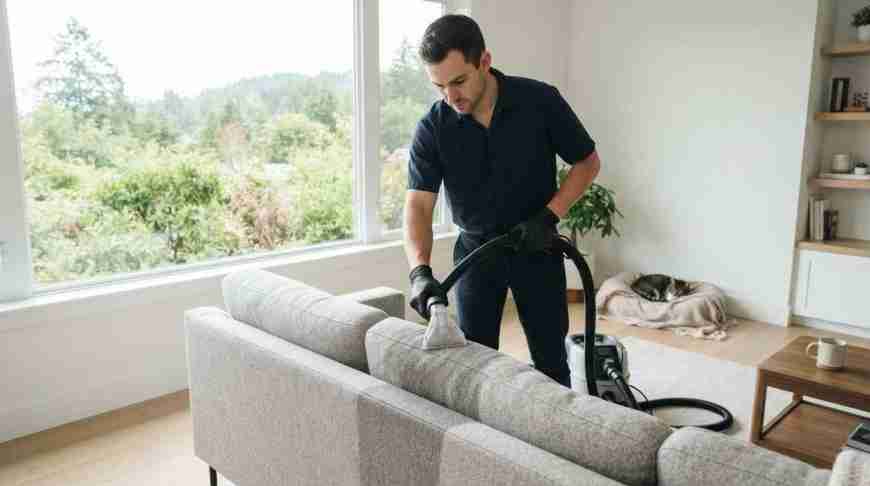
There isn’t one cleaning method for every sofa in Langford or Bear Mountain. Upholstery fabric, construction and condition all shape the care a piece needs. Knowing these details helps protect its appearance while addressing everyday soil and marks across Victoria, Sidney, Sooke, and Mill Bay.
It’s reasonable to consider both the cleaning process and the care your furniture needs, especially when delicate fibres, stains or odours are involved. A careful assessment helps match the approach to the upholstery and protect its condition.
This article explains how professional upholstery steam cleaning Langford works, which fibre-care and safety steps matter, and what affects drying. It also covers Southern Vancouver Island’s damp climate to help you plan a furniture refresh with confidence through Sani-Tech Victoria.
Key Takeaways
- Furniture type, fabric, soil and access all affect the work involved, so note these details when requesting an estimate.
- Plan for children and pets to stay off damp upholstery until it is fully dry, and follow the cleaning team’s after-care guidance.
- The right cleaning method depends on the fabric and its condition; matching the process to the fibres helps protect their colour and texture.
- Drying depends on moisture, airflow and indoor humidity, so consider your home’s conditions when planning the cleaning.
Carpet and upholstery cleaning in Greater Victoria
In Langford and Greater Victoria, furniture type, fabric, soil and access shape the cleaning plan. Compare the service scope and care steps to understand which method suits your upholstery.
Upholstery Steam Cleaning Services in Langford
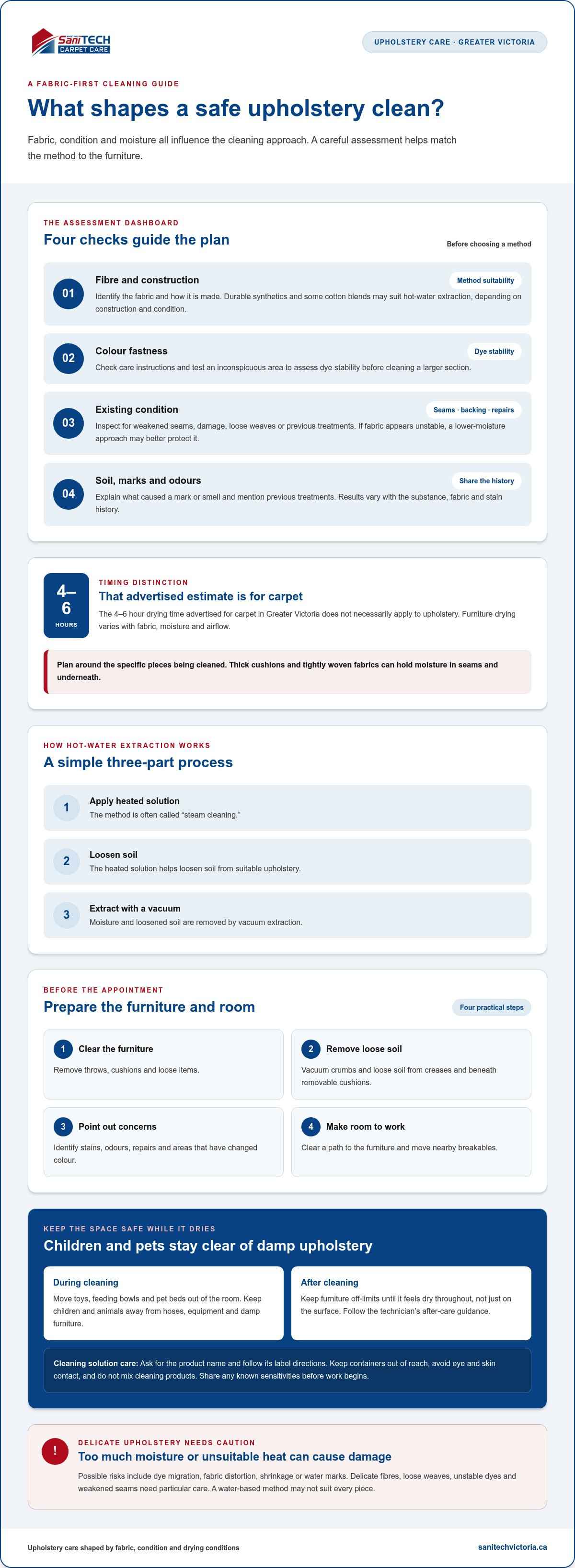
Professional upholstery cleaning can address everyday soil on sofas, chairs and other fabric-covered furniture. An assessment considers fibre type, colour fastness, seams, existing marks and furniture condition. These details help determine whether hot-water extraction suits the fabric and how to manage moisture. For upholstery steam cleaning in Langford, ask for a clear description of the items and work included.
When comparing service plans and guarantees, review the written scope, cleaning method, after-care instructions and guarantee terms. Note what the guarantee covers, any exclusions and the remedy offered if the stated service standard isn’t met.
Fabric protector is separate from upholstery cleaning, so ask whether it’s included in the treatment or offered as an optional service. Soil can collect along traffic lanes, even in newer carpet. Point out these paths during an assessment so they receive appropriate attention before extraction.
Best-Rated Upholstery Cleaners Near Langford
There isn’t one “best-rated” cleaner for every Langford household. Compare recent, detailed reviews that describe similar furniture, communication, fabric care and results. A review about carpet cleaning may not show how a cleaner handles a delicate sofa or chair.
For service in Langford, share the address, furniture type and access details when arranging an appointment. Carpet cleaning in Greater Victoria is advertised with drying times of 4-6 hours. That timing applies to carpet, not necessarily upholstery. Furniture drying varies with fabric, moisture and airflow, so plan around the specific pieces being cleaned.
The Langford carpet-cleaning service uses hot-water extraction for bedrooms, living areas and traffic lanes. Sofa and upholstery cleaning is priced by seat count and done on the same visit.
Cleaning safety for children and pets
Before cleaning, clear toys, feeding bowls and pet beds from the room. Keep children and animals away from hoses, equipment and damp furniture during the appointment. This keeps the work area clear and prevents curious hands or paws from contacting wet fabric or cleaning solution.
Ask for the cleaning solution’s name and follow its label directions. Non-toxic, biodegradable products are an option, but safe handling still matters. Keep containers out of reach, avoid contact with eyes and skin, and don’t mix cleaning products. If a child or pet has a known sensitivity, share that information before work begins.
- Remove chew toys and food dishes so they don’t touch treated surfaces.
- Keep cats and dogs off damp cushions; paws can track moisture elsewhere.
- Store toys and blankets outside the room until upholstery is dry.
- Ventilate the space as directed, while keeping pets safely contained.
Moisture management matters. A child climbing onto a damp sofa can press cleaning residue onto clothing or skin, while a pet may lick or chew a cushion. Keep furniture off-limits until it feels dry throughout, not just on the surface. Thick cushions and tightly woven fabrics can retain moisture in seams and underneath.
After cleaning, check cushion seams, the underside of removable cushions and the floor around the furniture. Follow the technician’s after-care instructions before returning toys, bedding or pet accessories. If you’re planning a clean in a busy household, prepare a separate resting area first. For practical fibre-care guidance, consider the fabric, household routines and the drying conditions in your room.
Cleaning methods
Professional upholstery cleaning matches moisture, temperature and extraction to the fabric. The right method starts with identifying the fibres and checking their condition.
Fabric Suitability for Steam Cleaning
“Steam cleaning” often describes hot-water extraction, where heated solution loosens soil before vacuum extraction. Depending on construction and condition, this method may suit durable synthetic fabrics and some cotton blends. Fibre content alone isn’t enough to decide.
Check the manufacturer’s care instructions and tell the cleaner about previous treatments or repairs. Testing colour fastness in an inconspicuous spot can help assess dye stability before broader cleaning begins.
Removing Stains, Odours, and Allergens
Extraction can lift soil and some stains from upholstery, but results depend on the substance, fabric and stain history. Oil, ink, pet accidents and old marks may respond differently. Repeated rubbing can push residue deeper or affect the surface.
Cleaning can remove some odour-causing soil and particles, but it doesn’t guarantee complete odour or allergen removal. Explain what caused a mark or smell, such as a pet accident, so the technician can select a suitable treatment and set realistic expectations.
Risks for Delicate Upholstery
Excess moisture or unsuitable heat can cause dye migration, fabric distortion, shrinkage or water marks. Delicate fibres, loose weaves, unstable dyes and weakened seams need particular care. A water-based method may not suit every piece.
Before cleaning, inspect the seams, backing and any existing damage. Testing an inconspicuous area can reveal colour or texture changes before a larger section is treated. If the fabric appears unstable, a lower-moisture approach may better protect the upholstery.
Preparing Furniture for Steam Cleaning
Prepare each piece to make inspection and cleaning easier:
- Remove throws, cushions and loose items from the furniture.
- Vacuum crumbs and loose soil from creases and beneath removable cushions.
- Point out stains, odours, repairs and areas that have changed colour.
- Clear a path to the furniture and move nearby breakables.
Keep children and pets away from the work area, and leave treated furniture unused until it is dry. Note the fabric label before cleaning; it gives the technician useful information about fibre care.
Estimated upholstery drying time
Upholstery drying time has no reliable single estimate for every Langford home. A tightly woven dining chair and a thick, padded sofa hold moisture differently. Carpet drying estimates don’t automatically apply to furniture because fabric, cushion filling and extraction methods differ.
Four factors shape how quickly a piece dries: fibre type, cushion thickness, moisture used and room conditions. Dense foam, layered cushions and water-absorbent fabric can take longer to dry. Effective extraction removes more moisture during cleaning, while airflow helps the rest evaporate.
Southern Vancouver Island’s damp weather can slow indoor drying when windows stay closed and the air is humid. Improve circulation by opening suitable windows or running a fan nearby, directed across the room rather than forcefully at one cushion. Leave space between furniture and walls so air can move around the upholstery.
- Keep cushions separated when the furniture design allows it.
- Don’t replace throws or blankets while fabric still feels damp.
- Keep children and pets off the furniture until it is dry throughout.
- Check seams and cushion undersides, not only the exposed surface.
A dry outer surface can hide moisture in seams or cushion filling. Check those areas before sitting down or returning cushions to their usual positions. If a cushion feels cool or damp, allow more airflow and time. Avoid direct heat, which can affect some fabrics and finishes.
Plan around use. For example, clean a frequently used sofa when the household can leave it undisturbed, rather than immediately before guests arrive. Explain your room’s ventilation and furniture construction when arranging service; these details help set practical expectations. To plan around your upholstery’s drying needs, request an upholstery cleaning estimate.
Sani-Tech Victoria: Carpet Steam Cleaning
Sani-Tech Victoria provides upholstery cleaning for furniture that needs professional care. If a sofa or armchair has accumulated soil or visible marks, an assessment can help determine an approach suited to its fabric and condition.
Share the furniture type, material and any areas of concern when discussing your needs. This gives the team useful context for planning the work and caring for your upholstery. Contact Sani-Tech Victoria to discuss your furniture cleaning needs.
Plan your next upholstery refresh
Choose a cleaning plan based on how each piece is used, not just how it looks today. A family-room sofa, a seldom-used accent chair and a dining bench face different kinds of wear. Thinking about daily use helps you prioritize furniture and plan care that suits your home.
If you’re considering upholstery steam cleaning in Langford, gather the fabric-care label and note any previous treatments before arranging service. These details give the cleaning team a clearer starting point for discussing suitable care. For delicate or well-loved furniture, a careful approach matters more than rushing toward a quick result.
Sani-Tech Victoria can help with upholstery cleaning as well as carpet steam cleaning and area rug cleaning. Contact Sani-Tech Victoria today to discuss the furniture you’d like cleaned and take the next step with confidence.
Frequently Asked Questions
Do you charge extra to come out to Langford or up to Bear Mountain?
Whether travel affects the quote depends on the address, access and work involved. A free estimate considers the furniture and cleaning requirements alongside the visit details, so a Langford or Bear Mountain address alone doesn’t establish the total. Share your location, the pieces you’d like cleaned and any access considerations when requesting an estimate.
How Long Will It Take to Dry?
There isn’t one fixed drying time for every upholstered piece. A lightly padded chair in a well-ventilated room dries differently from a deep sofa with thick cushions. After cleaning, separate removable cushions if appropriate and keep air moving through the room. Check seams and cushion undersides before putting throws back or using the furniture again.
Is Your service Safe for Kids, Pets, and the Environment?
Sani-Tech Victoria’s cleaning solutions are non-toxic, biodegradable, and pet- and child-friendly. Still, keep children and pets away from equipment and treated furniture during the appointment. Move a dog’s bed and food bowls out of the work area, then follow the technician’s directions for returning them after cleaning.
How does professional upholstery steam cleaning work?
Professional upholstery steam cleaning usually refers to hot-water extraction, not dry steam alone. The technician assesses the fabric, loosens suitable soil with a cleaning solution, then extracts the soil and moisture using specialized equipment. For upholstery steam cleaning in Langford, the fabric’s construction and condition guide the process. Final steps may include grooming the pile and setting cushions to dry.
How long does upholstery take to dry after steam cleaning?
Drying depends on fabric absorbency, cushion filling, how much moisture is extracted and room airflow. A removable cushion may dry at a different pace from the sofa’s fixed frame. Keep furniture clear until seams and deeper layers feel dry, not just the surface. In humid Southern Vancouver Island weather, indoor ventilation can help moisture leave the room.
Do Langford upholstery cleaners offer mobile or in-home service?
Sani-Tech Victoria provides cleaning for residential and commercial properties, including upholstery care. For an in-home visit, include your Langford address and furniture details when requesting a free estimate. Mention the items you want cleaned, such as a sofa, dining chairs or a fabric armchair, and note building access or parking details. This helps establish the visit’s scope and a suitable cleaning plan.