
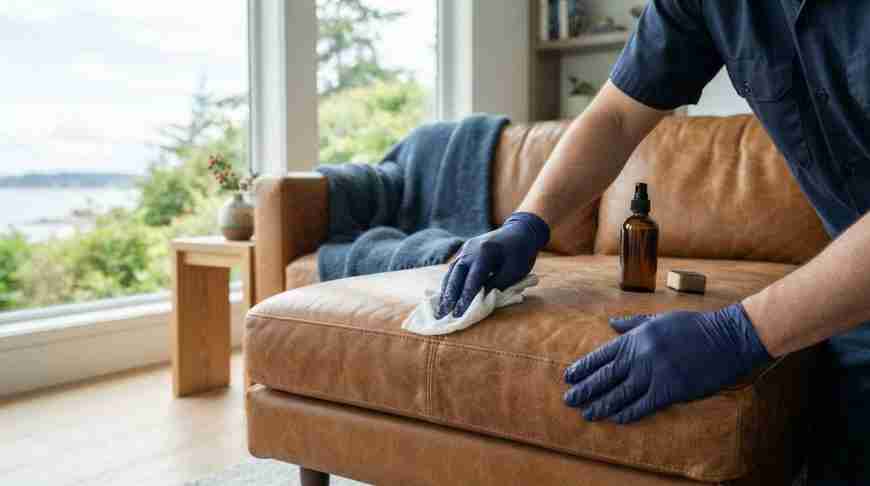
Leather furniture can be professionally cleaned, but the right approach depends on its material and condition. For leather sofa cleaning in Victoria, start by identifying the concern: built-up soil, a particular mark, or visible surface changes. These require different assessments, and cleaning alone may not address every sign of wear.
Set a realistic goal before deciding what care the sofa needs. Removing everyday grime is different from restoring colour or repairing a damaged finish. The sofa’s age, use, and previous care all affect what cleaning can reasonably achieve. A clear goal helps you assess whether the proposed process suits the furniture, rather than judging it only by how freshly treated the surface looks.
This guide explains how to approach professional leather care, from choosing a suitable cleaning method to understanding conditioning and finish inspection. It also considers how delicate upholstery and local indoor conditions affect furniture care in Victoria, Sidney, Sooke, and Mill Bay, helping you make an informed decision for your home.
Key Takeaways
- Leather furniture can be cleaned, but the method should match its material, finish, and condition.
- Delicate upholstery needs a controlled approach to reduce the risk of colour loss, surface damage, or fabric distortion.
- Cleaning and conditioning are separate steps; the right care depends on the sofa’s finish and whether it needs conditioning.
- A close inspection helps identify the leather type, wear, and areas that need special attention before cleaning begins.
- Professional upholstery and leather cleaning can help address embedded soil while supporting the long-term care of your furniture.
Can you clean leather furniture?
Yes. Professional cleaning can remove built-up soil from many leather sofas when the method suits the material. For leather sofa cleaning in Victoria, first identify what needs attention: general soiling, a sticky seat, or a localized mark. Each concern calls for a different assessment. Cleaning should not be mistaken for repairs or colour restoration.
A useful assessment considers the whole sofa, not just the seat cushions. Check the back, sides, underside of removable cushions, and areas near the floor. These spots can collect dust, pet hair, or colour transfer from clothing. A sofa beside a frequently used doorway, for example, may gather different soil from one in a formal sitting room.
The way the furniture is used also matters. A family sofa may have concentrated soil on the armrests and headrests, while a waiting-room chair may show repeated contact across its front edge. A cleaner can distinguish surface soil from changes caused by wear. This is important because cleaned leather may look different from nearby faded or abraded areas.
Consider the surrounding room as part of the plan. Before moving cushions or equipment, note nearby wood, metal, and fabric components. A leather sectional with fabric piping needs careful handling at the joins. Protecting adjacent materials and keeping the work area organized helps prevent cleaning solution from transferring to trim or flooring.
Reviews of leather sofa cleaners in Victoria, BC are most useful when they describe work on leather furniture specifically. Look for details about how the cleaner assessed the material, explained the proposed process, and addressed the customer’s concern. A review focused only on carpet may reveal little about leather care.
Stain protection is not automatically suitable for every upholstered surface. Leather and fabric respond differently, so don’t assume a protector intended for one material is appropriate for the other. If the sofa has already been treated, mention this before cleaning. A product previously applied to one cushion, for example, may affect how a later cleaning method works.
Drying time depends on the cleaning method, moisture used, and room airflow. After professional cleaning, keep the area clear so air can circulate around the sofa. In a Victoria home with closed windows during damp weather, airflow may be limited. Avoid covering the furniture or placing objects against treated surfaces until they are dry.
For guarantees and insurance in Victoria, read the written terms to understand what a guarantee covers, what remedy it provides, and any exclusions. Insurance documentation should identify the insured business and the work covered. These details clarify the service arrangement without suggesting that every stain or surface change can be reversed.
Cleaning delicate fabrics and leather
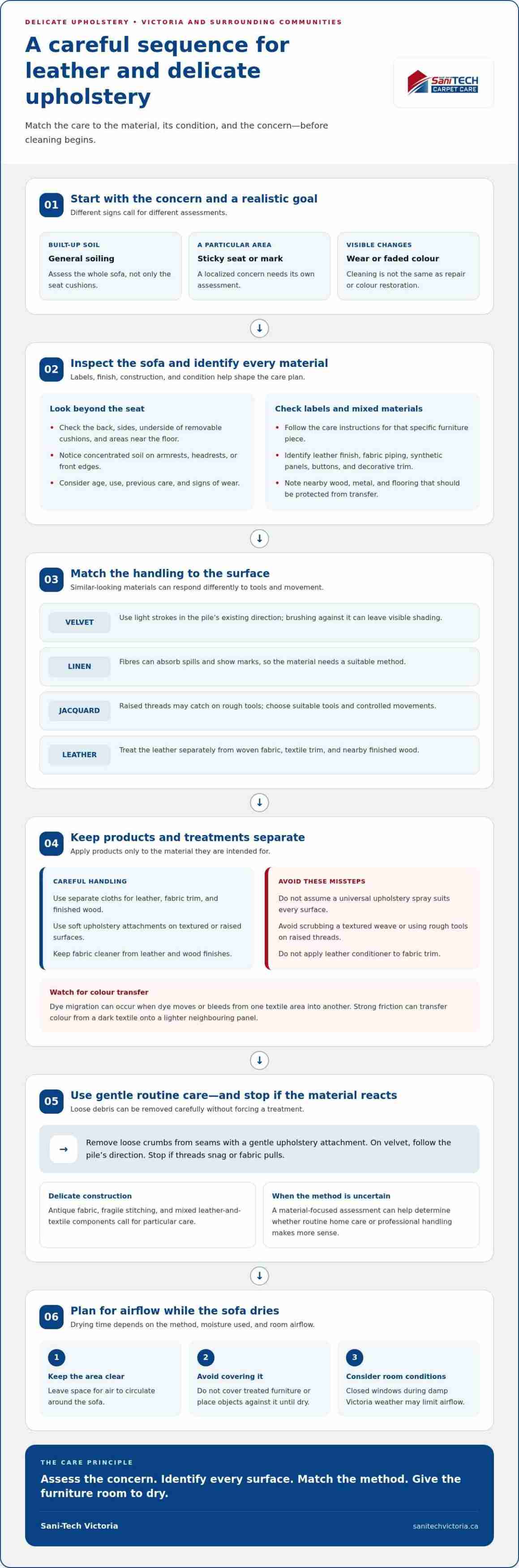
Delicate upholstery needs material-specific handling, even when two pieces look alike. Linen, velvet, and leather each have distinct surface characteristics. Check the furniture label and care instructions first. If a label specifies a cleaning method, treat it as guidance for that item, not for every fabric in the room.
Fabric construction affects where soil settles and how cleaning may change a surface’s appearance. Velvet has a directional pile, so brushing against its natural lay can leave visible shading. Linen can show marks where fibres absorb spills. Raised threads in patterned jacquard may catch on rough tools. These examples show why choosing the right tool and using controlled movements matter as much as the cleaning agent.
Leather needs a separate plan from woven fabric. Its finish may include a surface coating, while side panels or piping may be synthetic or textile. Treating contrasting materials as one surface can risk uneven colour or texture. Apply products only to the intended material, and use separate cloths for leather, fabric trim, and nearby finished wood.
Common mistakes include using a universal upholstery spray on every surface, scrubbing a textured weave, or applying leather conditioner to fabric trim. These can leave residue, flatten a pile, or change the surface sheen. Coloured upholstery can also experience dye migration, when dye moves or bleeds from one textile area to another. Strong friction can transfer colour from a dark textile onto a lighter neighbouring panel.
- Read the label: Match the care method to the specific cushion or furniture piece.
- Identify mixed materials: Note leather piping, synthetic backing, buttons, and decorative trim.
- Choose suitable tools: Use soft upholstery attachments on textured or raised surfaces.
- Keep products separate: Avoid transferring fabric cleaner onto leather or wood finishes.
For routine household care, remove loose crumbs from seams with a gentle upholstery attachment, then stop if threads snag or fabric pulls. On velvet, use light strokes in the pile’s existing direction. If a leather arm panel sits beside a fabric seat, use a method intended for each material instead of carrying one treatment across the seam.
Pieces with antique fabric, fragile stitching, or mixed leather and textile components need particular care. A material-focused assessment can help determine whether routine home care is suitable or professional handling makes more sense. For delicate leather surfaces, professional leather cleaning can address accumulated soil with attention to the finish and construction.
Leather sofa cleaning and conditioning
A professional leather cleaning process follows a sequence: inspect the finish, remove loose soil, clean with a compatible method, and assess whether conditioning is appropriate. For a sofa in Victoria, the technician also considers wear, previous treatments, and indoor conditions. Each step helps reduce the risk of a cleaning product or excess moisture affecting the leather’s appearance.
Typical cleaning steps include:
- Check the leather’s finish, seams, worn areas, and existing stains.
- Remove loose dust and grit from creases with suitable tools.
- Test a compatible cleaner on a discreet area and inspect the result.
- Clean in small sections, using controlled product and moisture.
- Remove residue as directed, then allow the sofa to dry naturally.
- Assess the surface before deciding whether conditioning is suitable.
Conditioning isn’t automatically the final step. Some leather finishes have a protective surface coating, while absorbent leather responds differently to products. An unsuitable conditioner can leave a greasy feel, uneven sheen, or residue that attracts soil. Follow the furniture maker’s care guidance, and use conditioner only if it suits the leather and its condition.
How often should a leather sofa be professionally cleaned? There’s no single interval for every home. Cleaning needs depend on use, visible soil, pets, household activity, and the leather’s finish. A sofa used daily needs attention sooner than one in a rarely used room.
For a fresh spill, blot promptly with a clean, dry cloth. Don’t scrub, use a hair dryer, or apply a household stain remover. Ink, food, and body oils behave differently, so the safest next step depends on the stain and leather finish. Rubbing ink across a cushion, for instance, can spread the mark and disturb the surrounding surface.
Conditioning can support the surface only when the product and application suit the material. Apply a small amount with a soft cloth, following the product directions, rather than saturating a cushion. Testing a hidden area first can reveal changes in colour or feel. Keep conditioner off uncoated fabric trim, and avoid layering products over old residue.
After cleaning, airflow helps the sofa dry evenly. In Victoria’s damp indoor conditions, keep cushions separated and away from heaters and direct sunlight. Check seams and folds before returning cushions to regular use. Leather sofa cleaning in Victoria works best as careful maintenance, with cleaning and conditioning chosen for the sofa’s material, use, and condition.
Leather type and finish inspection
Before cleaning a leather sofa, identify its leather type and surface finish. Aniline leather has little surface pigment, so natural markings remain visible and liquids can penetrate readily. Semi-aniline leather has a light protective colour layer, while pigmented leather has a more consistent surface coating. These differences affect how a cleaner interacts with the material.
Appearance offers clues, but it can’t identify leather reliably on its own. Uniform colour and a subtle sheen may suggest coated leather, while visible pores and natural shade variation may point to an absorbent finish. Furniture labels, care documents, and manufacturer guidance can help clarify the material. A specialist should compare these details with the sofa’s condition before choosing a process.
Inspection covers more than the main seat panels. Check armrests, headrests, seams, piping, cushion edges, and areas beneath removable cushions. These zones may show different wear because they receive different pressure and contact. A polished armrest, for example, may have body oils, while sunlight has faded a seat panel. Treating both areas identically can lead to an uneven appearance.
- Colour and sheen: Note differences between cushions, panels, and exposed edges.
- Surface wear: Look for cracking, peeling, sticky patches, scratches, or colour loss.
- Construction: Check seams, stitching, piping, repairs, and fabric trim.
- Previous care: Record any polish, conditioner, or repair product already applied.
A small, discreet test helps assess a proposed cleaning method. Choose an inconspicuous spot, apply a limited amount of the intended product, and inspect it once dry. Watch for colour transfer, darkening, tackiness, or a change in sheen. A test can reveal how that area reacts, but it can’t prove that every panel will respond identically.
Existing damage changes the cleaning plan. Peeling pigment, open cracks, loose seams, and repaired patches may be vulnerable to moisture or friction. A cleaner should distinguish surface soil from finish deterioration before starting. A pale patch, for instance, may be colour loss rather than removable dirt; aggressive rubbing could make it more noticeable.
Victoria’s coastal conditions also deserve consideration. Indoor humidity and salt-laden air can affect how a sofa feels and how quickly a cleaned surface dries, but they don’t identify its leather type. Note the room’s airflow and the sofa’s position, especially near windows or heating sources. A careful inspection considers these conditions alongside the material, its wear, and the appropriate cleaning method.
Professional upholstery and couch cleaning in Greater Victoria
Professional couch cleaning starts with identifying the upholstery, soil, and areas that get the most use. A fabric sofa in a Victoria family room may collect crumbs along seams, while an office chair often shows soil on its front edge. These patterns help guide the work. The method must suit the upholstery, not treat every couch as if it were made from the same material.
Leather, woven fabric, microfiber, and velvet each respond differently to moisture and agitation. A technician can inspect care labels, seams, cushion construction, and visible wear before selecting a process. Pressure can leave pile shading on a velvet seat, while a loose-weave cushion may need careful handling to limit distortion. Identifying the upholstery type helps protect its texture and colour.
Soil removal is a sequence, not a single pass. First remove loose debris, then assess stains and embedded grime. Depending on the material, a professional may use hand tools or upholstery equipment to apply and remove cleaning solution with control. This helps address soil in high-contact areas without soaking the frame or leaving unnecessary residue.
- Inspect: Note fabric type, wear, seams, cushions, and existing marks.
- Prepare: Remove loose debris from creases and beneath removable cushions.
- Test: Check a discreet area for colour or texture changes.
- Clean: Use a material-appropriate method on sections, including arms and seat fronts.
- Finish: Check treated areas and allow airflow around cushions as they dry.
A couch’s construction matters, too. Removable covers, attached cushions, decorative buttons, and wood trim affect how cleaning can be done. A button-tufted sofa, for instance, needs careful attention around recessed areas where soil gathers. Keeping moisture away from exposed wood helps protect its finish and prevents cleaning solution from transferring to other materials.
Greater Victoria’s coastal climate can bring damp indoor conditions, which may slow furniture drying when airflow is limited. After cleaning, separate cushions where possible and ventilate the room. Avoid directing a heater at damp upholstery, since concentrated heat can dry one area faster than another. Drying depends on the material, moisture used, room conditions, and airflow.
For homes in Victoria, Sidney, Sooke, or Mill Bay, professional upholstery care can be useful when a couch has extensive soiling, delicate fabric, or persistent odours. A careful assessment helps determine a suitable process for the specific piece. Book professional upholstery cleaning when your sofa needs more than routine vacuuming.
That assessment-led approach is supported by Andrew Salo’s 17 years of hands-on experience assessing upholstery and selecting cleaning methods. Experience in those tasks can help keep the choice of process tied to the couch’s fabric, construction, and condition, rather than relying on a single method for every piece. Clear discussion of visible marks, wear, and areas of concern also helps establish what should be addressed during the cleaning.
Before work begins, point out delicate sections, previous colour or texture changes, and cushions needing particular attention. The technician can consider these details alongside the upholstery assessment and explain how the chosen method will be applied. Careful handling and a final check of treated areas keep the focus on the furniture’s specific needs and suitable airflow while it dries.
Sani-Tech Victoria: Carpet Steam Cleaning
Sani-Tech Victoria provides Leather Cleaning for sofas that need careful, material-specific attention. The service can address built-up soil, visible marks, or areas routine dusting can’t reach. The leather’s finish, wear, and condition are assessed before a cleaning approach is selected.
For households in Victoria, Sidney, Sooke, and Mill Bay, professional care can help maintain leather seating alongside other soft furnishings. Upholstery Cleaning addresses fabric furniture, while Area Rug Cleaning and Carpet Steam Cleaning support care throughout the home. Each service focuses on the material being cleaned instead of applying one method to every surface.
Contact Sani-Tech Victoria to discuss leather cleaning for your sofa.
Choose the right care for your furniture
A well-maintained sofa deserves a care plan suited to its material and daily use. Keep the manufacturer’s care instructions with your furniture records, and note any stains, repairs, or products previously applied. These details help guide a useful conversation before arranging leather sofa cleaning in Victoria.
For a broader refresh, Sani-Tech Victoria also provides Upholstery Cleaning, Area Rug Cleaning, and Carpet Steam Cleaning. Discuss the surfaces that need attention and the condition of each piece, then decide what suits your home. A measured approach helps care for leather and surrounding furnishings without treating different materials as if they need the same methods.
Contact Sani-Tech Victoria about upholstery cleaning and take the next step toward considered care for your home.
Frequently Asked Questions
Can I clean a leather sofa myself, and what products are safe?
Yes, routine dusting and minor spills can be handled at home with care. Use a product labelled by its manufacturer for leather furniture, following the directions. Test a hidden patch first and let it dry before treating a visible panel. Avoid household disinfectants, abrasive sponges, and unlabelled oils, which can alter sheen or leave residue. Blot spills with a clean cloth instead of rubbing; seek professional assessment for persistent ink or dye marks.
Best leather sofa cleaners Victoria BC reviews
Look for reviews describing leather-specific work, how the cleaner assessed the material, explained the proposed process, and addressed the customer’s concern. Reviews focused only on carpet cleaning may not indicate experience with leather care.