
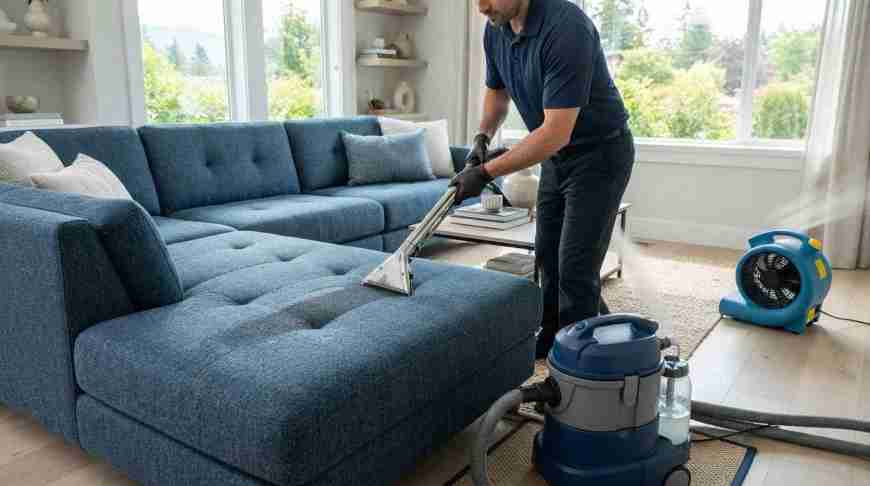
Drying time after sectional sofa steam cleaning in Victoria depends on the upholstery fibres and construction, how much moisture remains after extraction, and the room’s airflow and humidity. There’s no single drying time that applies to every sofa. Dense cushions and still, humid air can slow drying, while good circulation helps moisture evaporate.
A freshly cleaned sectional may look ready before its deeper layers are dry, so consider both the surface fabric and the cushions. Damp conditions across Southern Vancouver Island can also slow moisture loss, making ventilation part of the drying process.
This guide explains how professional upholstery cleaning works, what affects drying, and why fibre type matters when caring for your sectional. You’ll also learn how preparation, cleaning technique, and airflow after cleaning support a thorough result while helping protect the fabric.
Key Takeaways
- Identify the upholstery fibre and check its care instructions before choosing a cleaning method.
- Understand how sectional size, cushion construction, moisture removal, airflow, and indoor humidity affect drying.
- Learn what a professional upholstery-cleaning process can involve for sofas, sectionals, and chairs.
- Set a cleaning schedule based on household use, visible soiling, and the needs of the fabric rather than a fixed rule.
- See how careful sectional cleaning can address hard-to-reach areas while helping protect the upholstery.
Fabric-specific cleaning methods
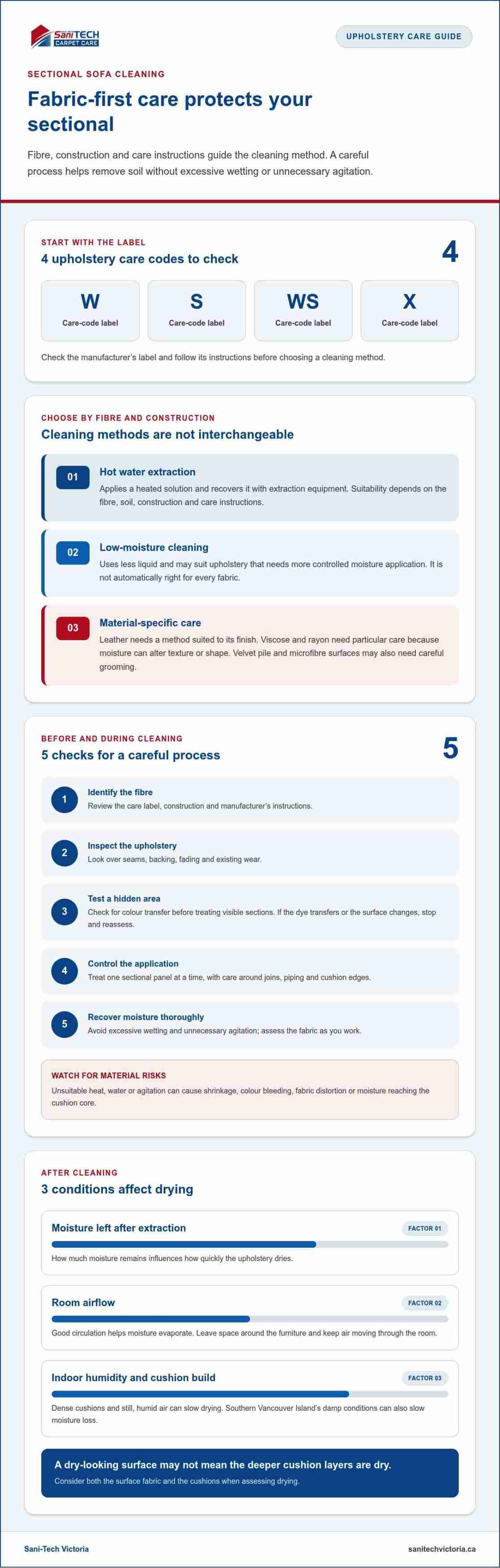
Choose a cleaning method based on the upholstery fibre, construction, and manufacturer’s care code. A sectional’s fabric, seams, and cushion filling all affect how safely moisture can be applied.
Preserving Upholstery Feel
A good clean removes soil without leaving fabric stiff, flattened, or rough. Fibre type matters: velvet’s pile can change direction, while woven polyester may respond differently to moisture and brushing. Viscose and rayon need particular care because moisture can alter their texture or shape. Leather also needs a method suited to its finish, not an approach designed for fabric.
For tailored care, inspect a hidden area, assess the fibre and colourfastness, then choose the cleaning action and moisture level. This helps guide treatment of delicate panels, piping, and contrasting sections. Gentle grooming after cleaning can help restore the fabric’s direction and feel.
Cleaning Method Comparisons
“Steam cleaning” is often used as a general term, but upholstery cleaning may involve hot water extraction, which applies a heated solution and recovers it with extraction equipment. Low-moisture cleaning uses less liquid and may suit fabrics that need more controlled moisture application. Neither method is right for every sectional: the fibre, soil, construction, and care instructions guide the choice.
Look beyond the method’s name. A careful process includes identifying the fibre, testing colour in a discreet area, controlling application, and recovering moisture thoroughly. For example, a heavily used polyester seat may need a different approach from a delicate rayon arm panel. The aim is to remove soil without excessive wetting or unnecessary agitation.
Fabric Safety and Damage Risks
Steam cleaning isn’t suitable for every fabric or upholstery care code. Check the manufacturer’s label, including codes such as W, S, WS, or X, and follow its instructions. Shrinkage, colour bleeding, fabric distortion, or moisture reaching the cushion core can occur if heat, water, or agitation is unsuitable for the material.
A careful process begins with a visual inspection of seams, backing, fading, and existing wear. Test a hidden area for colour transfer before treating visible sections. If dye transfers or the surface changes, stop and reassess the method rather than continuing across the sectional.
Sectionals also need controlled moisture across their separate modules. Treating one panel at a time helps prevent uneven wetting and makes extraction easier to manage. Pay close attention to joins, piping, and cushion edges, where liquid can collect or reach underlying materials.
For viscose or rayon, don’t assume a water-based method is suitable just because another panel tolerated it. Keep agitation gentle and assess the surface as you work. Leather needs care suited to its finish, while fabric upholstery needs a method appropriate for its specific fibres.
Upholstery cleaning for sofas, sectionals, and chairs
Furniture cleaning should account for each piece’s construction, use, and upholstery condition. In Greater Victoria, sofas, sectionals, and dining chairs can collect different soils in different areas.
Upholstery Dust and Contaminants
Seat creases, cushion edges, and the gap between a sofa’s back and seat trap crumbs and settled dust. Pet hair can cling to woven upholstery, while skin oils build up on frequently used armrests. Inspection helps locate these deposits before cleaning, focusing attention on the areas that get the most use.
Professional equipment can loosen and recover embedded soil more effectively than wiping the visible surface alone. Cleaning doesn’t establish that allergens are gone or treat a health condition. It addresses soil and residue in the textile, using a method suited to the upholstery’s material and condition.
Fibre-Specific Upholstery Care
Cotton, wool, polyester, and microfibre each need different care. A cotton cushion cover may readily absorb moisture, while a polyester blend can hold oily marks around armrests. Wool upholstery needs a gentle approach that respects its texture. Microfibre’s fine surface can show pressure marks, so grooming direction matters after cleaning.
If a sofa has mixed materials, identify each section before applying a cleaning solution. Check attached labels and manufacturer instructions, then treat piping, decorative trim, and cushion panels according to their construction. This helps avoid using one method on fabrics with different cleaning needs.
Benefits of Professional Cleaning
Professional upholstery cleaning combines inspection, suitable equipment, and controlled soil removal. It can reach seat seams and cushion contours that routine vacuuming may miss, and address dull-looking traffic areas such as a family sectional’s centre seat or a reading chair’s arms.
Good care helps maintain furniture’s appearance and useful life by limiting abrasive soil build-up. It can also help keep a living space feeling cleaner, without making unsupported promises about health outcomes or complete stain removal. Results depend on the fabric, the soil, and the furniture’s existing wear.
Before an appointment, clear small items from the seats and note known spills, pet-related marks, or worn areas. Point out loose seams, repaired patches, and cushions that cannot be turned. For a sectional, identify each connected piece and any tight access points. This helps plan a careful cleaning sequence for the whole arrangement.
In Greater Victoria, indoor humidity and airflow can affect how quickly upholstery dries after cleaning. Leave space around the furniture and keep air moving through the room as the fabric dries. For chairs with removable cushions, follow the technician’s placement guidance rather than stacking damp pieces together.
Free estimates and satisfaction guarantee
A satisfaction guarantee is most useful when its terms clearly explain what happens if the completed cleaning doesn’t meet the agreed service standard. Before booking, read the written policy and note what upholstery work it covers. A clear process helps you understand how to raise a concern without mistaking a guarantee for a promise that every mark will disappear.
Check what the policy considers a service concern. An area missed during the agreed cleaning, for example, differs from a stain that remains because it altered the fabric’s dye. Existing fading, worn fibres, and weakened seams are also different from cleaning performance. These distinctions help set realistic expectations for the sectional and its condition.
Look for instructions on how to report an issue and what information to provide. Keep the service record, care-label details, and notes about the affected module together. If a concern involves one seat rather than the whole sectional, identify its location and describe what you noticed after the upholstery dried. Specific details make the concern easier to assess.
A written remedy should describe the available response, rather than relying on a broad phrase such as “complete satisfaction.” Policies may outline a reinspection or another remedy, or set different terms. Read the wording carefully, and don’t assume the policy covers pre-existing damage, permanent stains, or changes caused by ageing fabric.
For example, a persistent soil line on a seat and a colour change caused by an old spill are not necessarily the same issue. The first may relate to the cleaning result; the second may reflect a change within the fibre. A clear assessment distinguishes what cleaning can address from damage already present in the upholstery.
Before service, note visible concerns and point them out during the initial inspection. Afterward, compare the completed work with the agreed scope, including the sections and cushions treated. If something needs attention, follow the policy’s reporting steps and describe the area clearly. This creates a useful record without assuming a particular outcome.
The terms matter as much as the guarantee’s name. Check whether an independent assessment is part of the remedy and how it is arranged. Understand what evidence is considered, such as the original condition, care instructions, and service notes. A clearly defined process makes the guarantee easier to understand and gives you a path for raising a genuine concern.
Recommended professional cleaning frequency
There’s no single cleaning interval that suits every sectional. Set a schedule based on household use, fabric condition, and visible soil. A sofa used daily by children and pets needs closer attention than a rarely used formal-room settee. The upholstery label matters too: cotton, wool, and synthetic blends respond differently to moisture and cleaning action.
Use these practical signs to decide when to arrange professional attention:
- Armrests, seat fronts, or headrests look darker than less-used areas.
- Dust and crumbs remain in seams after routine vacuuming with an upholstery attachment.
- A spill leaves a visible mark or sticky residue after appropriate spot care.
- Pet hair, odours, or everyday soil return quickly in a frequently used seating area.
- The fabric’s care label calls for specialist handling, or the upholstery shows wear.
Keep a simple record after each cleaning. Note the date, modules treated, main soil concerns, and any fabric-care instructions. For example, tracking a family sectional’s chaise, corner seat, and headrest separately can show which areas soil first. This helps shape a usage-based schedule instead of relying on the same interval for every sofa.
Household routines also affect timing. A sofa used for meals may collect food particles and oily marks, while a sectional used by pets may gather hair around cushion seams. Vacuuming with a suitable upholstery tool and promptly blotting fresh spills can reduce surface build-up between professional visits. Avoid aggressive rubbing, which can spread a mark or roughen fibres.
In Victoria and across Southern Vancouver Island, damp indoor conditions can affect drying after cleaning. Choose a time when you can keep air moving through the room, and don’t cover damp cushions. If the home feels humid, improve ventilation and leave space around the furniture. Drying conditions don’t determine the cleaning schedule, but they help with practical planning.
Fabric condition is another useful guide. Fading, loose seams, worn patches, or a change in texture call for careful assessment before cleaning. A heavily used cotton seat may need a different plan from a lightly used synthetic back cushion. Set the cleaning schedule for the whole sectional, with priority given to high-contact sections.
Instead of waiting until every surface looks visibly soiled, check the sectional during regular home upkeep. Read the care label, inspect seat seams and armrests, and vacuum accessible crevices. Arrange professional cleaning when accumulated soil, recurring marks, or the fabric’s care needs call for a deeper process. This supports upholstery care without imposing an unsupported fixed timetable.
Sectional sofa cleaning
A sectional needs a planned approach because connected modules, seams, and cushions create different cleaning challenges. Professional cleaning starts with assessing the full layout and upholstery before choosing a method.
Professional Cleaning Inclusions
Professional sectional sofa steam cleaning in Victoria, BC includes an upholstery inspection, soil assessment, fabric-appropriate preparation, and controlled cleaning with moisture recovery. Before treating the fabric, the technician notes the sectional’s modules, cushion construction, visible marks, and care instructions.
Cleaning focuses on contact areas such as seat fronts, armrests, and headrests, as well as seams where crumbs and dust collect. Extraction removes loosened soil and cleaning solution; a final inspection checks for missed sections and an uneven appearance. The process and products should suit the upholstery, not just the sofa’s size.
A chaise, corner unit, and removable cushions each need attention. Before work begins, mention old spills, pet-related marks, loose trim, or repairs. These details help set priorities and avoid treating a fragile panel like a durable seat cushion.
Preparing the Sectional
To prepare a sectional for professional steam cleaning, remove blankets, toys, remote controls, and decorative cushions. Clear a path to each module, including the chaise and the space beside the sofa, so equipment can reach the upholstery without needing to move household items.
Vacuum loose crumbs if convenient, but don’t scrub stains or apply a new cleaner before the appointment. Point out marks and explain what caused them, such as coffee, food, or a pet accident. This history helps guide treatment and avoids guesswork.
Check the care label and gather any manufacturer instructions. Identify cushions that detach, modules that separate, and areas that cannot be moved. If the sectional sits against a wall, make room where practical. Access to its back and sides helps the technician assess the whole piece.
Each sectional layout changes the work sequence. A U-shaped sofa may have enclosed corners and narrow gaps, while an L-shaped model often has a chaise with its own cushion and seam pattern. Treating one module at a time helps keep the process organized and provides consistent coverage across connected sections.
After cleaning, follow the technician’s guidance on using the furniture. Keep cushions separated where directed and allow airflow around damp sections. During Victoria’s humid periods, ventilation can help moisture leave the fabric. Avoid covering the sectional or pushing it tightly against a wall while it dries.
Before the visit, record the sectional’s configuration and the areas needing extra attention. For careful sectional sofa cleaning, arrange a cleaning appointment and provide those details when booking.
Sani-Tech Victoria: Carpet Steam Cleaning
Sani-Tech Victoria provides upholstery cleaning for sectionals that need fibre-conscious care and thorough soil removal. Before work begins, its cleaning approach considers the fabric, visible soiling, cushion construction, and access around connected sofa sections.
For sectionals with leather components, Sani-Tech Victoria also provides leather cleaning, using care suited to the material rather than treating it like fabric upholstery. Carpet Steam Cleaning and Area Rug Cleaning are also available when floor coverings need attention as part of your home-care planning.
Choose Sani-Tech Victoria when routine vacuuming no longer addresses embedded soil or visible build-up on your sectional. Share the sofa’s layout, care-label details, and areas of concern when arranging service. Contact Sani-Tech Victoria or visit sanitechvictoria.ca to discuss your upholstery cleaning needs.
Plan the Right Care for Your Sectional
Use what you’ve learned to make a clear plan for your sectional. Decide which parts need attention, note any concerns, and choose a time that fits your household routine. A focused plan makes it easier to discuss the work and prepare your living space.
For sectional sofa steam cleaning in Victoria, share your priorities and arrange a suitable appointment. Whether you’re addressing a specific concern or planning care for the whole sofa, clear communication helps get the work underway.
Keep the sectional’s care instructions handy and make the seating area accessible before the visit. These simple preparations help the appointment proceed smoothly and keep the focus on the result you want from your furniture care.
When you’re ready to discuss your sectional, contact Sani-Tech Victoria. A thoughtful plan is a practical first step toward caring for the furniture you use every day.
Frequently Asked Questions
How Long Will It Take to Dry?
Follow the technician’s guidance rather than judging readiness by the surface alone. Sectional cushions can retain moisture inside even when the outer fabric feels dry. Before regular use, check the cushion seams and underside, where moisture may linger. If any area still feels damp, leave it exposed to air and wait before replacing throws or sitting on that section.
What should I do about a fresh spill before cleaning?
Gently blot the spill with a clean, absorbent cloth, working from the outside toward the centre. Avoid rubbing, which can push liquid deeper or spread it across the upholstery. Don’t apply heat or combine household cleaners, as these steps may affect the stain or fabric. Note what spilled and when, then share that information during the service assessment.
Can removable cushion covers be machine washed?
Wash a cover only if its care label or manufacturer’s instructions allow it. A zipper doesn’t necessarily mean the cover is machine washable. Washing can change its fit, colour, or texture, and a shrunken cover may no longer fit the cushion properly. Check the instructions and choose a suitable care method before removing the covers.
Can pet odours be treated in a sectional?
Pet odour treatment can be part of upholstery care, but the affected area’s location matters. Odour may remain in a cushion or beneath the visible fabric, especially if a spill soaked through. Identify the affected module and explain what happened, including any previous treatment. Sani-Tech Victoria offers Stain and Pet Odour Cleaning, with treatment guided by the upholstery and affected area.
Can leather trim and fabric upholstery be cleaned together?
Leather and fabric need different care, even when they’re part of the same sectional. Leather trim has a surface finish unlike woven fabric, so a solution or technique chosen for one may not suit the other. Identify leather panels, piping, or contrasting sections during the initial inspection. Distinguishing the materials helps guide appropriate treatment across the furniture.
Why can a mark become visible again after cleaning?
A mark may reappear if residue or spill material remains below the visible surface and moves upward as the upholstery dries. This is sometimes called wick-back. The source of the mark, how deeply it penetrated, and any previous treatment can affect the result. If it returns, note its exact location and report it through the cleaning service’s follow-up process.
Does a sectional need treatment if only one area looks soiled?
Not always. A localized mark may need focused treatment, while frequent use can leave connected seats with a less obvious layer of general soil. The right approach depends on the visible condition, fabric, and how the sectional is used. Compare the affected panel with adjacent sections in consistent lighting, then describe what you see during the upholstery assessment.
What details should I provide about a previous stain treatment?
Share the product name, if you know it, and explain how it was applied. Mention whether it was rinsed, blotted, or left to dry, and identify the treated panel. Some products leave residue that changes how fabric responds to later cleaning. This history gives the technician useful context and helps avoid applying an incompatible treatment over an earlier one.