
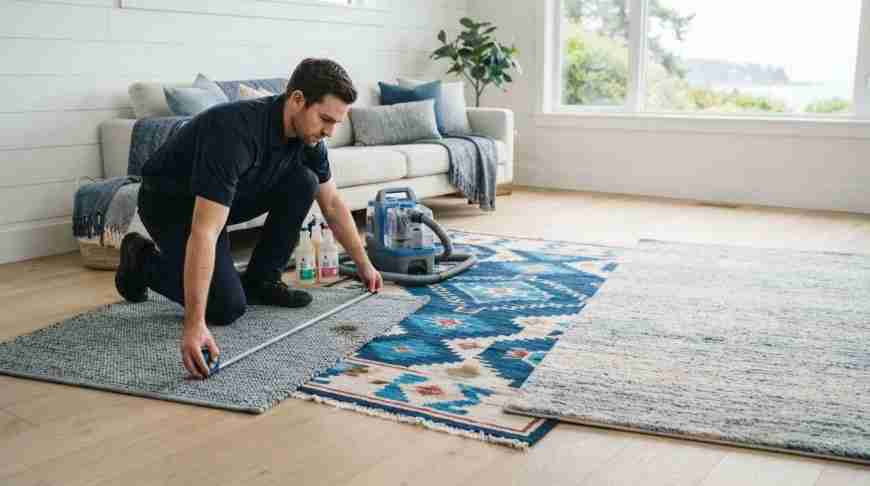
A machine-made rug’s cleaning needs depend on its dimensions, fibre, soil level, and any stains or odours. Calculate its area by multiplying its length by its width, then consider the material and condition to determine an appropriate cleaning method. Larger rugs can take more work, while delicate fibres may need careful handling.
When rugs vary in size and construction, it helps to know what professional care involves. This guide explains how area calculations work, how dimensions affect the cleaning process, and why fibre and condition matter when requesting an estimate.
You’ll also learn what to consider when a machine-made rug needs more than routine soil removal, so you can make an informed decision about its care.
Key Takeaways
- Measure the rug’s length and width to understand how its total area shapes the cleaning estimate.
- Check the fibre and construction, since synthetic rugs and machine-made wool rugs may need different cleaning approaches.
- Stains and odours can require targeted treatment beyond routine soil removal, affecting the work involved.
- Compare per-square-foot pricing with the rug’s full dimensions and condition for a clearer estimate.
- Specialist area rug cleaning can help protect the rug’s fibres and appearance as part of its ongoing care.
What affects the price of rug cleaning?
A machine-made rug’s cleaning plan depends on its size, fibre, condition, and required treatments. When comparing rug-cleaning services in Canada, check what routine cleaning includes and whether stain treatment, odour removal, or repairs are separate. Clear descriptions of the work make it easier to compare equivalent services.
Stains need treatment suited to their source. Coffee, greasy food, and pet urine leave different residues, so a single approach may not suit every rug. When describing the rug, note the stain type and location. Colour fastness also matters because dye migration can affect how a marked area is treated.
Odour removal may involve more than surface cleaning. Pet urine can penetrate a rug’s backing, so treating only the visible spot may not address the affected area. Describe where the odour is strongest and whether it returns after airing. This helps determine whether odour treatment should be part of the cleaning plan.
The rug’s condition can also affect the work. Loose fringe, unraveling edges, or brittle backing may need attention beyond soil removal. Fringe repair and edge binding are distinct tasks, so a service description should specify the repair and its location. That makes clear what the rug needs in addition to cleaning.
- Stains: Note each stain type and location, such as a food spill near one corner.
- Odours: Describe the source, including pet urine, and whether it returns after airing.
- Repairs: Identify loose fringe, damaged edging, or backing concerns separately.
- Cleaning scope: Check whether the plan covers the full rug or specific areas.
- Method: Ensure the proposed process suits the rug’s fibre and construction.
These details make service descriptions easier to compare because the work can differ. Odour treatment or fringe repair involves different tasks from routine soil removal. Describe the rug’s size, material, condition, and areas of concern to identify which treatments and repairs are relevant.
Factors affecting rug cleaning costs
A rug’s cleaning needs depend on its dimensions, fibre, construction, soil level, and accessibility. These details help determine the cleaning method and handling required. Share them before arranging service for a clearer picture of the work involved.
Rug size and cleaning costs
Rug size is its measured surface area, calculated by multiplying its length by its width in feet. A larger rug generally takes more time and needs more space to handle during cleaning.
A 5-by-7-foot rug and an 8-by-10-foot rug differ in surface area and handling needs. Measure the rug itself, rather than the floor around it, and note whether furniture blocks access. These details help distinguish the textile’s dimensions from the room layout and clarify how much rug needs attention.
Shape matters, too. Rectangular measurements alone may not describe a round or irregular rug precisely. Share its shape and widest dimensions so the cleaning plan reflects the textile rather than unused floor space.
Other cost factors
Other factors include the rug’s physical condition and setting. They matter because rugs of equal size can require different care.
Fibre and construction help guide the cleaning method. Dense synthetic pile, machine-made wool, and a Persian rug with delicate dyes can respond differently to moisture and agitation. Soil from an entryway may also be more embedded than dust on a rug in a lightly used room. Traffic patterns help explain the difference.
Access affects handling, too. A rug beneath a heavy dining table may take more preparation to move than one in an open space. Narrow hallways, stairs, or limited working room can also affect how the rug is handled. Mention these conditions when describing it.
Before arranging care, note the rug’s fibre label, pile texture, typical use, and placement. Include nearby furniture or access constraints. These practical details help match the process to the rug’s construction and condition. If you need guidance for an area rug, area rug cleaning services address care for rugs as a distinct textile.
Cleaning costs by rug size
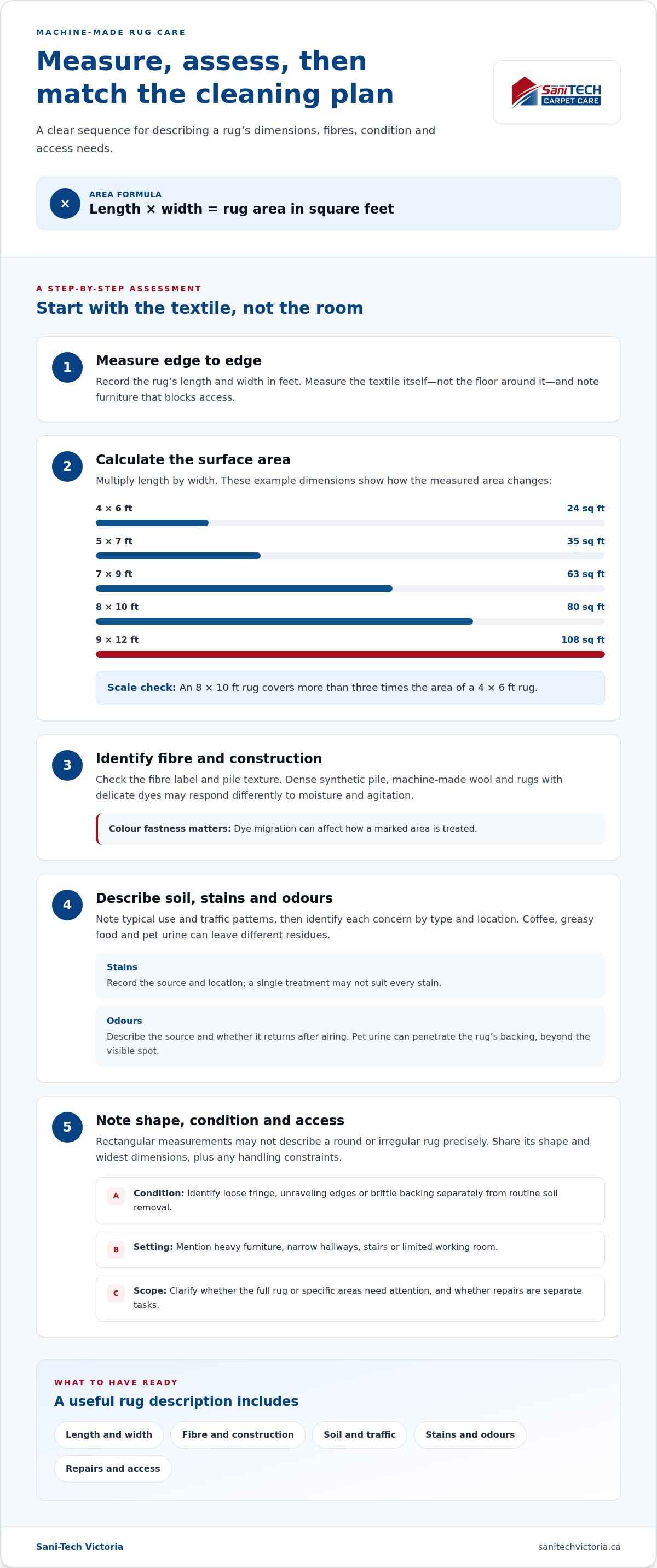
Rug size helps estimate the cleaning work because a larger surface usually needs more time and solution. Measure the rug’s length and width in feet, then multiply them to calculate its area. For example, a 4-by-6-foot rug covers 24 square feet, while a 9-by-12-foot rug covers 108 square feet. Those measurements give a clearer starting point for comparing professional rug cleaning estimates.
Here are common machine-made rug dimensions and their calculated areas:
- 4 by 6 feet: 24 square feet.
- 5 by 7 feet: 35 square feet.
- 7 by 9 feet: 63 square feet.
- 8 by 10 feet: 80 square feet.
- 9 by 12 feet: 108 square feet.
The figures show how quickly area increases as dimensions change. An 8-by-10-foot rug covers more than three times the area of a 4-by-6-foot rug. If an estimate uses a per-square-foot method, that additional surface area affects the amount of cleaning work. A quote may instead group familiar dimensions into size categories, so check how the rug’s measurements are applied.
Accurate measurements matter when a rug sits beneath furniture or extends partly into a carpeted area. Measure edge to edge instead of estimating from the room. For a non-rectangular rug, share its shape and widest dimensions; length times width may include space beyond the textile. The measurement helps describe the job, while the rug’s actual outline informs handling.
Size also affects practical handling. A 9-by-12-foot rug requires more room to move and position than a 4-by-6-foot rug. Its weight, pile, backing, and access through hallways or doorways can shape the work involved. These details matter even when two rugs have similar square footage. A large rug with dense pile, for example, may need a different approach from a flat, lightweight synthetic rug of comparable dimensions.
For useful measurements, record the length and width in feet and note any irregular outline. Include the rug’s location, such as beneath a dining table, and describe nearby furniture that affects access. These details distinguish the rug’s size from the room’s carpeted area and clarify the work covered by an estimate. Measurements help compare size, but fibre, soil, and cleaning method still shape the scope.
Cleaning costs for synthetic and machine-made wool rugs
Synthetic and machine-made wool rugs may need different cleaning approaches, even when they are the same size. Synthetic fibres are generally less expensive to clean than delicate materials such as silk or antique rugs. Machine-made wool still needs fibre-appropriate care because wool and synthetic yarns respond differently to moisture and cleaning solutions.
Construction helps determine the method. A low-pile synthetic rug may release soil differently from a dense machine-made wool rug. The backing matters as well, since some materials need careful moisture control. Fibre labels and construction details help explain why similarly sized rugs may receive different estimates.
Machine-made wool requires attention to colour fastness and drying. Excess moisture or an unsuitable cleaning solution can contribute to dye migration or distortion. A Persian rug, by comparison, may have delicate fibres or dyes that call for a different assessment. The label, texture, backing, and visible wear all help guide the cleaning method.
Professional area rug cleaning can address embedded soil more thoroughly than surface vacuuming. Before arranging cleaning or delivery, note the fibre on the label and describe any backing damage, fading, or previous cleaning. This helps match the process to the rug’s construction rather than treating every synthetic or wool rug alike.
Machine-made rugs can be cleaned at home, but excess water, strong products, or aggressive scrubbing can leave residue, affect dyes, or distort the backing. For routine upkeep, vacuum the rug and attend promptly to fresh spills. Test any spot-cleaning product in an inconspicuous area first.
Professional cleaning is generally recommended every 12 to 18 months. Rugs in high-traffic areas may need cleaning every 6 to 12 months, while homes with children or pets may need a shorter interval of 3 to 6 months. These schedules reflect soil exposure and use, not the fibre alone.
In Southern Vancouver Island, damp indoor conditions can make thorough drying especially important after a rug gets wet. Let it dry fully to avoid trapping moisture against its backing or the floor. A synthetic rug in a low-traffic room and a wool rug in a busy entryway need different care, even at the same size. Fibre, construction, traffic, soil, and drying needs all shape the cleaning plan.
Per-square-foot pricing calculations
Per-square-foot pricing applies a cleaning rate to the rug’s measured area. Multiply its length by its width, with both measurements in feet, to find the area in square feet. Then multiply that area by the quoted rate per square foot. This is a starting calculation, not necessarily the full estimate when separate services are involved.
For example, an 8-by-10-foot rug has an area of 80 square feet. If a quote gives a rate per square foot, multiply that rate by 80 to calculate the cleaning portion. Keep the rate and area units consistent. A rate stated per square foot cannot be applied directly to measurements in inches without converting the dimensions first.
An estimate may also include work beyond area-based cleaning. Stain treatment, odour removal, or repairs may be itemized separately from the basic service. Check whether the quoted rate covers the whole rug and whether handling or pickup is included. This explains why multiplying the area by the stated rate may not match the full estimate.
Rug shape affects measurement. A rectangular rug is straightforward to calculate, while a round rug needs a different formula. For a circle, multiply pi by the radius squared; the radius is half the diameter. For an irregular outline, record the shape and dimensions clearly. Don’t count empty floor space within the rug’s widest measurements as cleaned textile.
- Measure: Record the rug’s length and width in feet.
- Calculate: Multiply those measurements to find rectangular square footage.
- Apply: Multiply the area by the quoted rate per square foot.
- Compare: Review extra treatments, repairs, and handling separately.
Check how each estimate handles partial square feet and unusual edges. One may use exact measurements, while another may use a size category. Ask which dimensions and rate were used, then compare the same cleaning scope. If one estimate includes stain treatment and another does not, the totals describe different work.
Material can change the appropriate cleaning method, even when the area calculation is unchanged. Synthetic fibres and machine-made wool may need different care, and delicate fibres can require extra attention. An area-based formula describes quantity, not fibre suitability. The method must still account for the rug’s construction.
Use the calculation to understand an estimate, not to assume every job follows one formula. The measured area gives a basis for comparison, while the listed scope shows what the final figure covers. Check the units, dimensions, included handling, and separately listed treatments before comparing estimates.
Sani-Tech Victoria: Carpet Steam Cleaning
Sani-Tech Victoria cleans machine-made rugs and provides carpet steam cleaning for carpeted rooms. If a rug has embedded soil, visible stains, or fibres and backing that need particular care, professional cleaning can address its material without treating every textile the same way.
For an informed estimate, share the rug’s measurements, fibre label, condition, and any areas needing attention. These details help describe the work and handling involved. Sani-Tech Victoria serves homeowners in Victoria, Sidney, Sooke, Mill Bay, and surrounding South Vancouver Island communities.
Contact Sani-Tech Victoria for a free estimate on cleaning your machine-made rug.
Choose the right care for your rug
A rug’s cleaning plan should account for more than its appearance. Fibre, backing, wear, and how the rug is used all help determine its care. To understand machine-made rug cleaning cost, look at the work included, not just a figure in isolation.
If your rug needs professional attention, Sani-Tech Victoria offers area rug cleaning. Carpet steam cleaning is for carpeted rooms, while upholstery cleaning is available for fabric furnishings. Matching the service to the material keeps care focused on the item that needs it.
Before arranging service, note what you’ve observed about the rug and what matters most to you, such as soil removal or routine upkeep. This gives you a useful starting point for discussing suitable care. For professional help with your rug or home furnishings, contact Sani-Tech Victoria. Thoughtful care can help you feel more confident about maintaining the pieces you value.
Frequently Asked Questions
How Much Does Rug Cleaning Cost?
A rug-cleaning estimate in Canada depends on dimensions, fibre, construction, condition, and requested treatments. A flat synthetic runner with ordinary soil is a different job from a dense wool rug with embedded spills. Compare what each estimate includes, such as routine cleaning, stain treatment, fringe work, and handling. Matching the scope lets you assess estimates fairly instead of comparing totals for different services.
Do you charge for pickup and delivery?
Pickup and delivery may be included or offered as an optional extra, depending on the arrangement. Sani-Tech Victoria offers area rug pickup and delivery. When comparing estimates, check whether transport is included or listed separately. This matters when arranging care for a large rug that is difficult to move through your home.
How do I get an exact price for my rug?
Provide the rug’s measurements, fibre label, location, and a clear description of its condition. Mention details such as worn backing, lingering odour, or a spill near the edge. These specifics help describe the cleaning needed. Sani-Tech Victoria offers a free estimate in Victoria, Sidney, Sooke, and Mill Bay, so you can discuss your rug’s needs before arranging service.
Why is rug cleaning more expensive than carpet cleaning?
Rug cleaning isn’t automatically more expensive than carpet cleaning. A loose area rug may need separate handling, assessment, or fibre-specific care, while fitted carpet is cleaned in place. For example, delicate dyes may call for a different process from durable synthetic carpet. The estimate reflects the work and method involved, so compare rug and carpet services only when their cleaning scope is similar.
How much does professional machine-made rug cleaning cost in Canada?
Machine-made rug cleaning cost in Canada varies with dimensions, fibre, construction, soil, and additional work. A synthetic rug with routine soil and a machine-made wool rug with heavy traffic wear may need different methods. The estimate should reflect the specific rug and cleaning scope. For a useful estimate, share its measurements and describe its condition, including any spots or odours.
What is the average rug cleaning price per square foot in Canada?
There isn’t one per-square-foot rate for every rug-cleaning job across Canada. The calculation can vary with the rug’s material, cleaning method, local service arrangement, and condition. Per-square-foot pricing relates the estimate to the rug’s area, but may not cover separate treatments or handling. Check what the rate includes before using it to compare estimates.
How much does it cost to clean a machine-made rug by size?
Size affects the cleaning estimate because a larger rug has more surface area to clean, but dimensions alone don’t determine the amount. Two similar-sized rugs can need different work if one has dense pile or heavier soil. When requesting an estimate, provide the exact length and width, and ask whether the calculation uses measured area or a standard size category.
Do rug cleaners charge extra for pickup and delivery in Canada?
Pickup and delivery may be included in some arrangements or offered as an optional extra in others. The service area and the rug’s handling needs can affect transport arrangements. Sani-Tech Victoria offers area rug pickup and delivery. Review the estimate to see whether transportation is included in the quoted scope or separate from cleaning.