

A single drop of cooking oil or automotive grease isn’t just a surface mark; it’s a structural threat to your carpet’s integrity that begins bonding with the fibres the moment it lands. You’ve likely felt that immediate wave of anxiety when you see a dark, oily smudge on your floor, fearing that any attempt to clean it will only spread the mess or leave a permanent “ghost” stain that attracts dirt for months to come. We understand that frustration because we’ve seen how improper DIY attempts often lead to set-in discolouration or a stiff, oily texture that ruins the comfort of your home.
This guide provides the safest, most effective professional techniques for grease stain on carpet removal, ensuring you can lift stubborn oils without causing permanent damage. As Victoria’s trusted restoration specialists since 1983, we’re sharing the “blot-absorb-extract” methodology we use to maintain hygienic, beautiful environments across South-Vancouver Island. We will walk you through the exact steps to eliminate oily residue and ensure your carpet fibres remain soft, clean, and completely free of unsightly marks.
Key Takeaways
- Act immediately by blotting instead of rubbing, as heat and friction can permanently set oily substances into your carpet fibres.
- Utilize dry absorbents like cornstarch for safe grease stain on carpet removal, which helps pull oil out of the pile before it bonds.
- Identify whether you’re dealing with organic food oils or petroleum-based grease to choose the appropriate specialized cleaning agent.
- Protect your investment by avoiding harsh, high-pH chemicals that risk stripping the colour or leaving a dirt-attracting residue.
- Discover why high-temperature professional steam extraction is essential for liquefying and fully removing deep-seated grease from the base of the carpet.
First Response: What to Do the Moment Grease Hits Your Carpet
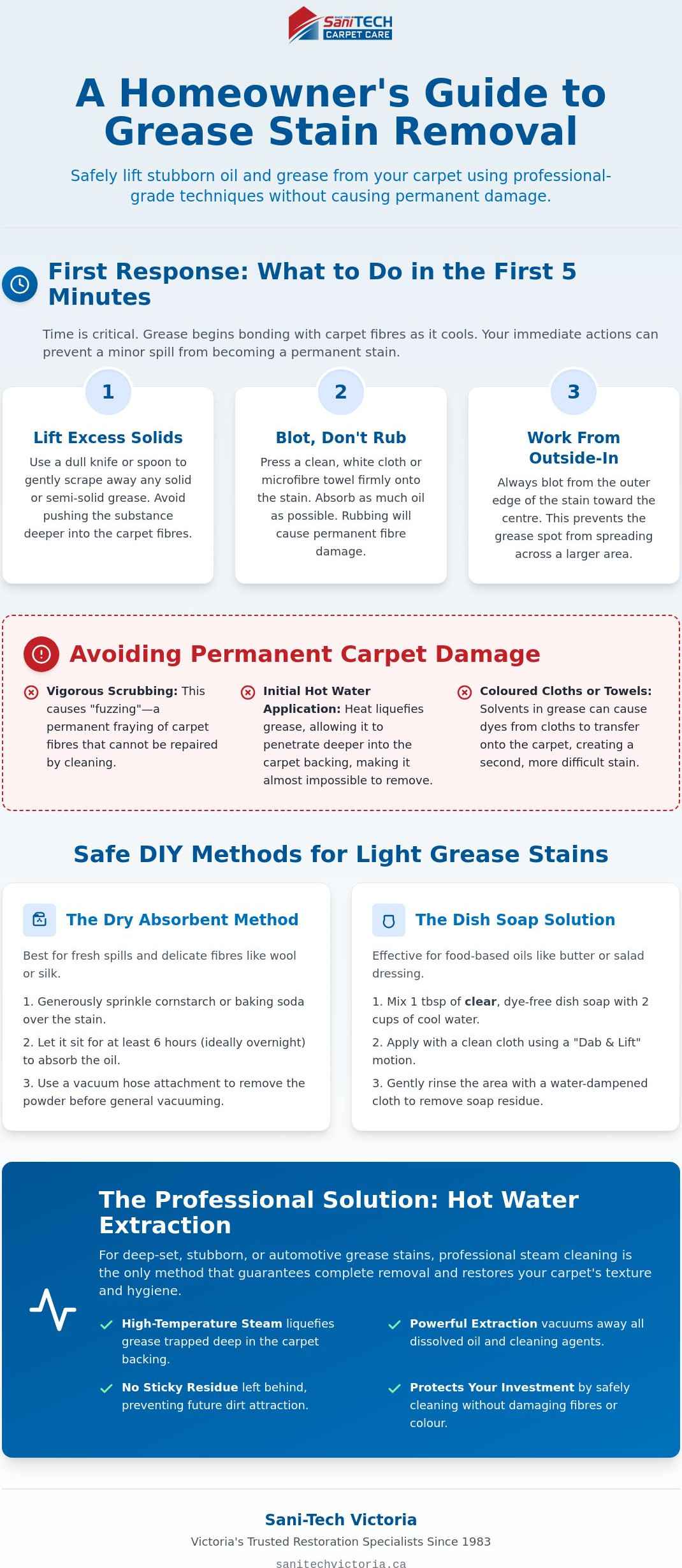
Time is the most critical factor when an oily substance hits your floor. Unlike water-based spills, grease behaves as a semi-solid that begins to bond with synthetic carpet fibres the moment it starts to cool. Successful grease stain on carpet removal depends entirely on your actions in the first few minutes. If you allow the oil to reach the primary backing of the carpet, the task of extraction becomes significantly more complex. Your primary objective is to contain the spill and prevent it from migrating deeper into the pile.
Before reaching for any liquid cleaners, you must address any solid or semi-solid matter. Use a spoon or a dull butter knife to gently lift away excess grease, such as butter, mayonnaise, or thick automotive lubricants. Work from the outside of the spill toward the centre to avoid smearing the mark into unaffected areas. Once the bulk of the material is removed, use a clean, white cotton towel to absorb as much liquid oil as possible. Press down firmly but avoid any horizontal movement.
The Dangers of Heat and Friction
Friction is a destructive force during the initial cleanup phase. Vigorous scrubbing often leads to “fuzzing,” a condition where the carpet fibres fray and lose their structural twist. This texture change is permanent and cannot be reversed by professional cleaning. You should also strictly avoid using hot water during this stage. While heat helps break down grease during professional extraction, applying it now will only liquefy the oil. This allows it to seep further down the yarn and into the carpet backing, where it becomes nearly impossible to reach with standard household tools. While various carpet cleaning methods exist for different soil types, the initial response to grease must remain cool and controlled.
Selecting the Right Blotting Material
The choice of material for blotting can mean the difference between a successful cleanup and a secondary stain. We always recommend using a plain white cotton towel. Coloured rags or patterned paper towels carry a high risk of dye transfer, especially when they come into contact with the solvents found in some greases. Microfibre cloths are also highly effective; their dense structure is specifically designed to trap oily molecules more efficiently than standard paper products. Continue the blotting process with fresh sections of the cloth until no more oil transfers onto the fabric. This ensures that the grease stain on carpet removal process is focused on the remaining residue rather than a large pool of liquid.
Safe DIY Methods for Removing Light Grease Stains
While professional intervention is the gold standard for deep-set oils, light surface spills can often be mitigated using household staples. The key to successful grease stain on carpet removal at home lies in using non-toxic agents that lift the oil without damaging the delicate fibres of your rug. It’s vital to realize that patience is your greatest asset during this process. Rushing the application or extraction phases often leads to the very permanent discolouration you are trying to avoid.
The Absorbent Powder Method
Cornstarch or baking soda acts as a powerful dry absorbent for fresh spills. Sprinkle a generous layer over the blotted area and let it sit for at least six hours, or ideally overnight. The microscopic particles of the powder bind to the oil molecules through the process of adsorption, physically pulling the grease out of the carpet pile. This method is particularly effective for silk or wool rugs where liquid cleaners might cause fibre distortion or dye bleed.
When it’s time to remove the powder, don’t use your upright vacuum’s beater bar immediately. Use the hose attachment first to extract the bulk of the powder from the base of the fibres. This prevents the machine from grinding the soiled powder deeper into the backing. Many old-fashioned cleaning tips recommend similar dry methods because they are gentle on the carpet’s structural integrity and avoid the risk of over-wetting.
The Dish Soap and Cool Water Rinse
For food-based oils like butter or salad dressing, a grease-cutting detergent is remarkably effective. Mix one tablespoon of clear dish soap with two cups of cool water. Avoid tinted soaps; the dyes can cause secondary staining that is harder to treat than the grease itself. Apply the solution with a clean cloth using a “Dab and Lift” technique, working from the outside of the stain toward the centre to keep the mark contained.
After the oil is lifted, a final rinse is mandatory to prevent the “Residue Trap.” Use a mixture of one part white vinegar to four parts water to neutralize the soap and break any remaining surface tension. This step ensures that no sticky film remains to attract future dirt. If your DIY efforts don’t yield a perfect result, our team provides meticulous carpet steam cleaning to ensure a residue-free finish that restores the soft texture of your floor.
Automotive vs. Food Grease: Why the Source Matters
Successful grease stain on carpet removal requires more than just a generic soap; it demands a chemical understanding of what exactly has landed on your floor. As restoration specialists in Victoria since 1983, we’ve found that homeowners often mistake all oily marks for the same problem. In reality, the molecular structure of a pizza spill is vastly different from that of a tracked-in motor oil smudge. Applying the wrong solution can actually set the stain, making professional grease stain on carpet removal much more difficult later on.
One of the most frustrating aspects of oil-based spills is “wicking.” This occurs when grease travels deep into the carpet backing during a DIY cleaning attempt. As the carpet dries, the oil is pulled back up to the surface fibres, causing the stain to reappear days later. This is why identifying the source is the first step in any professional-grade recovery plan. A surface-level fix won’t suffice if the grease has already compromised the primary backing.
Handling Tough Kitchen Spills
Dealing with animal fats like butter or bacon grease presents a different challenge than vegetable oils. Animal fats tend to solidify faster, trapping dirt within the greasy matrix. For these organic spills, enzyme-based cleaners are often the most effective tool; they biologically break down the proteins and fats. If these spills migrate from your floor to your furniture, you may need specialized upholstery cleaning to prevent the oil from damaging delicate fabric weaves. For older, oxidized stains that have turned yellow, the chemical bond is much stronger. This often requires professional-grade heat to liquefy the residue before extraction.
The Challenge of Industrial and Automotive Oils
Petroleum-based lubricants, such as axle grease or motor oil, are far more stubborn than kitchen spills. These substances are designed to resist breakdown under extreme heat and pressure. Standard household detergents are largely ineffective here. These stains usually require specialized volatile dry solvents that safely break down petroleum bonds without damaging the carpet’s integrity. We strongly caution against the “internet wisdom” of using flammable solvents like gasoline or brake cleaner indoors. These chemicals can delaminate the carpet backing and ruin the subfloor. According to the Carpet and Rug Institute, using unapproved solvents can also void your carpet’s manufacturer warranty. If you find yourself scrubbing a dark industrial mark with no progress, stop immediately. Continued friction will only cause permanent black staining in the carpet centre.
The Dangers of DIY: Avoiding Permanent Carpet Damage
While home remedies offer a quick fix, they often introduce hidden risks that jeopardize the lifespan of your flooring. Improper grease stain on carpet removal techniques can lead to chemical burns, particularly when using high-pH cleaners like ammonia or harsh laundry detergents. These substances can strip the dye from your carpet, leaving a bleached or faded patch that no amount of professional cleaning can restore. We’ve encountered many Victoria homes where a small grease spot became a permanent white circle because of aggressive chemical use.
Excessive liquid is another common pitfall. When you saturate a grease spot with water and soap, the liquid can seep through the fibres and reach the primary backing. This often leads to delamination, where the secondary backing separates from the carpet. This structural failure causes the carpet to ripple or buckle. Additionally, trapped moisture combined with organic grease provides a perfect breeding ground for bacteria, resulting in persistent, musty odours that linger long after the stain appears gone.
The Soap Residue Problem
If your “cleaned” spot turns dark or grey within two weeks, you’ve likely fallen into the residue trap. Surfactants in dish soap are designed to cling to oil, but if they aren’t fully extracted with a professional-grade machine, they remain in the pile. This sticky film acts as a magnet for household dust and foot traffic soil. You can test for this by pressing a damp, white cloth onto the area; if you see even a hint of foam or bubbles, the soap is still there. Professional extraction is the only way to ensure grease stain on carpet removal doesn’t lead to a perpetual cycle of re-soiling.
Risks to Heirloom and Oriental Rugs
Natural fibres require a completely different level of care. We never recommend DIY grease removal for silk or high-end wool pieces, as these materials are highly sensitive to pH imbalances and moisture. Improper treatment can cause permanent fibre shrinkage or irreversible dye bleed. If you own a valuable piece, it’s safer to seek expert oriental rug repair and restoration rather than risking a home experiment. For a worry-free experience that preserves your investment, you can book a professional carpet steam cleaning to handle the extraction with clinical precision.
Professional Carpet Steam Cleaning: The Only Permanent Solution
While blotting and absorbent powders manage surface spills, they rarely reach the oils that have migrated to the base of the carpet pile. Professional grease stain on carpet removal utilizes truck-mounted systems that generate temperatures exceeding 200 degrees Fahrenheit. This intense heat is essential because it liquefies solidified fats and petroleum bonds that have hardened within the fibres. Once the grease is liquefied, our high-pressure extraction process pulls the emulsified slurry out of your home and into a waste tank. This level of power is simply unattainable with a portable rental unit.
In our damp South-Vancouver Island climate, leaving any organic grease behind is a recipe for bacterial growth and persistent odours. Our technicians utilize specialized pre-conditioning agents designed specifically for the high-traffic zones of Victoria homes. These solutions break down the molecular tension of the oil before the steam hits the floor. We also prioritize sanitizing and deodorizing every treated area. This ensures that no organic matter remains to rot or attract allergens, creating a hygienic environment that is safe for every member of your household.
The Sani-Tech Victoria Advantage
We have served the communities of Sidney, Sooke, and Mill Bay since 1983. This decades-long history has given us a clinical understanding of the specific carpet types and environmental challenges unique to our region. Our carpet steam cleaning process uses organic and safe cleaning methods that protect your family and pets from harsh chemical residues. Choosing a professional “spotting” service is a strategic investment in your property. Unlike rental machines that often lack the suction to fully remove moisture, our equipment ensures your floors are dry and residue-free within hours, not days.
Maintaining Your Carpet After Professional Cleaning
Once your carpets are restored, prevention is the best strategy for longevity. We recommend using high-quality entrance mats to trap automotive grease before it reaches your interior rooms. Area rugs can also serve as a sacrificial layer in high-risk zones like dining areas or kitchens. To maintain the structural integrity and soft texture of your flooring, schedule a professional deep clean every 12 to 18 months. This proactive maintenance removes abrasive grit and hidden oils before they can cause permanent fibre wear. If you’re currently facing a stubborn oily mark, contact Sani-Tech Victoria for a professional deep clean today and experience the meticulous care your home deserves.
Secure Your Investment with Professional Extraction
Successful grease stain on carpet removal relies on a meticulous balance of immediate action and chemical precision. You now understand that while blotting and absorbent powders manage the initial spill, they cannot address the oils that bond with the deepest fibres. Attempting to scrub away petroleum or organic fats often leads to permanent texture damage or the dreaded residue trap. These “ghost” stains return because the underlying oil hasn’t been fully emulsified and extracted from the carpet backing.
As locally owned expert stain removal specialists serving Greater Victoria since 1983, we provide the industrial-grade heat and suction required to fully liquefy and remove stubborn grease. We don’t just clean the surface; we restore the hygienic environment your family deserves. Book Your Professional Carpet Steam Cleaning in Victoria Today to ensure your floors remain soft, clean, and free of oily marks. Our team is ready to provide the clinical precision needed to save your carpets and give you total peace of mind. You don’t have to face tough stains alone.
Frequently Asked Questions
Can I use Dawn dish soap to get grease out of my carpet?
Yes, clear dish soap is highly effective for food-based oils because it breaks down organic fats. You must mix a small amount with cool water and blot the area gently. It’s vital to use a clear detergent to avoid dye transfer. You must also rinse the area thoroughly with a vinegar solution to prevent a sticky residue from attracting future dirt.
What is the best way to remove old, dried grease stains?
Professional hot water extraction is the only reliable way to tackle oxidized grease. Once grease dries, it forms a hardened bond with the synthetic fibres that household cleaners cannot break. We use truck-mounted equipment to reach the high temperatures required to liquefy this bond. This ensures the emulsified residue is pulled from the base of the pile rather than just the surface.
Will steam cleaning remove automotive oil from my rug?
Truck-mounted steam cleaning is exceptionally effective for petroleum-based lubricants. These substances resist standard detergents but respond well to high-pressure extraction and specialized pre-treatments. Our systems reach temperatures that break down the viscosity of motor oil. This allows for complete grease stain on carpet removal without the risk of delaminating the carpet backing through improper chemical use.
Is it safe to use baking soda for grease stain on carpet removal?
Baking soda is a safe, non-toxic absorbent for fresh spills. It works through the process of adsorption, pulling liquid oil away from the yarn before it can set into the backing. You must let it sit for several hours and then vacuum it out carefully using a hose attachment. Never scrub the powder into the fibres, as this can cause permanent abrasion and fraying.
How do I know if a grease stain is permanent?
A stain is likely permanent if the carpet fibres have suffered structural damage or “fuzzing” from aggressive scrubbing. If you’ve used high-pH chemicals like ammonia, the colour may be permanently stripped from the yarn. In these instances, what looks like a stain is actually a chemical burn. If the fibre remains intact but discoloured, professional-grade extraction can often still achieve a successful result.
Should I call a professional immediately for a grease spill?
You should call a professional immediately for petroleum spills or large organic accidents. These substances migrate quickly into the carpet backing and subfloor where household tools cannot reach. Early intervention with professional-grade suction prevents delamination and “wicking.” This stops the stain from repeatedly rising to the surface after you think you’ve cleaned it.
How much does it cost to have a single grease stain professionally removed in Victoria?
Professional rates in Victoria vary depending on the complexity of the extraction and the total square footage being treated. Most reputable companies have a minimum service charge to cover the logistics of bringing specialized truck-mounted equipment to your home. We recommend requesting a specific assessment based on the type of grease and the size of the affected area.
Can grease stains cause my carpet to smell over time?
Organic grease stains will often develop unpleasant odours if they aren’t fully extracted. Butter, pizza oils, and animal fats provide a food source for bacteria, especially in our humid South-Vancouver Island climate. Over time, these fats rot within the carpet backing and primary padding. This creates a sour or musty smell that household deodorizers can’t eliminate because they don’t reach the source.