

Is your carpet actually worn out, or is it simply buried under years of mechanical compaction and chemical residue? Many homeowners look at grey, flattened traffic lanes in their hallways and assume the fibres are permanently damaged beyond repair. You likely feel frustrated by those stubborn furniture indentations or worry that your flooring has become a hygiene risk for your family. It is a common concern for discerning property owners, but before you consider the massive expense of replacement, you should know that most carpets are simply hiding their original beauty under layers of deeply embedded grit and neglected pile.
We understand the pride you take in maintaining a clean, healthy, and aspirational home environment. This guide provides the definitive professional secrets on how to make old carpet look new again by utilizing restoration techniques that go far beyond a standard surface clean. You will discover the technical methods used to revive a flattened pile, remove the dingy look from high-traffic zones, and restore the vibrant original colour of your flooring. We will walk you through the essential balance of mechanical pile lifting and deep extraction required to extend the life of your investment and return that signature fluffiness to every room in your home.
Key Takeaways
- Distinguish between permanent fibre wear and simple soil loading to determine if your flooring is a candidate for professional restoration.
- Utilize mechanical agitation and the “Steam and Rake” method to lift flattened pile and effectively remove stubborn furniture indentations.
- Address the dingy, grey look in hallways by neutralizing pH levels; this process restores the original colour and vibrancy of the yarn.
- Realize the power of 200-degree steam cleaning as a professional reset button and learn how to make old carpet look new again through thermal memory restoration.
- Protect your flooring investment with the “Rule of Two” maintenance strategy to prevent local grit from causing premature fibre abrasion.
Why Carpets Look Old: Pile Flattening vs. Soil Loading
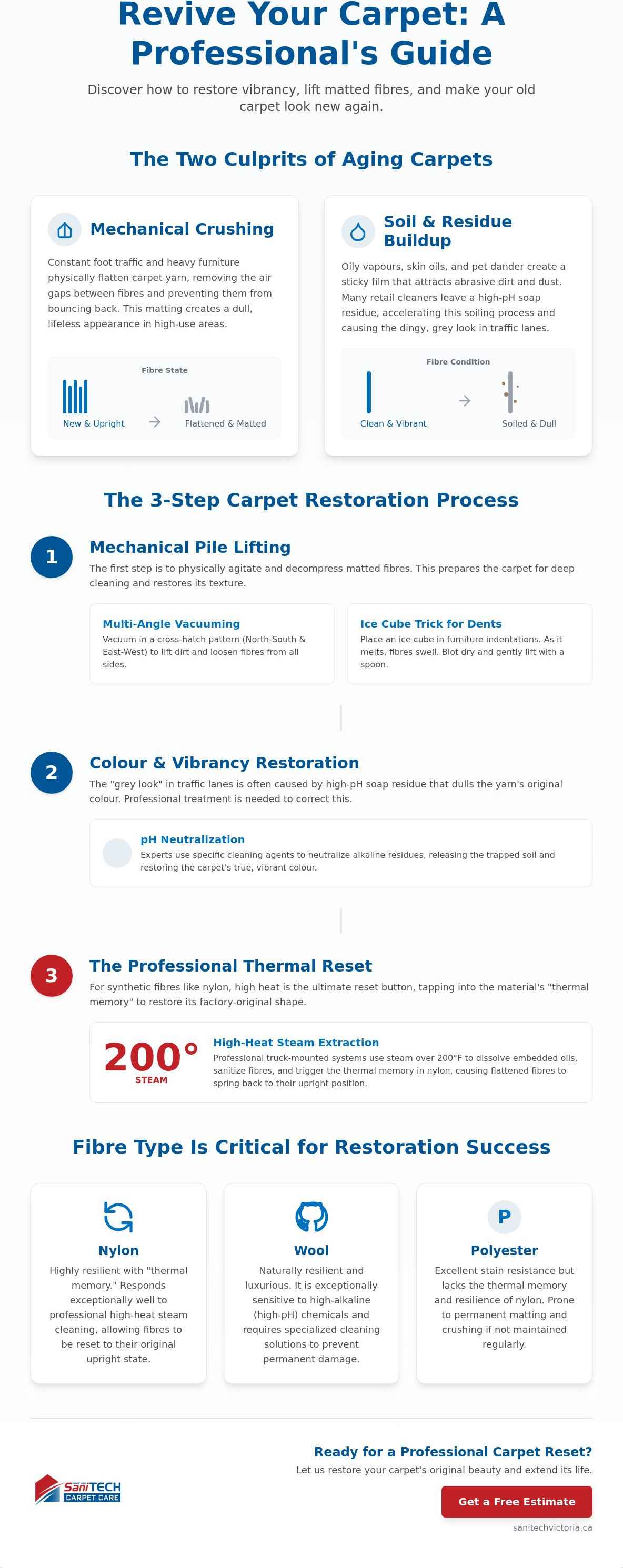
A new carpet possesses a distinct aesthetic defined by upright, resilient fibres and a vibrant, uniform colour. When light hits these vertical fibres, it reflects evenly, creating that lush, deep look we associate with a fresh installation. Over time, your carpet loses this luster through two primary mechanisms: mechanical crushing and chemical dulling. Understanding these forces is the first step in learning how to make old carpet look new again without resorting to a costly replacement.
Mechanical crushing occurs when the weight of heavy furniture or consistent foot traffic physically flattens the yarn. Once the air gaps between the fibres are removed, the carpet no longer bounces back. This is more than just an aesthetic issue; it’s a structural change in how the flooring handles light. Additionally, microscopic abrasive soil acts like tiny shards of glass. Every time you walk across a soiled carpet, these particles grind against the yarn, creating micro-scratches that permanently dull the fibre’s finish. This physical damage is why “grey lanes” in hallways often won’t disappear with simple vacuuming.
The Impact of Oily Soil and Residue
Cooking vapours, pet dander, and skin oils create an invisible, tacky film on your flooring that acts as a powerful magnet for household dust. This phenomenon explains why high-traffic zones appear so dingy compared to the protected edges of the room. Many homeowners attempt to fix this with supermarket spot cleaners, but these products often leave behind a high-pH soap residue. This sticky film actually accelerates the aging process by trapping new dirt faster than before. Soil loading is the cumulative buildup of these organic and inorganic materials that eventually overwhelms the carpet’s ability to hide debris.
Fibre Types: Wool, Nylon, and Polyester
The success of your restoration depends heavily on the material underfoot. Many heritage homes in Victoria feature high-quality wool carpets, which are naturally resilient but exceptionally sensitive to high-alkaline chemicals. In contrast, modern synthetic fibres like nylon possess a “thermal memory.” When treated with professional Carpet cleaning methods involving high-heat steam, nylon fibres can actually be “reset” to their original upright position. Polyester, while stain-resistant, lacks this same memory and is more prone to permanent matting if the pile isn’t maintained regularly. Realizing your specific fibre type is crucial when discovering how to make old carpet look new again, as the wrong approach can lead to permanent texture loss or colour bleeding.
DIY Pile Lifting: How to Revive Flattened Carpet Fibres
Reviving a flattened carpet pile requires a meticulous combination of moisture, heat, and mechanical agitation. Before you begin, you must determine if your flooring is actually a candidate for restoration. A “crushed” pile is simply compressed under weight, whereas a “worn” pile has suffered actual fibre loss due to abrasion. If you can still see the original colour deep within the yarn but the surface feels hard or matted, you can successfully learn how to make old carpet look new again through strategic pile lifting.
The foundation of any restoration project is a thorough, multi-angled vacuuming session. Most people vacuum in a single direction, which only cleans one side of the fibre. By vacuuming in a cross-hatch pattern, moving both North-South and East-West, you mechanically break the soil bonds that act like a low-grade adhesive. This simple change in technique allows the pile to stand more upright before you even apply moisture. While these home efforts are effective for maintenance, the Carpet and Rug Institute suggests that a professional deep clean remains the gold standard for maintaining warranty requirements and total fibre health.
The Ice Cube Trick for Furniture Indentations
Heavy sofas and cabinets leave deep, unsightly divots that seem permanent. To fix these, place an ice cube directly into the indentation and allow it to melt completely. The slow release of moisture allows the compressed fibres to swell and regain their original shape. Once the ice has melted, blot the area with a clean white towel to remove excess water. Use a blunt tool, like the edge of a spoon or a specialized carpet brush, to gently agitate the pile back into an upright position. You must be careful not to over-saturate the area; excessive water can seep into the backing and create a risk for mould or mildew growth.
Using Heat and Moisture Safely
For larger areas of flattened carpet, professional cleaners often use a damp towel and a household iron to “steam” the pile back to life. Place a moist, clean towel over the affected area and run a medium-heat iron over it for several seconds. The resulting steam penetrates the synthetic fibres, resetting their “thermal memory” and allowing them to stand tall once more. However, you must exercise caution. Synthetic carpets like polyester have a low melting point; never let the iron touch the carpet directly. If your DIY efforts don’t yield the results you expect, the experts at Sanitech Victoria possess the specialized raking tools and high-heat extraction equipment to handle more stubborn compaction.
Restoring Colour and Vibrancy: Dealing with the “Grey” Look
The “grey” traffic lanes that dominate your hallways are often the result of a chemical phenomenon rather than simple soil accumulation. When property owners research how to make old carpet look new again, they frequently overlook the critical role of pH balance. Most household soils are slightly acidic, while common “supermarket” spot cleaners are aggressively alkaline. When these high-pH detergents are applied but not properly neutralized, they remain in the fibre as a sticky, invisible film. This residue acts like a magnet, bonding to new dust and oils to create that stubborn, dingy appearance that vacuuming cannot touch.
To combat this, professional restoration focuses on an acidic rinse to “brighten” the fibres and restore their original vibrancy. A simple solution of white vinegar and water can act as a natural neutralizing agent, breaking down the alkaline salts that make the carpet feel crunchy and look dull. Adhering to the Carpet and Rug Institute cleaning guidelines ensures that you are following industry-standard protocols for maintaining the chemical health of your flooring. By resetting the pH level of your carpet, you allow the original dyes to reflect light correctly once more.
Removing the “Sticky” Residue
You can easily determine if your carpet is suffering from detergent buildup by performing a simple “foaming test.” Spray a small amount of warm water onto a clean area of the carpet and agitate it with your fingers. If you see bubbles or feel a slippery, soapy sensation, your carpet is laden with unrinsed cleaner. Most “old” carpets are simply “soapy” carpets. To fix this, use a one-to-one ratio of white vinegar and water in a spray bottle. Mist the area lightly and blot with a clean cloth to neutralize the alkaline detergents and strip away the sticky residue that traps dirt.
Spot Treating Old Stains Without Bleaching
Successful spot removal requires identifying the type of stain before applying any treatment. Protein-based stains, such as blood or dairy, require cool water and enzymatic cleaners to break down the organic matter. In contrast, tannin-based stains like coffee or tea respond better to slightly acidic solutions. You must follow the “blot, don’t rub” rule to preserve the physical integrity of the yarn. Aggressive scrubbing creates “fuzzing,” a permanent distortion of the fibre that mimics the look of a stain even when the colour is gone. If a spot remains unchanged after several careful attempts, you may be dealing with permanent dye damage where the original colour has been physically altered.
The Professional Reset: When to Call in the Experts
While DIY methods provide temporary relief for surface-level dinginess, they often fail to address the deep-seated soil loading that occurs over years of use. This is where a professional intervention acts as a necessary “reset button” for your flooring. Many homeowners reach a point where they believe replacement is the only option; however, professional truck-mounted systems can often salvage what looks like a lost cause. If you are seeking this level of expertise in the UK, Carpet Cleaner In Manchester provides comprehensive restoration for both residential and commercial properties. By understanding how to make old carpet look new again through industrial-grade restoration, you can save thousands of dollars in replacement costs while ensuring a hygienic environment for your family.
The true secret to reviving synthetic fibres lies in the application of 200-degree steam. This specific temperature is required to reset the “thermal memory” of nylon and polyester yarns, allowing them to stand upright once more. Standard household equipment simply cannot maintain these temperatures. At Sani-Tech Victoria, our specialized carpet steam cleaning victoria service utilizes high-pressure extraction to pull out the abrasive grit that acts like sandpaper on your fibres. This process doesn’t just improve aesthetics; it physically removes the microscopic debris that causes premature wear.
The Science of Hot Water Extraction (HWE)
Professional Hot Water Extraction is a precision-engineered process involving heat, agitation, and massive suction. Most DIY “steamers” are actually just hot water vacuums that lack the pump pressure to reach the base of the pile or the vacuum strength to remove all the moisture. This lack of power often leaves carpets damp for days, leading to “wicking,” where old stains migrate from the backing back to the surface as the carpet dries. Professional equipment ensures rapid drying times, which is essential for locking in the restored pile height and preventing the return of deep-seated spots.
Restoring Heirloom Rugs
Delicate area rugs and oriental pieces require a different level of care than standard wall-to-wall carpeting. These items often feature natural dyes and intricate weaving that can be easily damaged by improper pH levels or excessive heat. For these treasures, off-site cleaning provides a deeper level of restoration in a controlled environment. Beyond simple cleaning, we also specialize in oriental rug repair victoria, addressing issues like failing fringes or worn binding. This comprehensive approach ensures that your heirloom pieces continue to serve as a focal point in your home for decades to come.
If your efforts to revive your flooring have hit a plateau, it is time to trust the meticulous local experts who have served this community for decades. Contact Sanitech Victoria today to schedule a professional restoration and experience the difference that true technical expertise makes.
Maintenance Strategies to Keep Your Carpet Looking New
Once you have mastered how to make old carpet look new again, the goal shifts from restoration to disciplined preservation. Maintaining the integrity of your flooring requires a proactive approach that we call the “Rule of Two.” This strategy dictates a professional deep extraction every 12 to 18 months to remove the microscopic grit that standard vacuuming leaves behind. By adhering to this schedule, you prevent the accumulation of abrasive soils that physically cut into the carpet fibres, ensuring your investment remains in peak condition for its entire lifespan.
In Victoria, our proximity to the coast means that fine silica and salt are frequently tracked into the home. These particles are particularly damaging because they act like tiny blades against the yarn. You should install high-quality, heavy-duty entrance mats at every exterior door to catch this coastal grit before it reaches your interior rooms. Additionally, you should consider rearranging your furniture every six months. This simple habit redistributes wear patterns across the room, preventing the permanent crushing of the pile in specific high-traffic zones.
Vacuuming for Longevity
Effective vacuuming is your first line of defence against the “dust dulling” that makes carpets look aged. You must utilize a vacuum equipped with HEPA filtration to ensure that fine particulates are trapped rather than exhausted back into your living space. Most homeowners forget to maintain their equipment; you should change your vacuum filters every six months to maintain maximum suction power. Adjust the height of your beater bar so that it just grazes the top of the carpet pile. If the bar is too low, it causes unnecessary friction; if it’s too high, it fails to agitate the soil. For a typical household with pets or children, you should vacuum high-traffic areas at least three times per week.
Protecting Your Investment
Applying a high-quality carpet protector, such as Teflon or Scotchgard, is an essential final step in any restoration project. these treatments create an invisible barrier that prevents oily soils and liquid spills from bonding to the fibre. This protection significantly reduces the formation of “grey lanes” in your hallways and makes future spot cleaning much more effective. Often, a total room refresh involves more than just the flooring. Scheduling a professional upholstery cleaning victoria bc alongside your carpet service ensures that dust and allergens are removed from every fabric surface in the room. Finally, implementing a strict “no-shoes” policy is the most effective way to reduce the transfer of asphalt oils and outdoor pollutants, keeping your home hygienic and your carpets looking vibrant for years to come.
Reclaim the Beauty of Your Home’s Flooring
Restoration is a meticulous science that combines mechanical pile lifting with precise chemical neutralization. You’ve learned that most “worn” carpets are actually just burdened by soil loading and alkaline residue. By applying targeted heat and maintaining a disciplined vacuuming schedule, you can significantly extend the life of your flooring. Understanding how to make old carpet look new again allows you to preserve your home’s aesthetic without the immediate need for a costly replacement, much like how specialized rejuvenation from NanoTech Exteriors can extend the life of a home’s roof.
Since 1983, we’ve served South-Vancouver Island with a commitment to technical excellence and household safety. Our specialized services include expert rug restoration and meticulous fringe rebuilding for your most delicate heirloom pieces. We prioritize your well-being by utilizing organic and family-safe cleaning solutions that deliver a premium, worry-free experience. Breathe new life into your floors with Sani-Tech Victoria’s expert steam cleaning services.
Your carpets represent a significant investment in your home’s comfort and value. With the right professional care and these expert strategies, you can enjoy a plush, vibrant environment for many years to come.
Frequently Asked Questions
Can very old carpet really be restored to look new?
Restoration is highly effective if your flooring is suffering from soil loading rather than permanent fibre loss. While we can’t replace yarn that has physically worn away, professional steam cleaning resets the thermal memory of synthetic fibres and removes the dulling grit. This meticulous process is the secret to how to make old carpet look new again without the significant expense of a full replacement.
How much does it cost to professionally restore old carpets in Victoria?
Professional restoration costs depend on the square footage and the specific level of soil loading present in your home. Most local specialists in Victoria provide estimates based on the number of rooms or the total area requiring treatment. It’s always best to request a personalized assessment to ensure all traffic lanes and indentations are addressed correctly using industrial-grade equipment.
Will steam cleaning make my carpet look flatter or fluffier?
Professional steam cleaning makes your carpet look significantly fluffier by using high-heat extraction to reset the “thermal memory” of the fibres. Unlike DIY machines that often leave carpets damp and heavy, industrial truck-mounted systems lift the pile while removing the sticky residues that cause matting. This results in an upright, resilient texture that feels lush and comfortable underfoot once again.
How do I fix a carpet that has become “crunchy” after DIY cleaning?
A “crunchy” texture is usually caused by high-pH soap residue left behind by supermarket cleaners that wasn’t properly rinsed. To fix this, you should apply a light acidic rinse using a solution of one part white vinegar to one part water. This simple solution neutralizes the alkaline detergents and strips away the sticky film, allowing the fibres to regain their natural softness and flexibility.
Is it better to clean an old carpet or just replace it?
You should opt for professional restoration if the carpet backing is still sound and the fibres aren’t physically thinning or balding. Many homeowners assume grey traffic lanes are permanent damage, but they’re often just heavily soiled areas that need deep extraction. A professional restoration is a fraction of the cost of replacement and can extend your flooring’s life by several years.
How can I get rid of the “old carpet smell” permanently?
Eliminating persistent odours requires removing the organic material trapped deep within the backing and underlay. Standard vacuuming only addresses surface debris; permanent removal requires professional steam cleaning and specialized disinfecting services. This process neutralizes bacteria and pet dander at the source, ensuring a hygienic and fresh-smelling environment for your household. It’s an essential step in learning how to make old carpet look new again.
What is the best type of vacuum for lifting carpet pile?
The most effective tool for pile lifting is a high-quality upright vacuum with an adjustable beater bar and HEPA filtration. You must be able to set the height so the brushes just graze the top of the yarn to agitate the pile without causing friction damage. This mechanical action is essential for maintaining the results of a professional restoration and preventing future compaction.
Does raking the carpet actually help it look newer?
Raking is a vital final step in the restoration process because it aligns the fibres to reflect light evenly across the room. By using a specialized carpet rake after cleaning, you ensure the pile dries in an upright position and eliminate unsightly footprints or wand marks. This simple mechanical alignment is a professional secret for achieving a uniform, lush appearance in your home.