

What if the hours you spend scrubbing your bathroom floor on your hands and knees are actually pushing dirt deeper into your grout lines? It is a frustrating reality for many homeowners in our beautiful, albeit humid, coastal city. When you are searching for how to remove stains from grout victoria bc, you likely want a solution that does more than just move the surface grime around. The porous nature of grout makes it a literal magnet for the dust and moisture common in our South Vancouver Island climate, often leading to deep-seated discolouration that standard household cleaners simply cannot reach.
We realize that you want a home that feels as hygienic as it looks, without the fear of using harsh chemicals that might harm your pets or children. This guide reveals the most effective, professional-grade methods to eliminate those stubborn marks and restore your tile surfaces to their original, uniform brilliance. You will discover the science behind pH-balanced cleaning, the benefits of professional steam extraction, and the specific sealing techniques required to stop recurring mildew in its tracks. By the end, you will have a clear maintenance plan that ensures your grout stays bright and protected for years to come.
Key Takeaways
- Understand how Victoria’s coastal humidity and the porous nature of grout work together to pull contaminants deep into your floor surfaces through capillary action.
- Master the professional techniques for how to remove stains from grout victoria bc using pH-balanced methods that avoid the structural damage caused by common acidic cleaners.
- Evaluate the performance gap between manual scrubbing and high-pressure steam extraction to determine when your home requires a specialist’s intervention for deep restoration.
- Learn a safe protocol for managing minor surface spots using soft-bristled tools that protect your tile’s finish and preserve the integrity of the grout line.
- Realize the long-term value of penetrating sealers, which create a hydrophobic barrier to prevent future discolouration and stop recurring mildew in damp environments.
Understanding Why Grout Stains in Victoria Homes
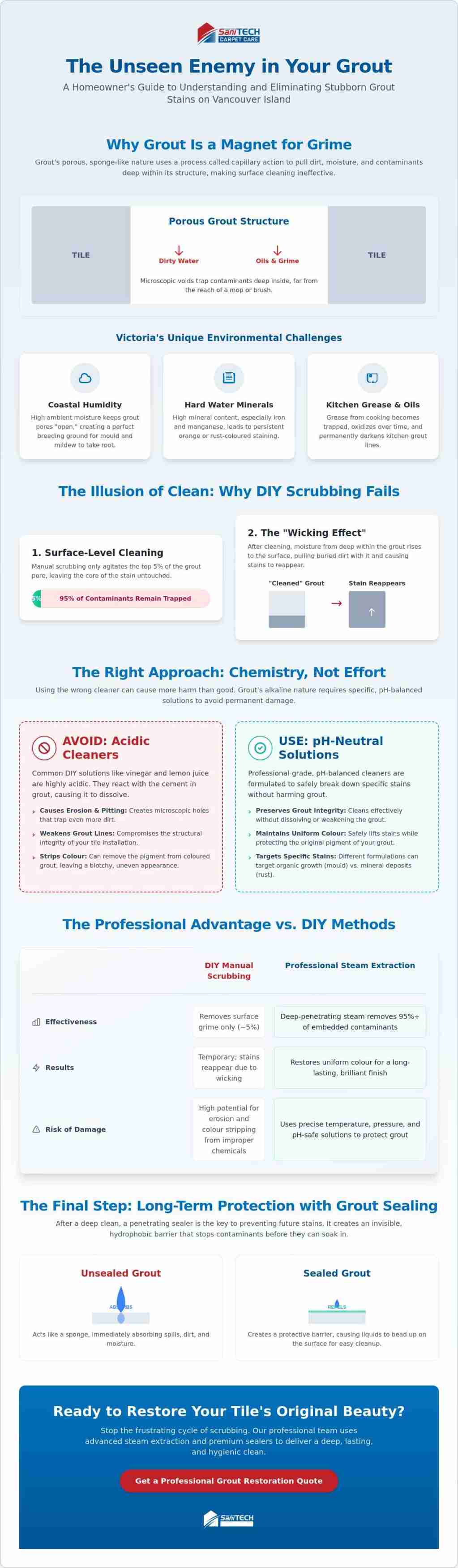
Grout is the most vulnerable component of your tile installation. While your ceramic or porcelain tiles are typically non-porous and easy to sanitize, the lines between them are a different story. To understand What is Grout? is to realize it is a cement-based material that functions much like a hard, dense sponge. It is filled with thousands of microscopic voids. These pores are susceptible to capillary action, a physical process where liquids and microscopic debris are literally pulled deep into the grout line. When you mop your floors, the grout often drinks the dirty water, trapping oils and grime where a standard surface wipe cannot reach them.
Learning how to remove stains from grout victoria bc requires a professional understanding of these structural challenges. There is a significant difference between surface-level grime, which sits on top of the grout, and deep-set structural staining. Surface grime is often just a film of dust or soap scum. Structural staining occurs when contaminants have migrated into the core of the grout, bond with the cement, and become a permanent part of the floor’s appearance. In our coastal environment, this process is accelerated by high ambient moisture levels that keep grout pores “open” and receptive to staining agents.
The Impact of Vancouver Island Water and Humidity
Victoria’s unique geography plays a direct role in the state of your floors. In regions like Sooke or Mill Bay, homeowners often deal with higher mineral content in their water supplies. These hard water minerals, specifically iron and manganese, can lead to persistent “orange” or rust-coloured staining that resists traditional detergents. The humidity is another factor. In Saanich homes, particularly those with older ventilation systems, the constant moisture in bathrooms creates a perfect breeding ground for organic growth. Mildew does not just sit on the surface; it roots itself into the grout pores. Kitchen grout faces a different battle, as it is uniquely susceptible to grease-based stains that turn rancid and darken the grout over time as they oxidize.
The Porosity Problem: Why Scrubbing Often Fails
Many homeowners exhaust themselves with vigorous scrubbing only to find the results are temporary. This happens because manual surface scrubbing usually only reaches the top 5% of the grout pore. You might clear the surface, but the core of the stain remains untouched. This leads to the “wicking” effect. You may feel successful after a DIY session, but as the grout dries, the moisture deep inside the pore travels back to the surface, bringing the buried dirt and discolouration with it. This is why stains seem to disappear then reappear just days later. Grout porosity is the primary obstacle to effective DIY cleaning; without the right tools, you are simply moving dirt around rather than removing it.
The Science of Grout Stains: Organic vs. Mineral
Effective stain removal is not a matter of effort; it is a matter of chemistry. To successfully restore your floors, we must first classify the discolouration into one of three categories: organic, mineral, or synthetic. Organic stains are living organisms like mould or bacteria. Mineral stains consist of hard water deposits or rust. Synthetic stains involve dyes from spilled wine or ink. Understanding these distinctions is the foundation of learning how to remove stains from grout victoria bc without causing permanent damage to the tile assembly.
A common mistake many homeowners make is reaching for acidic cleaners like white vinegar or lemon juice. While these are often touted as “natural” solutions, they are actually destructive to cement-based grout. Grout is alkaline by nature. When an acid meets an alkaline surface, a chemical reaction occurs that dissolves the calcium carbonate. This leads to pitting, erosion, and a gradual weakening of the grout line. The Tile Council of North America emphasizes the use of pH-neutral cleaners to maintain the colour and integrity of the installation. Using the wrong pH can strip the pigment from your grout, leaving it blotchy and even more porous than before.
Organic Stains: Mould, Mildew, and Bacteria
In our humid coastal climate, organic growth is the most frequent culprit behind dark, speckled patterns in Victoria bathrooms. These are not merely surface marks; they are colonies of fungi rooted deep within the grout pores. Many residents rely on bleach to solve the problem. However, bleach is a topical oxidizer that only whitens the surface of the mould. It leaves the microscopic “roots” or hyphae alive deep inside the grout. Because bleach is mostly water, it can actually provide the moisture the mould needs to grow back stronger. Untreated organic growth in high-traffic family areas can compromise the hygienic environment of your home, potentially impacting indoor air quality over time.
Mineral and Grease Stains in the Kitchen
Kitchen surfaces face a unique set of challenges. Cooking oils become airborne during meal preparation and settle into the grout lines near the stove. Over time, these oils oxidize and become “baked” into the pores, creating a sticky, dark residue that attracts more dust. Bacteria and mould then feed on the soap scum and grease trapped in these microscopic voids. Removing these deposits requires an alkaline-based cleaner to effectively emulsify the fats and lift them out of the cement. If your kitchen or bathroom surfaces have reached a point where standard household methods no longer provide results, our professional grout and tile cleaning service utilizes specialized, safe chemistry to restore these surfaces to their original state.
Mineral deposits also present a hurdle for local homeowners. Hard water minerals can create a crusty orange or white build-up that is difficult to remove without scratching delicate tile glazes. A meticulous approach is required to break these bonds without compromising the aesthetic of your flooring or backsplashes.
DIY Grout Cleaning Methods vs. Professional Steam Extraction
Deciding how to remove stains from grout victoria bc often starts with a choice between a weekend project and a professional restoration. For minor, surface-level splashes on recently sealed floors, a quick DIY intervention is often sufficient. However, when grout lines have darkened across an entire room or haven’t been deep-cleaned in years, the limitations of household tools become clear. We believe in empowering homeowners with the knowledge to maintain their property, but it’s vital to recognize when a stain has moved beyond the reach of a hand brush.
Rental equipment and consumer-grade steam mops lack the two most critical components for grout recovery: consistent high heat and industrial-strength extraction. While a home mop might move dirt around the surface, it often leaves the grout saturated. This over-wetting is a significant risk in our humid South Island climate. Without the ability to immediately vacuum up the dirty water, the liquid carries contaminants deeper into the porous cement, potentially reaching the sub-floor where it can cause structural issues or persistent odours.
The Limits of Baking Soda and Vinegar
A popular internet myth suggests that mixing baking soda and vinegar is the ultimate cleaning solution. In reality, the chemical reaction between an acid (vinegar) and a base (baking soda) mostly produces carbon dioxide gas and salt water. The impressive fizzing does very little to break down molecular bonds or emulsify oils. Additionally, the abrasive nature of baking soda can wear down the delicate texture of the grout over time, making it even more susceptible to future staining. The following table illustrates the performance gap between these manual efforts and a specialized approach.
| Metric | DIY Household Methods | Professional Tile and Grout Cleaning |
|---|---|---|
| Temperature | Tap water (approx. 50°C) | 200°F+ (93°C+) Steam |
| Pressure | Manual scrubbing (variable) | 800 – 1,200 PSI |
| Extraction | Manual mopping or wiping | Simultaneous High-Lift Vacuum |
| Risk Level | High (Over-wetting/Pitting) | Low (Controlled Recovery) |
Why Professional Steam Extraction is Superior
True restoration requires 200°F+ steam to effectively emulsify deep-set oils and kill organic mould spores on contact. Our truck-mounted systems deliver this heat consistently while rinsing the grout at pressures between 800 and 1,200 PSI. This process flushes the microscopic voids we discussed earlier. Because the system utilizes simultaneous vacuum extraction, the dirty water is removed the instant it hits the floor. This prevents “re-soiling,” a common DIY problem where dirt settles back into the damp grout as it dries. Professional-grade drying then ensures no moisture remains to fuel new mould growth, leaving your floors hygienic and ready for a protective sealer.
Step-by-Step Guide to Removing Minor Grout Stains
Managing the daily wear on your tile surfaces requires a meticulous approach to maintain a hygienic home environment. When local residents ask how to remove stains from grout victoria bc, they often overlook the fundamental importance of safety and preparation. Before you begin any cleaning project, prioritize your household’s well-being by ensuring the room is well-ventilated. Many Victoria bathrooms lack large windows, so running an exhaust fan or using a portable floor fan is essential to disperse cleaning vapours. Always wear gloves to protect your skin from irritation, even when using milder solutions.
One critical safety rule stands above all others: never mix different cleaning chemicals. Combining products containing ammonia with bleach creates toxic chloramine gas, which is extremely hazardous to your family and pets. We recommend sticking to a single, high-quality product for your entire session. If you encounter a stubborn mark that refuses to budge, avoid the temptation to add more aggressive chemicals. Instead, recognize that the stain may be structural rather than surface-level, requiring a more advanced intervention than household tools can provide.
Preparation and Tool Selection
Successful stain removal depends on having the correct professional-grade tools at your disposal. You will need a pH-neutral cleaner specifically formulated for stone or ceramic, a soft-bristled grout brush, and several clean microfibre cloths. Avoid using stiff wire brushes or metal scrapers; these are too aggressive and will permanently scratch your tile glaze or cause the grout to crumble. Start by thoroughly sweeping or vacuuming the area to remove all loose grit and hair. Proper preparation prevents you from accidentally pushing loose surface dirt deeper into the grout pores as you apply liquid cleaners.
The Cleaning Process: Agitation and Rinsing
Once your surface is clear of debris, follow this professional protocol for the best results:
- Step 1: Dwell Time. Apply your pH-neutral cleaner to the grout lines and let it sit for 5 to 10 minutes. This allows the chemistry to penetrate the pore and emulsify the stain.
- Step 2: Gentle Agitation. Use your soft-bristled brush to scrub the grout lines. Use a back-and-forth motion rather than circles to stay within the channel and protect the surrounding tile edges.
- Step 3: Thorough Rinsing. Wipe away the dirty solution with a damp microfibre cloth. Rinse the area with clean water several times to ensure no chemical residue remains, as leftover soap can actually attract more dirt later.
- Step 4: Complete Drying. Use a clean towel to buff the area dry. Moisture left to sit in our humid coastal air will only encourage new mildew growth.
If these manual steps do not restore the uniform colour of your floors, it is likely that contaminants have migrated deep into the cement structure. At this stage, continuing to scrub will only damage the grout’s integrity. To achieve a truly deep-clean result without the back-breaking labour, you can book a professional grout and tile cleaning to restore your surfaces with high-pressure steam extraction.
Long-Term Protection: Grout Sealing and Professional Restoration
The cleaning process is only half the battle. If you skip the sealing stage, you are leaving your freshly restored grout lines exposed to the same contaminants that caused the original discolouration. Sealing is the essential final step that creates a hydrophobic barrier inside the grout structure. This barrier prevents liquids, oils, and microscopic debris from being absorbed into the cement pores. In our unique coastal environment, where dampness is a constant factor, a high-quality sealer is your primary defence against recurring mildew and deep-set structural stains.
At Sani-Tech Victoria, we bring over 40 years of local expertise to every restoration project. We understand that Victoria homeowners value longevity and quality over quick fixes. By applying a professional-grade penetrating sealer, we ensure your grout remains resistant to the “wicking” effect discussed earlier. This proactive measure simplifies your weekly cleaning and protects the structural integrity of your tile installation for years to come.
Clear vs. Colour Sealing: Which is Right for You?
Choosing the right protection depends on the current condition of your floors. Clear sealers are ideal for new installations or grout that has been perfectly restored to its original shade. They penetrate deep into the pores without changing the appearance of the lines. However, if your grout has permanent, patchy discolouration from years of neglect, Professional Grout Sealing using a colour-matched pigment is the superior choice. Colour sealing provides a uniform, consistent look while adding a durable layer of protection that prevents future stain absorption. This meticulous approach allows us to revitalize older floors that might otherwise seem beyond saving.
Maintenance Tips for Victoria Homeowners
Preserving your investment requires a shift in your weekly cleaning routine. We advocate for a strict “No-Vinegar” rule. As established in our look at grout chemistry, acidic cleaners gradually dissolve the cement and strip away your protective sealer. Stick to pH-neutral cleaners and microfibre mops to keep your surfaces hygienic and bright. For high-traffic areas like kitchens and entryways, we recommend a professional maintenance visit every 12 to 18 months. This ensures your sealer remains intact and your home stays beautiful. If you are ready to stop struggling with how to remove stains from grout victoria bc and want a long-term solution, Request a free estimate from Sani-Tech Victoria to restore your tile surfaces today.
Invest in the Lasting Beauty of Your Victoria Home
Maintaining pristine tile surfaces in our coastal climate requires more than just regular mopping. As we have explored, the porous nature of cement-based grout makes it a magnet for the moisture and oils common in South Island households. While minor surface spots can be managed with the right pH-neutral tools, understanding how to remove stains from grout victoria bc often means recognizing when your floors require a deeper, structural restoration. Attempting to scrub away deep-set discolouration manually often leads to frustration and potential surface damage.
We believe your home deserves a meticulous level of care that only decades of experience can provide. Since 1983, we have served the Greater Victoria region with specialized high-pressure steam extraction and safe, non-toxic cleaning solutions. This professional approach eliminates organic growth at the root and prepares your surfaces for a protective seal that actually lasts. You don’t have to settle for dull, patchy grout lines that diminish the value of your property.
Restore your floors with Victoria’s meticulous grout cleaning experts—Get a Free Estimate
Take the first step toward a more hygienic and vibrant home environment today. Your floors are a significant investment; with the right professional maintenance, they will continue to look exceptional for years to come.
If your home improvement plans involve more significant structural changes or exterior care, you can also explore Demolition Services from JBM Custom Contracting to help prepare your property for its next chapter.
Frequently Asked Questions
Can I use bleach to clean my grout lines?
Bleach is not a recommended solution for deep cleaning grout. While it provides an immediate whitening effect, it acts only as a topical oxidizer that fails to reach the roots of organic growth deep within the pores. Over time, the high pH of bleach can actually degrade the cement structure and strip away protective sealers. For those researching how to remove stains from grout victoria bc, we suggest using pH-neutral or specialized alkaline cleaners instead.
How often should I have my tile and grout professionally cleaned in Victoria?
Most Victoria homeowners find that a professional deep cleaning every 12 to 18 months is ideal for maintaining a hygienic environment. High-traffic areas like entryways and kitchens may require more frequent attention to prevent grease and grit from becoming permanently embedded. Regular maintenance ensures your protective sealer remains effective against our local humidity. This proactive schedule prevents the need for more costly restoration or grout replacement in the future.
Is it possible to remove permanent stains from light-coloured grout?
Yes, most seemingly permanent stains can be addressed through professional restoration techniques. If high-pressure steam extraction cannot fully lift a deep-set synthetic dye or mineral stain, colour sealing is a highly effective alternative. This process involves applying a specialized, pigment-enriched sealer that provides a uniform look while creating a durable barrier against future contaminants. It is an excellent way to revitalize patchy, light-coloured floors without a full renovation.
Will professional grout cleaning damage my ceramic or porcelain tiles?
Professional steam extraction is completely safe for ceramic and porcelain tiles when performed by seasoned specialists. Our truck-mounted systems utilize controlled pressure and heat that target the porous grout without compromising the hard, non-porous glaze of your tiles. We meticulously adjust our equipment settings to match the specific requirements of your floor. This ensures a thorough deep clean that preserves the structural integrity and aesthetic of your entire tile installation.
How long does it take for grout to dry after a professional steam cleaning?
Grout typically takes between 4 and 6 hours to dry completely after a professional steam extraction session. Factors such as the humidity levels in your Victoria home and the amount of airflow in the room can influence this timeline. We recommend keeping foot traffic to a minimum during this period to prevent new dirt from settling into the damp pores. Using a floor fan can often accelerate the drying process significantly.
What is the best way to prevent mould from returning to my bathroom grout?
The most effective way to prevent mould is to combine proper ventilation with a high-quality penetrating sealer. Ensuring your bathroom exhaust fan runs for at least 20 minutes after every shower helps manage the humidity that fuels organic growth. When you apply a professional sealer, it creates a hydrophobic barrier that stops moisture from soaking into the grout pores. This dual approach is essential for maintaining a clean environment in our coastal climate.
Is grout sealing really necessary for new tile installations?
Yes, sealing is a critical step for new tile installations that many contractors unfortunately overlook. New grout is essentially a fresh, open sponge that will immediately begin absorbing dirty mop water and spills. Applying a sealer right away ensures your investment is protected from day one. This proactive measure makes your routine cleaning much easier and prevents the early onset of the discolouration that leads people to search for how to remove stains from grout victoria bc.
Can Sani-Tech Victoria remove stains from natural stone grout like marble or slate?
Sani-Tech Victoria specializes in the meticulous cleaning of grout lines surrounding natural stone like marble, slate, and travertine. These materials are much more sensitive than ceramic and require specialized, low-pressure techniques and stone-safe chemistry. Our technicians are trained to identify the specific stone type and adjust the cleaning protocol to prevent etching or dulling. We ensure your natural stone surfaces are restored with the clinical precision they require.