

The standard household cleaner sitting in your cupboard might be the fastest way to permanently strip the protective finish off your premium leather upholstery. It’s a common anxiety for Victoria homeowners who demand the best for their interiors but feel overwhelmed by the technical differences between Aniline and Protected leather. You want a home that feels both healthy and immaculate; however, the fear of a DIY mistake leading to a C$500 professional restoration bill often keeps the dirt and pet stains piling up.
We understand that your furniture represents a significant investment in your family’s comfort and well-being. This expert guide explains exactly how to clean a leather sofa while adhering to Canada’s strict January 1, 2024 VOC regulations for upholstery cleaners. You’ll learn how to identify your specific leather type, remove stubborn odours safely, and achieve a lustrous finish that lasts. We’ll also preview the critical signs that indicate it’s time to stop the DIY process and call in a professional specialist to ensure your leather remains second to none for years to come.
Key Takeaways
- Master the “Water Drop Test” to accurately identify your leather type and ensure your cleaning method is safe for your specific furniture finish.
- Implement the “Dry-to-Damp” rule for how to clean a leather sofa, preventing the common moisture mistakes that lead to permanent water rings.
- Understand how Vancouver Island’s unique salt air and humidity fluctuations impact leather longevity and why specialized conditioning is essential for restoration.
- Protect your investment by avoiding the “Kitchen Pantry Trap” and other common DIY errors that result in rancid odours or structural damage.
- Learn to identify the specific indicators that signal when a deep clean requires the meticulous care of a professional restoration specialist.
Identifying Your Leather: The Critical First Step to a Safe Clean
Treating every hide the same is the most common mistake we see in Victoria homes. Knowing how to clean a leather sofa effectively starts with a technical assessment of the material finish. If you apply a standard water-based cleaner to a porous aniline hide, you risk permanent tide marks and structural darkening. Our team at Sani-Tech Victoria prioritizes understanding leather conservation before any moisture touches the surface. Since 1983, we’ve seen how the wrong chemical can turn a minor spill into a permanent blemish.
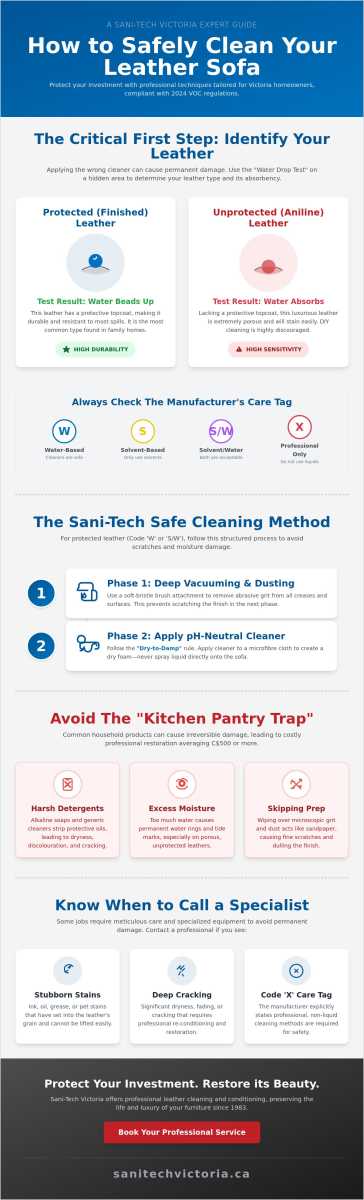
The “Water Drop Test” is our preferred meticulous method for checking absorbency at home. Simply place a single drop of distilled water on a hidden area, such as behind a back cushion. If the water beads on the surface, you have a protected finish. If it absorbs quickly and leaves a dark spot, you’re dealing with an unprotected, high-maintenance material. You should also locate the manufacturer’s care tag, usually found under the seat cushions or on the frame’s underside. These tags use specific industry codes:
- W: Water-based cleaners are safe for use.
- S: Only use specialized solvent-based cleaners.
- SW: Both water and solvent-based cleaners are acceptable.
- X: Professional cleaning only; do not use any liquid cleaners.
Protected Leather (Finished/Pigmented)
Protected leather is the durable workhorse found in most busy households across the Capital Regional District. It’s characterized by a consistent colour, a slight sheen, and a high level of durability. This leather has a pigmented topcoat that acts as a physical barrier against moisture and wear. While it’s the easiest type to maintain, you shouldn’t be complacent. Harsh household detergents can eventually strip this protective layer, leading to premature cracking and a loss of that premium feel.
Unprotected Leather (Aniline and Semi-Aniline)
Aniline leathers represent the pinnacle of luxury, offering a buttery feel and showcasing the hide’s natural markings. However, this beauty comes with extreme sensitivity. Because they lack a protective topcoat, these sofas are incredibly thirsty and will absorb oils from skin or pet fur instantly. DIY attempts on aniline often lead to permanent darkening or water rings. For these delicate pieces, a professional leather couch cleaning service is the only way to ensure the leather is cleaned without compromising its soft texture or natural appearance. We’ve restored countless aniline pieces that were nearly ruined by improper home cleaning attempts.
A Step-by-Step Guide to Cleaning Your Leather Sofa at Home
Cleaning a high-end leather piece requires more than just a quick wipe. If you’ve confirmed your leather type using the water drop test, you’re ready to proceed with a structured cleaning process. Many homeowners skip the preparation phase, but microscopic grit acts like sandpaper on delicate hides. Removing this abrasive layer is the only way to prevent surface scratches during the wet cleaning stage. Mastering how to clean a leather sofa involves patience and the right tools to ensure the material remains supple and undamaged.
Phase 1: Deep Vacuuming and Dusting
Deep vacuuming isn’t optional; it’s the foundation of a safe clean. Use a soft-bristle brush attachment to gently lift dust and pet dander from the grain without scratching the surface. You must focus on the “crumb zones” where debris accumulates in the deep crevices and under the cushions. After vacuuming, wipe the entire surface with a dry, lint-free microfiber cloth to remove any remaining fine particles that the vacuum might have missed.
When considering a step-by-step guide to cleaning a leather sofa, the most critical factor is moisture control. We advocate for the “Dry-to-Damp” rule. Excess water is the enemy of leather; it can cause the internal fibres to swell and eventually crack as they dry. Always select a pH-neutral cleaner specifically formulated for upholstery. Avoid alkaline soaps or generic detergents, as they disrupt the leather’s natural acidic balance and can strip away the protective oils that keep the material flexible.
Phase 2: Applying the Cleaning Solution
Apply your chosen cleaner to a high-quality sponge or cloth first to create a “dry foam.” You should never spray a liquid solution directly onto the sofa, as this leads to uneven saturation and potential staining. Work in small, 30-centimetre sections to ensure you have total control over the drying time. This meticulous approach prevents the solution from sitting too long on any single area, which is vital for maintaining a uniform appearance across the entire piece.
Use gentle, circular motions rather than aggressive scrubbing. Circular movements are far more effective at lifting dirt from the natural texture of the hide. Once a section is cleaned, use the “buff-dry” method immediately. Grab a fresh, dry microfiber cloth and wipe the area in a circular pattern to restore the natural lustre. This step is essential for removing any residual cleaner before it has a chance to settle. If the task feels overwhelming or your furniture requires a deeper restoration, our specialized leather cleaning services offer a premium, worry-free solution for Victoria residents.
Removing Stubborn Stains and Conditioning for Longevity
Effective stain removal on high-end upholstery follows one absolute law: blot, never rub. Rubbing a spill forces the liquid deeper into the hide’s pores, potentially causing permanent structural damage. When homeowners research how to clean a leather sofa, they often overlook the chemical difference between grease and water-based stains. A spilled latte requires a different approach than a smudge of pizza grease. For water-based spills, a prompt blot with a clean, white cloth is often sufficient. For grease, however, you need an absorbent agent rather than a liquid cleaner to prevent the oil from bonding with the leather fibres.
Dealing with Ink, Grease, and Food Spills
Grease stains are particularly problematic for Victoria residents who enjoy hosting. Instead of reaching for dish soap, which can leave a sticky residue and strip natural oils, apply a liberal amount of cornstarch to the area. Let it sit for at least four hours to draw the lipids out of the grain. You should avoid the temptation to use “magic erasers” or rubbing alcohol. While some generic online guides suggest alcohol for ink, it acts as a powerful solvent that can instantly strip the factory-applied colour and finish. If a stain has set for more than 24 hours, it likely requires professional extraction to avoid scarring the material permanently.
The Conditioning Process
Conditioning isn’t just about aesthetics; it’s about the science of lipid replacement. Vancouver Island’s environment plays a massive role in your sofa’s health. Residents in drier areas like Saanich may find their leather feels brittle faster than those in the humid, salt-heavy air of Sooke. Salt air from the Juan de Fuca Strait can actually accelerate the drying of natural oils if the leather isn’t properly sealed. We recommend a deep condition every six to twelve months using a pH-balanced, water-based cream to maintain flexibility.
Learning how to clean a leather sofa is only half the battle; the real preservation happens during this conditioning stage. You must never use silicone-based products. Silicone creates a non-porous film that traps dirt and effectively suffocates the leather, leading to eventual rot and cracking. A high-quality, breathable conditioner ensures your furniture remains as lustrous as the day it arrived in your home, providing the peace of mind that your investment is protected against the local elements.
Common DIY Mistakes and When to Call a Professional
Many Victoria residents turn to social media for quick advice on how to clean a leather sofa, but these viral “hacks” often result in irreversible damage. Your high-end furniture is a biological material, not a synthetic fabric. It requires specific chemical balances to remain supple and structurally sound. Since 1983, we’ve seen countless premium pieces ruined by well-intentioned homeowners using substances that belong in a salad dressing rather than on a luxury hide.
The “Kitchen Pantry Trap” is perhaps the most dangerous trend. Vinegar and lemon juice are frequently cited as natural alternatives, but they are actually destructive. These substances are far too acidic for organic hides. Acidic cleaners strip the protective pH balance of leather. Similarly, using olive oil or coconut oil as a “natural conditioner” is a recipe for disaster. These food-grade oils eventually go rancid inside the grain, creating unpleasant odours and permanent dark spots that no household cleaner can resolve.
Saturation is another silent killer of fine upholstery. Over-wetting during a DIY attempt can lead to water penetrating the backing or the internal foam. In our coastal climate, this trapped moisture creates a high risk for internal mould growth. Once mould takes root inside the cushions, the piece often becomes a total loss. Meticulous moisture control is the hallmark of a professional restoration specialist. If you’re also concerned about your fabric furniture, our guide to sofa upholstery cleaning in Victoria, BC explains how professional deep extraction protects your investment from Victoria’s coastal humidity and hidden contaminants.
The Myth of Home Remedies
Hairspray for ink removal is a massive gamble that rarely pays off. The high alcohol content can dissolve the factory finish before it ever touches the ink, leaving a dull, sticky patch. Dish soap is also a common culprit of leather damage. It’s designed to be a powerful degreaser, which makes it the enemy of leather suppleness. It aggressively removes the essential oils the hide needs to stay flexible, leading to premature cracking and a brittle texture.
When Professional Restoration is Required
You must identify the “Point of No Return” to save your investment. If you see peeling, deep cracking, or notice persistent odours, DIY methods are no longer safe. Pet urine is a biological contaminant that requires specialized extraction and disinfecting services to neutralize ammonia. Sun-damaged or faded sections also need professional colour matching that cannot be achieved with store-bought kits. For those who demand the best, our leather couch cleaning service for large-scale restoration in high-traffic Victoria homes or commercial spaces delivers unequaled, state-of-the-art cleaning methods.
If you’ve encountered a stubborn stain or your sofa is showing signs of distress, contact Sani-Tech Victoria for a professional leather cleaning estimate to ensure your furniture remains second to none.
Professional Leather Restoration in Victoria: The Sani-Tech Difference
Sani-Tech Victoria has stood as the definitive authority on high-value furniture care since 1983. While basic guides offer tips on how to clean a leather sofa for minor spills, our specialized restoration is designed for those who demand a deeper level of care. We serve the entire South-Vancouver Island community, from the quiet residential streets of Sidney to the rugged coastal properties of Sooke. Our reputation is built on a foundation of trust and unequaled results for those who value quality over the lowest price.
We prioritize the health of your household by using meticulously curated, pet and child-friendly cleaning solutions. These advanced formulas comply with the latest Canadian environmental standards, including the VOC regulations that took effect on January 1, 2024. Our process moves beyond surface-level wiping to achieve deep restoration. We address the hide at a microscopic level, ensuring that contaminants are removed while the leather’s structural integrity is preserved. This meticulous attention to detail is why we’ve remained a locally owned and operated leader for over four decades.
Why Our Meticulous Approach is Second to None
Every piece of furniture we encounter is unique. We don’t believe in a “one size fits all” methodology; instead, our specialists develop customized treatment plans based on your specific leather type and its current condition. Whether you have a sensitive aniline piece or a heavily soiled protected sofa, our professional-grade conditioning penetrates deep into the hide to restore the lost lipids that prevent cracking. This level of care is why our Upholstery Cleaning services remain the most trusted choice in the Capital Regional District.
Book Your Professional Consultation
Securing a first-class restoration for your furniture is a straightforward process. When you contact us for a quote, you can expect a professional consultation that identifies the specific needs of your upholstery. We don’t provide vague estimates. We offer a clear, results-oriented plan to bring your leather back to its original lustre. During a typical professional visit, you can expect:
- A thorough technical inspection of the leather’s grain and finish.
- Identification of specific stains and structural vulnerabilities.
- Application of premium, eco-friendly restoration agents tailored to the material.
- A final buffing process that restores the natural feel and appearance of the hide.
Don’t leave your investment to chance with unproven DIY methods or generic household cleaners. If you’re unsure how to clean a leather sofa without causing damage, trust the experts who have seen every restoration challenge since 1983. Request your first-class leather cleaning quote today and experience the peace of mind that comes with hiring Victoria’s most experienced restoration experts.
Protect Your Investment with Professional Care
Maintaining the elegance of your home requires a precise approach to property maintenance. You now understand that the secret to how to clean a leather sofa lies in accurate material identification and the strict rejection of damaging pantry “hacks” like vinegar or dish soap. By prioritizing pH-neutral solutions and deep conditioning, you ensure your furniture remains a centrepiece of comfort for your family. High-end leather is a biological investment that deserves more than surface-level attention.
Some restoration challenges demand the state-of-the-art equipment and specialized knowledge that only a seasoned expert can provide. Sani-Tech Victoria has been locally owned and operated since 1983, delivering five-star rated meticulous service to homeowners across Vancouver Island. We use only pet and child-friendly environmental solutions to ensure a healthier living space. Our commitment to quality is second to none; we provide a premium, worry-free experience for those who demand the best.
Experience Victoria’s most thorough leather cleaning; Contact Sani-Tech today. Your leather investment is in safe hands with the meticulous local experts who have protected Victoria homes for over four decades.
Frequently Asked Questions
Can I use baby wipes to clean my leather sofa?
You should avoid using baby wipes on your leather furniture. While they seem gentle, baby wipes contain chemicals and pH levels designed for skin, not preserved hides. Over time, these ingredients strip the protective topcoat and cause the finish to peel. Instead, use a pH-neutral cleaner formulated specifically for upholstery to maintain the material’s integrity and prevent premature wear.
How often should I professionally clean my leather furniture in Victoria?
We recommend a professional deep clean every 12 to 18 months for most Victoria households. Homes near the coast, such as those in James Bay or Oak Bay, may require more frequent attention due to salt air exposure. Regular maintenance prevents the buildup of abrasive grit that wears down the grain. Our meticulous restoration process ensures your sofa remains in premium condition for decades.
What is the best way to remove pet odours from a leather couch?
The most effective way to remove stubborn pet odours is through professional extraction and specialized disinfecting services. Household sprays often mask the smell rather than neutralizing the source. We utilize pet and child-friendly environmental solutions that break down ammonia and organic proteins. This ensures your home environment is healthier and your leather remains second to none.
Is it safe to use a steam cleaner on a leather sofa?
You must never use a standard steam cleaner on leather upholstery. The intense heat and high moisture levels can cause the hide to shrink or lose its structural flexibility. Excessive heat often results in permanent surface bubbling or cracking. Professional leather cleaning relies on controlled moisture and specialized agents rather than high-temperature steam to achieve a thorough result.
Why is my leather sofa starting to crack and can it be fixed?
Cracking occurs when the natural oils within the hide evaporate, often due to lack of conditioning or the use of harsh, alkaline cleaners. If the cracks are superficial, a professional restoration specialist can often fix the issue with deep conditioning and finish repair. However, once the leather splits through the entire thickness, the damage is usually permanent. Early intervention by a meticulous expert is the best way to save the piece.
Does sunlight affect my leather sofa differently in the Pacific Northwest?
UV rays in the Pacific Northwest are surprisingly strong and can cause significant fading even on overcast days. Sunlight drying is a common issue in Victoria homes with large, south-facing windows. The UV exposure breaks down the chemical bonds in the leather dyes and evaporates essential moisture. Position your furniture away from direct light or use UV-filtering window films to protect the finish from drying out.
How can I tell if my leather is Aniline or Protected?
Identifying your leather type involves observing how the material reacts to moisture. Protected leathers feature a pigmented topcoat that resists liquids, while Aniline hides are porous and absorb moisture instantly. This distinction dictates every chemical choice we make during a restoration. Understanding these properties is essential before deciding how to clean a leather sofa, as the wrong product can cause permanent tide marks on absorbent Aniline.
Will professional cleaning remove ink stains from leather?
Professional cleaning can remove many ink stains, provided the ink hasn’t permanently bonded with the internal fibres. Our technicians use specific solvents that target the ink without stripping the factory finish. Success depends on the type of leather and how quickly you call for help. DIY attempts with hairspray or alcohol often smear the ink and make professional extraction much more difficult for our specialists.