
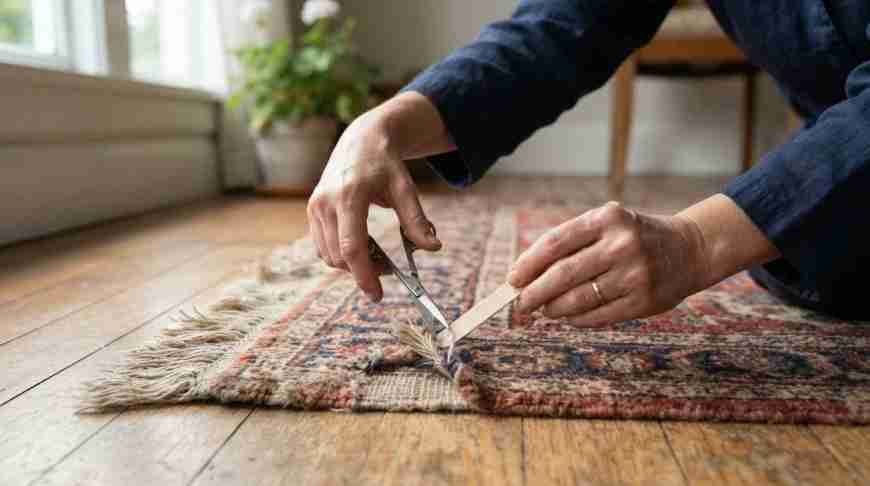
A frayed rug edge doesn’t always need sewing, but adhesive is best reserved for minor damage. You can sometimes repair frayed rug edges by trimming loose fibres and securing the area with fabric adhesive. If the binding is failing or the backing is weakening, a quick fix may not hold.
It’s reasonable to want to stop the unravelling without changing the rug’s appearance. First distinguish surface fraying from damage to the binding, foundation or fringe, since each needs a different approach. Handle loose threads carefully, because pulling them can make the damage worse.
This guide shows you how to assess a rug edge, which no-sew options may help with minor frays, and how to manage damaged or missing fringe. It also explains when professional binding or fringe rebuilding is a better fit, so you can choose a repair that suits the rug’s condition and helps protect its structure.
Key Takeaways
- For a minor edge fray, careful trimming and fabric adhesive may help; avoid pulling loose threads, which can worsen unravelling.
- Check whether the damage is limited to the edge or has reached the binding, backing, or fringe before choosing a repair.
- Damaged fringe needs a careful approach to keep the rug’s edge secure and its appearance consistent.
- When fraying is extensive or the rug’s foundation is weakening, professional binding or rug repair can be a more suitable long-term option.
DIY Repair or Professional Re-Binding?
Start by identifying what has failed: loose yarn, binding or fringe each calls for a different repair. The steps below help you match the method to the damage and the rug’s construction.
Diagnose Snags and Loose Bindings
Lay the rug flat and inspect the edge in good light. A snag lifts pile yarn; loose binding separates from the edge, while splitting fringe shows gaps where foundation threads are exposed. Don’t pull a snag, as doing so may worsen the damage.
Gently separate loose fringe with your fingers. If the binding has detached or the edge is splitting beneath it, trimming the surface won’t secure the rug’s structure.
Compare DIY and Professional Repairs
A home repair is suitable for a small, stable fray. A tight overcast stitch can secure minor loose yarn. If the binding has failed, whipstitching may be needed, with stitches roughly a quarter inch apart.
For extensive edge failure, professional binding or serging provides a more durable finish. These methods are better suited to damage along the binding or damage that exposes the foundation.
Gather Repair Materials and Tools
For a small repair, gather sharp scissors, a heavy-duty needle, matching upholstery thread, and fabric adhesive or binding tape. Trim loose threads rather than pulling them, and choose thread that matches the rug’s colour and edge.
Wool, synthetic and handmade rugs need care suited to their fibres and construction. The Canadian Conservation Institute cautions that wet wool is vulnerable to mechanical damage. Keep the backing dry and don’t force a needle through dense or fragile foundation threads.
Repair Edges with Binding Tape
Cut the binding tape slightly longer than the damaged section. Align it evenly with the rug edge and secure it according to the product instructions. If you’re stitching, sew through the binding edge without tugging on the foundation.
You can limit the risk to the backing by working carefully and stopping while the foundation is intact. Stop if the backing splits or stitches distort the edge. A professional can rebind or serge damage that extends beyond the tape.
Repairing damaged or missing rug fringe
- Inspect the fringe where it meets the rug’s edge. Check whether strands are uneven, detached or missing, and look for gaps in the foundation threads. Fringe can be decorative, but its attachment also relates to the rug’s structure. Don’t pull loose strands or cut close to the base, as this can disturb the remaining fibres and make the edge harder to secure.
- If only a few strands are uneven, use sharp scissors to trim their visibly loose ends. Keep the cut level with the existing fringe, not flush against the rug. Gentle trimming can tidy intact fringe without replacing it. Don’t trim where the foundation is exposed or the fringe is separating from the rug.
- Fabric adhesive may hold a small, stable separation while it cures. Apply it sparingly along the attachment area, follow the product instructions and keep it off the visible pile. Fabric glue usually needs about a day to cure fully. Keep the rug flat and undisturbed while it sets, since moving it too soon can shift the fringe or leave an uneven repair.
- Replace missing fringe only when the rug’s edge can support a new attachment. A matching replacement can be sewn or glued in place, but the method should suit the rug’s construction and the existing finish. On an antique or valuable rug, professional replacement can preserve its authenticity. A specialist in professional fringe rebuilding can assess how the fringe joins the rug before repair.
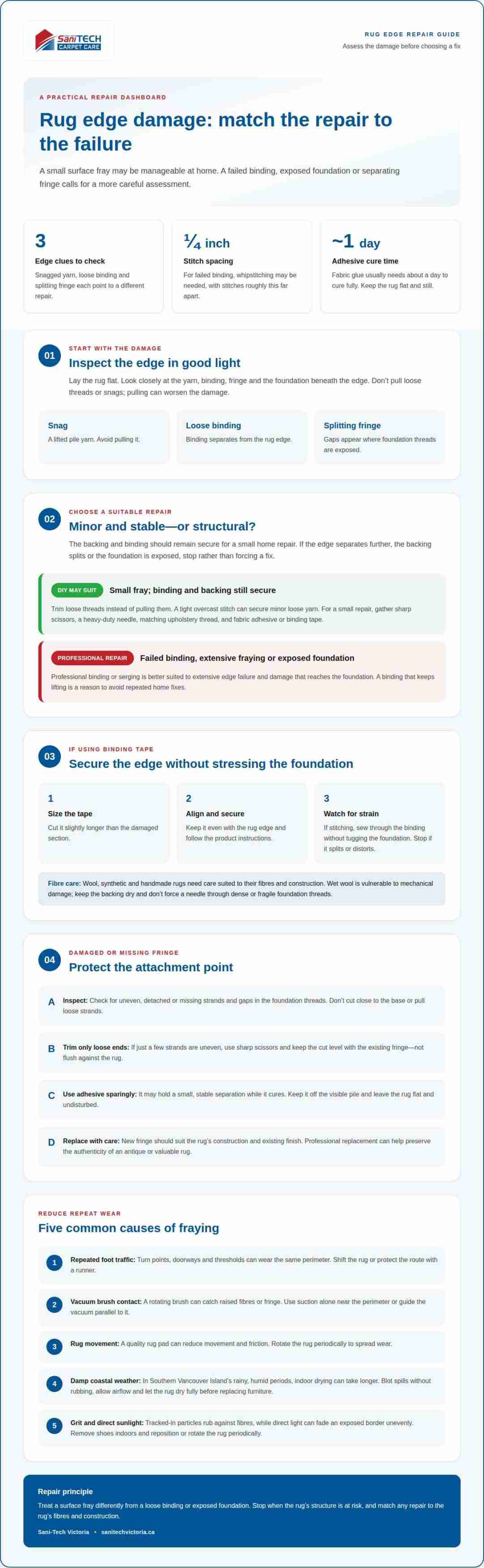
Common causes of fraying rug edges
- Look for repeated contact along the rug’s perimeter. Foot traffic can abrade fibres where people turn, pause or cross a doorway. A rug beside an entry, for example, may wear first at the threshold. Shift the rug or protect the route with a runner so the same edge doesn’t take every step.
- Notice how your vacuum meets the border. A rotating brush can catch raised fibres or fringe, especially when the vacuum head overlaps the edge. Use suction alone near the perimeter, or guide the vacuum parallel to it. This reduces pulling on loose yarn and helps prevent extra wear to a stressed section.
- Reduce sliding between the rug and floor. Movement can rub the underside and perimeter against the floor, especially on smooth surfaces. A quality rug pad helps reduce movement and friction. Rotate the rug periodically, too, so sunlight and foot traffic don’t keep wearing the same side.
- Consider Southern Vancouver Island’s damp coastal weather when managing moisture. Indoor drying can take longer during rainy, humid periods, so don’t leave a wet rug folded or pressed against the floor. Blot spills without rubbing, allow airflow around the affected area, and let it dry fully before replacing furniture. Persistent dampness can weaken fibres over time.
- Reduce wear from grit and sunlight. Tracked-in particles can rub against fibres underfoot, while direct light may fade an exposed border unevenly. Remove shoes indoors and use a runner on heavily walked routes. In sunny rooms, reposition or rotate the rug periodically to spread exposure across different edges.
When to choose DIY or professional rug repair
- Match the repair to the size and depth of the damage. A minor fray confined to surface fibres may be a reasonable home project if the backing and binding remain secure. Stop if the edge separates further while you work, or if stitches pull the foundation out of shape. Those signs suggest the damage may need a more detailed assessment.
- Consider professional repair when fraying extends along the binding or appears to affect the rug’s foundation. Rebinding or serging can secure a damaged edge more effectively than a small adhesive or stitch repair. A binding that keeps lifting is another reason to avoid repeated home fixes.
- Check how much of the perimeter is affected before investing time in a repair. Compare the damaged border with the full edge, not just the most visible corner. Consider the rug’s overall condition, too: widespread wear or a weakened backing changes the value of repairing one section.
- Consider the rug’s construction and value alongside the damage. A handmade or antique rug can have distinctive fibres, colours, and edge finishes that a basic repair may not match. For those pieces, professional assessment helps determine whether repair can preserve the existing structure. For a stable, small fray on a sturdy rug, a careful DIY fix may be appropriate. For extensive damage, request professional oriental rug repair to address the edge and protect the rug’s remaining structure.
Sani-Tech Victoria: Oriental Rug Repairs
Sani-Tech Victoria repairs Oriental rugs with frayed edges, failed binding and damaged fringe. When the foundation is exposed or fringe is separating, the repair needs to secure the edge without straining surrounding fibres. Binding and fringe rebuilding address structural damage, rather than simply trimming loose strands or covering them with adhesive.
Choose professional repair if a home fix hasn’t held, the damage extends along the rug, or the piece is handmade or valuable. The repair can be suited to the rug’s construction and the condition of its edge. Area Rug Cleaning is also available if the rug needs cleaning.
Contact Sani-Tech Victoria to discuss repairing your rug’s frayed edge or fringe.
Protect your rug’s next chapter
A rug’s edge affects more than its appearance; it can influence how well the rug serves your home. Before deciding how to repair frayed rug edges, consider the rug’s use, construction and sentimental or practical value. A small repair that suits a sturdy everyday rug may not suit a handmade or cherished piece. Choose a method that preserves the rug rather than simply concealing visible damage.
Sani-Tech Victoria offers Oriental Rug Repairs, Area Rug Cleaning, Carpet Steam Cleaning and Upholstery Cleaning in Victoria, Sidney, Sooke and Mill Bay. Keeping repair and care needs in view can help you plan the next step for your rug and surrounding furnishings.
For guidance on a damaged edge, loose binding, or worn fringe, contact Sani-Tech Victoria about rug repair. A considered repair can help you make a confident choice for a rug you value.
Frequently Asked Questions
Can you fix a fraying rug without sewing?
Yes, adhesive can sometimes stabilize a small surface fray without sewing. First determine whether the loose fibres are confined to the pile or the edge construction has separated; adhesive won’t replace missing foundation yarns. Choose a product intended for textiles and test it on a hidden edge for changes in colour or stiffness. Keep the rug flat while it sets.
Why does my rug keep fraying after I fix it?
Recurring fraying usually means the cause remains or the first repair didn’t reach the damaged structure. Check whether the same edge catches on a door, furniture leg or vacuum, and inspect the underside for a split or loose seam. If the wear returns after you reposition the rug, a surface repair may be masking deeper edge failure.
Will trimming a loose thread ruin the rug?
Carefully trimming a loose pile fibre usually won’t ruin a rug, but first make sure it isn’t a loop or foundation yarn. Compare it with nearby fibres: a pile end sits among the surface yarns, while a structural strand may run into the backing or fringe. If you can’t tell which it is, leave it alone; cutting a connected yarn can enlarge the opening.
How to repair frayed rug edges at home step by step
Start with the rug dry and flat. Photograph the damaged area so you can tell whether it spreads as you work. Identify whether the damage involves pile, binding or fringe before choosing a method. Work only on a small, stable section and keep the rug undisturbed until any repair product has set. Stop if the edge puckers, the backing separates or the colour changes.
How to stop a rug from fraying with fabric glue or seam sealer
Fabric glue or seam sealer can help hold a minor fray, but the result depends on the rug material and product compatibility. Check the label for suitable fibres and application instructions, then test a hidden spot for colour change or stiffness. Avoid saturating the edge: excess product can leave a hard, visible ridge and affect how the rug lies.
How to rebind or serge a rug edge yourself
DIY binding is most manageable on a straight edge with intact backing and a consistent width. Measure the exposed edge and compare it with the opposite side before cutting replacement tape; an uneven strip can make the rug sit crooked. Serging wraps yarn around the perimeter and generally requires a serger. A curved or splitting edge is harder to control at home.
Rug binding vs serging vs overlocking: which edge repair is best
For extensive fraying, professional binding or serging can provide a more durable finish. The method should suit the rug’s construction and condition.