
Your leather sofa isn’t just a piece of furniture; it’s a porous, biological investment that breathes and reacts to the unique coastal climate of Victoria. You likely chose leather for its timeless durability, yet learning how to clean a leather sofa without causing it to crack or discolour can feel like a high-stakes gamble. It’s stressful to realize your centrepiece is losing its original lustre while you remain unsure of which chemicals are actually safe for your family and your furniture.
Restoring that supple, showroom feel requires moving beyond simple surface wiping and into the science of pH-balanced hydration. This definitive guide provides the meticulous steps needed to safely remove grease and ink while restoring the hide’s natural oils. We’ll explore the specific needs of various leather types and provide a professional framework for protecting your investment against the drying effects of local heating and salt air. You’ll gain the confidence to maintain your furniture for decades, ensuring it remains a clean and hygienic focal point of your home.
Key Takeaways
- Identify your specific leather type using the Water Drop Test to prevent using incompatible products that could permanently ruin the finish.
- Master the meticulous step-by-step process of how to clean a leather sofa using distilled water and microfibre cloths to ensure a streak-free, professional result.
- Address stubborn grease and ink stains with targeted techniques that safely extract oils without damaging the hide’s delicate fibres.
- Understand the unique hydration requirements for leather in Victoria’s coastal environment to prevent premature cracking and loss of original lustre.
- Recognize the critical “red flag” signs, such as deep fading or peeling, that indicate your furniture requires the specialized care of a seasoned restoration expert.
Identifying Your Leather Type: The Crucial First Step
Treating every leather surface with the same generic product is the primary cause of irreversible sofa damage. Many homeowners assume a “leather is leather” approach, but this ignores the complex tanning and finishing processes that define how the material reacts to moisture and chemicals. Achieving a professional result depends entirely on identifying these nuances before you ever apply a cleaning solution. In our decades of experience serving the South Island, we’ve seen countless high-end pieces ruined by well-intentioned but incorrect care. Understanding your specific material is the only way to master how to clean a leather sofa effectively.
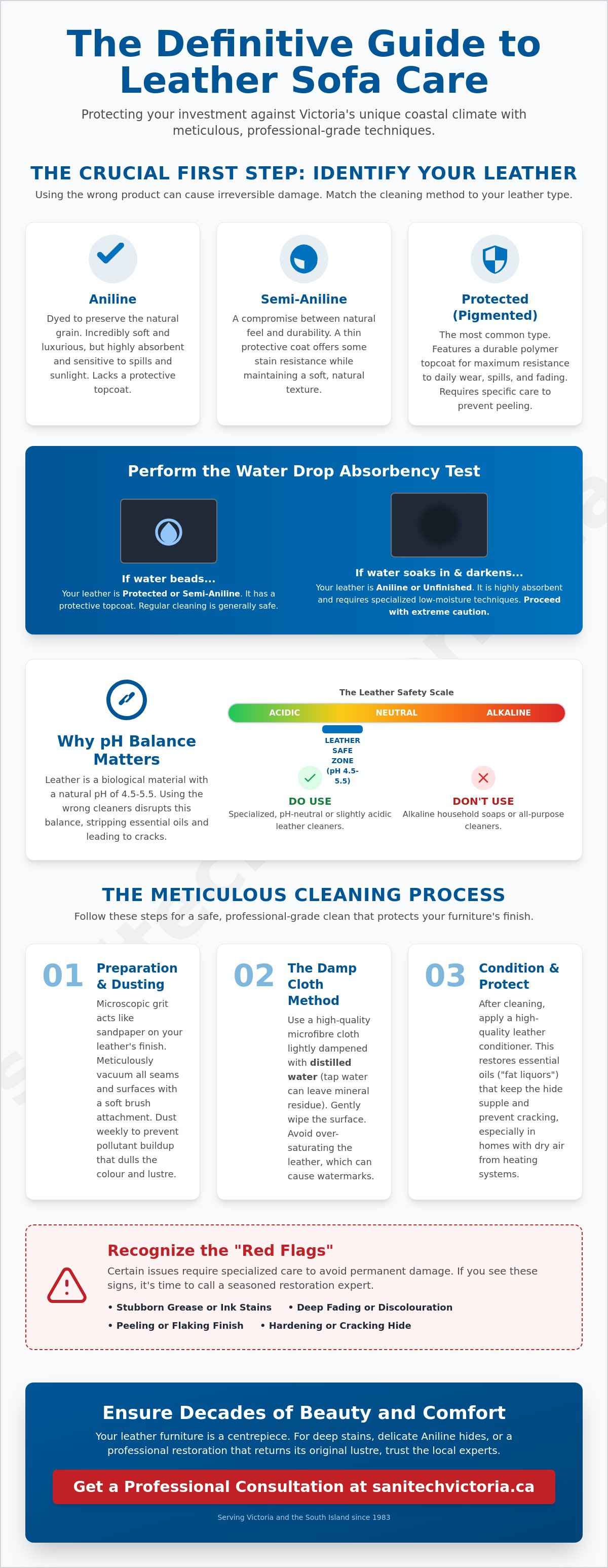
Aniline leather represents the pinnacle of luxury, dyed with soluble dyes that maintain the hide’s natural texture and markings. It lacks a protective pigment layer, making it incredibly soft but highly sensitive to spills and sunlight. Semi-Aniline offers a slight compromise with a thin protective coat that provides some stain resistance while keeping a natural feel. Most Vancouver Island families, however, own Protected (Pigmented) leather. This variety features a durable topcoat designed to resist daily wear and tear, though it still requires specific maintenance to prevent the finish from peeling or becoming brittle over time.
The Absorbency Test for Safe Cleaning
To determine how to clean a leather sofa without risking permanent stains, you must perform a meticulous absorbency test. Place a single drop of distilled water on a hidden area, such as the back of a cushion or a lower side panel. Observe the reaction carefully. If the water beads on the surface, your leather has a protective coating. If the water darkens the hide and soaks in immediately, you are dealing with a sensitive Aniline or unfinished material. This distinction is vital; absorbent leathers require specialized, low-moisture techniques to avoid water rings and surface distortion.
Why pH Balance Matters for Furniture Longevity
Leather is a biological material that naturally maintains a slightly acidic state, typically between pH 4.5 and 5.5. Using alkaline household soaps or “all-purpose” cleaners disrupts this delicate chemistry, causing the fibres to swell and eventually crack. Professionals utilize proper leather conservation techniques to ensure that the essential “fat liquors” introduced during the tanning process remain stable. These oils are what keep your sofa supple and resilient against the dry air of indoor heating systems. A pH-neutral leather cleaner is the only safe option for Aniline finishes.
How to Clean a Leather Sofa: A Meticulous Step-by-Step Guide
Cleaning a leather sofa requires a balance of patience and clinical precision. Before you begin the actual cleaning process, you must gather professional-grade tools to avoid damaging the delicate hide. Avoid using paper towels or abrasive sponges that can create micro-scratches on the surface finish. Instead, utilize high-quality microfibre cloths and distilled water. Distilled water is essential because the mineral content found in Victoria’s local tap water can sometimes leave faint, cloudy residues on darker leather finishes. Always start with a safety check by testing your cleaning method on a small, inconspicuous patch. This ensures the finish doesn’t react poorly before you move to the centre of the cushions.
Learning how to clean a leather sofa effectively starts with a “less is more” philosophy. Over-saturating leather is a common mistake that leads to watermarks or, in extreme cases, moisture reaching the internal foam. By following a structured, meticulous approach, you can maintain the material’s integrity while removing the daily buildup of environmental pollutants. If you find the process daunting or are dealing with a high-value heirloom, seeking out expert leather cleaning ensures the job is handled with restoration-level care.
Vacuuming and Dusting Protocols
Dry soil is the silent enemy of leather longevity. Over time, microscopic grit and dust settle into the grain and deep within the crevices of the furniture. When you sit down, this grit acts like sandpaper, slowly grinding away the protective topcoat. Use a vacuum with a soft brush attachment to meticulously clear every seam and fold. Weekly dusting is equally important for homes on Vancouver Island. It prevents the accumulation of urban pollutants that create a dull, grey film over your furniture’s original colour and lustre.
The Damp Cloth Method
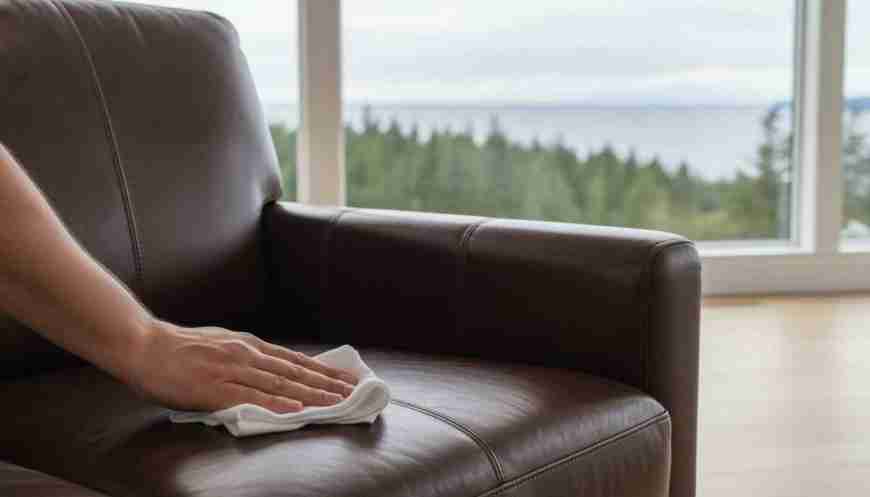
When you are ready to address surface oils, wring your microfibre cloth until it is barely damp to the touch. Wipe the leather in gentle, circular motions to lift body oils and light soil without pushing moisture into the pores. If you encounter specific localized marks, refer to expert advice on spot-cleaning leather furniture to ensure you don’t spread the stain. Once the surface is clean, use a separate dry cloth to buff the leather immediately. This prevents water spotting and helps restore the original sheen of the material. This methodical approach is the safest way to master how to clean a leather sofa while preserving its supple texture for years to come.
Removing Stubborn Stains: Ink, Grease, and Water Marks
Stains are the ultimate test of any homeowner’s patience. While the general cleaning steps outlined previously handle daily maintenance, stubborn marks require a more clinical approach to avoid permanent damage. The “Golden Rule” of professional stain removal is to always blot, never scrub. Scrubbing creates friction that generates heat, which can cause ink or oils to bond permanently with the leather fibres. It also risks thinning the protective topcoat, leading to a patchy, uneven appearance that even a professional restoration might struggle to fix.
Understanding how to clean a leather sofa when faced with a crisis requires knowing the chemistry of the stain. Most household “hacks” involve aggressive solvents like rubbing alcohol or nail polish remover. These are far too alkaline for the acidic nature of leather. They strip away the essential fat liquors that keep the material supple, leaving it brittle and prone to cracking. Instead, focus on gentle extraction methods that respect the integrity of the hide.
Managing Body Oils and Grease
Headrests and armrests are the most vulnerable zones for grease accumulation because they are in constant contact with skin and hair oils. Over time, these oils penetrate the finish and create dark, tacky patches. If you notice a fresh grease spill, apply a generous layer of cornstarch or talcum powder to the area. Leave the powder to sit for at least four to six hours, or even overnight. This allows the powder to “pull” the oils out of the pores through capillary action. Gently brush away the powder with a soft-bristled brush. You’ll quickly realize when a professional degreaser is needed; if the stain remains dark after two powder applications, the oil has likely moved deeper into the substrate.
Dealing with Ink and Dye Transfer
Ink marks are high-risk situations where speed is the most critical factor. Once ink dries and sets into the grain, it becomes a permanent dye. Dye transfer is a similar challenge, often occurring when new indigo-dyed blue jeans leave a blue tint on light-coloured leather. While some suggest using hairspray or alcohol, these methods are a dangerous gamble for high-end finishes. It’s often safer to consult professional upholstery cleaning quotes before the stain sets permanently. Professionals use specialized, pH-balanced ink lifters that target the pigment without dissolving the sofa’s original colour.
Water spots are another common frustration, usually caused by uneven drying. If a spill has already dried and left a ring, you can often blend it out by lightly dampening the area from the centre of the spot out to the nearest seam. This “feathers” the moisture and prevents a hard edge from forming as the leather dries. This meticulous attention to detail is what separates a standard wipe-down from a professional-grade cleaning result.
Conditioning and Protection for the Victoria Coastal Climate
Cleaning is only half the battle in preserving a high-quality leather investment. While you may have mastered how to clean a leather sofa to remove surface debris, failing to replace the lost moisture will lead to structural failure. Leather is a biological material that requires constant hydration to remain supple. In the unique environment of Southern Vancouver Island, our homes transition from salt-laden coastal air in the summer to dry, forced-air heating in the winter. Research indicates that leather loses 10% of its moisture annually in heated environments, making a consistent conditioning routine essential for longevity.
Neglecting this step leads to “dry rot,” where the internal fibres become brittle and snap under the weight of daily use. This damage is often irreversible. By integrating a professional conditioning protocol into your seasonal maintenance, you ensure the material can expand and contract without cracking. If your furniture already feels stiff or shows signs of surface crazing, it is time to secure a professional leather cleaning and conditioning service to stabilize the hide.
Choosing the Right Conditioner
The market is flooded with products that claim to restore leather, but many contain harmful additives. Avoid any conditioners that utilize silicone or heavy waxes. These substances create a non-porous film on the surface that “clogs” the leather’s ability to breathe, eventually leading to a sticky residue that attracts more dirt. Instead, look for high-grade, water-based emulsions. These professional serums are designed to penetrate deep into the leather fibres rather than just sitting on top. Quality conditioners also include antioxidants and UV inhibitors. These act as a “sunscreen” for your furniture, preventing the premature fading and “sunburn” often seen in sun-drenched living rooms in Saanich and Oak Bay.
Seasonal Maintenance Schedule
Victoria residents should follow a disciplined schedule to counteract our specific weather patterns. A quarterly application is ideal, but two major treatments per year are the absolute minimum. This proactive approach ensures your furniture remains a centrepiece rather than a maintenance burden. Use this schedule to keep your investment in peak condition:
- Spring: Perform a deep clean and heavy conditioning. This restores the moisture stripped away by a full winter of indoor heating.
- Autumn: Apply a protective conditioner to prepare the leather for the damp, cool winter months. This helps the finish resist moisture spotting from damp clothing or pets.
Consistency is the secret to a sofa that looks as good in twenty years as it does today. When you understand how to clean a leather sofa and follow up with the correct hydration, you are not just cleaning; you are performing essential property conservation.
When to Call the Meticulous Local Experts at Sani-Tech Victoria
Knowing when to transition from DIY maintenance to professional intervention is a critical skill for any furniture owner. While understanding how to clean a leather sofa at home is vital for weekly upkeep, certain “Red Flag” situations indicate that the material’s integrity is compromised. If you notice visible cracking, the finish beginning to peel, or deep fading from UV exposure, home remedies are no longer sufficient. These symptoms suggest that the internal fibres have lost their structural moisture or the protective topcoat has failed entirely. Continuing to apply retail-grade cleaners to damaged leather can actually accelerate the deterioration by allowing moisture to seep into the vulnerable substrate.
Professional restoration goes far beyond surface aesthetics. It involves a clinical understanding of leather chemistry and the mechanical advantage of specialized equipment. Our team provides a comprehensive solution that addresses the root causes of dullness and leather fatigue, ensuring your centrepiece remains both hygienic and beautiful. Whether you are dealing with a modern sectional or require the same level of craftsmanship we apply to oriental rug repair in Victoria BC, our meticulous approach remains the same.
The Professional Leather Cleaning Process
The Sani-Tech methodology utilizes a level of precision that cannot be replicated with a cloth and bucket. We employ a pH-balanced foam cleaning system designed to suspend deep-seated dirt and body oils without over-wetting the hide. This process is followed by the application of professional-grade conditioners that penetrate the entire thickness of the leather to restore internal suppleness. To finish, we apply specialized protective topcoats that help the surface resist future staining and environmental pollutants. This deep extraction removes the microscopic grit that acts like sandpaper, extending the life of your furniture by years.
Why Local Expertise Matters
Since 1983, Sani-Tech Victoria has served as the Capital Regional District’s premier resource for high-tier property maintenance. We understand the specific challenges of Vancouver Island’s climate, from the salt air of Sidney to the damp winters of Sooke. Our team has spent over 40 years encountering every possible technical challenge, from stubborn grease stains to delicate Aniline restorations. We prioritize your family’s well-being by using organic, family-safe cleaning solutions that ensure a hygienic environment without the use of harsh, abrasive chemicals. Don’t risk the finish of your premium furniture with trial and error. Request a meticulous leather cleaning quote from Sani-Tech Victoria today to ensure your investment receives the authoritative care it deserves.
Preserving Your Leather Legacy for Decades
Mastering how to clean a leather sofa is about more than just removing surface dust; it’s about preserving the structural integrity of a biological material. By identifying your specific leather type and applying pH-balanced hydration, you protect your investment against the unique drying effects of the Victoria coastal climate. Consistency remains the secret to longevity. Regular vacuuming and seasonal conditioning prevent the “dry rot” that claims so many high-end pieces across the South Island.
Sani-Tech Victoria has been the trusted authority for specialized leather and upholstery restoration since 1983. As a family-owned and locally operated business in Victoria, BC, we prioritize the safety of your household by using organic, meticulous cleaning methods that retail products cannot match. Our professional deep extraction technology reaches soil that manual cleaning simply cannot touch, ensuring your furniture remains a hygienic focal point of your home.
Book Your Meticulous Leather Cleaning Service with Sani-Tech Victoria
Your furniture deserves the highest tier of care to stay supple for years to come. We look forward to helping you maintain a clean and beautiful home environment.
Frequently Asked Questions
Can I use baby wipes to clean my leather sofa?
You should avoid using baby wipes on your leather furniture because they are formulated for human skin, not tanned hides. Human skin has a different pH than the acidic environment required for leather longevity. Using these wipes can strip the protective topcoat and leave behind chemical softeners that attract soil. For those learning how to clean a leather sofa safely, stick to pH-neutral cleaners specifically designed for upholstery.
How often should I professionally clean my leather furniture in Victoria?
We recommend a professional deep extraction and conditioning every 12 to 18 months for most Victoria households. This frequency accounts for our unique coastal climate and the drying effects of seasonal indoor heating. High-traffic homes with pets or children may require more frequent attention to prevent the buildup of body oils. Regular professional care ensures the material remains supple and prevents the premature cracking often seen in neglected pieces.
What is the best way to remove pet hair from a leather couch?
The most effective way to remove pet hair from a leather couch is by using a vacuum with a soft brush attachment. This prevents the hair from migrating into the deep crevices where it can be difficult to extract. For stubborn strands, a slightly damp rubber glove can create enough static and friction to pull the hair into manageable clumps. Always avoid using stiff bristles that could scratch the grain of the material.
Is vinegar a safe cleaner for genuine leather furniture?
Vinegar is not a safe solution for genuine leather furniture because its high acidity can dry out the natural fibres. While some DIY guides suggest it, vinegar often leads to structural brittleness and can cause the original dye to bleed or fade. Protecting your investment requires specialized, water-based emulsions that maintain the hide’s moisture balance without the risk of chemical burns or discolouration.
What should I do if my leather sofa starts to crack or peel?
If your sofa starts to crack or peel, you should immediately stop any DIY cleaning attempts and consult a restoration specialist. These are red flag indicators that the leather has lost its essential moisture or that the protective topcoat has failed. Professional intervention can often stabilize the material and prevent the damage from spreading. Delaying care usually results in the need for expensive reupholstery rather than a simple restoration.
Can Sani-Tech Victoria remove pet odours from leather upholstery?
Sani-Tech Victoria utilizes specialized, family-safe disinfecting services to neutralize pet odours trapped within leather upholstery. Unlike surface sprays that merely mask smells, our deep extraction process removes the organic matter causing the scent. This is particularly important for porous leathers like Aniline that absorb liquids quickly. Our meticulous approach ensures your home environment remains hygienic and fresh without compromising the integrity of the furniture.
How long does a professional leather cleaning service take to dry?
A professional leather cleaning service typically requires only one to two hours to dry completely. Because we use specialized foam cleaners and low-moisture techniques, the sofa is ready for use much faster than traditional steam-cleaned fabrics. We recommend waiting until the leather is dry to the touch before applying any final conditioners or sitting on the cushions. This ensures the protective topcoat sets correctly without any surface distortion.
Does sunlight through my windows damage my leather sofa?
Sunlight is a significant factor in the deterioration of leather furniture in sun-drenched areas like Saanich or Oak Bay. UV rays break down the chemical bonds in the leather dyes and evaporate the essential oils that keep the hide flexible. To mitigate this damage, we suggest using window treatments or repositioning furniture away from direct glare. Regular conditioning with UV-resistant serums provides an additional layer of protection against sunburn and fading.